A Childhood Tragedy Shaped One of Television’s Most Influential Hosts

Stephen Colbert, one of the most familiar and influential figures in American television, was born in 1964 in Washington, D.C., the youngest of ten children in a large and intellectually engaged family. His early years were spent between Maryland and South Carolina, environments that shaped his worldview through strong family bonds, academic curiosity, and a deeply rooted Catholic faith.
Colbert’s father was a respected physician and academic who emphasized discipline, critical thinking, and education. His mother balanced religious devotion with an appreciation for culture and learning, embodying a quiet progressivism that subtly contrasted with the family’s largely conservative values. Colbert has recalled that she voted for a Democratic presidential candidate—John F. Kennedy—only once, underscoring the political environment in which he was raised.
As a child, Colbert described himself as energetic and mischievous. Early on, he became acutely aware of how Southern accents and mannerisms were portrayed on television. Determined not to be reduced to stereotypes, he deliberately trained himself to speak like national news broadcasters, studying pronunciation, rhythm, and delivery. This self-taught discipline would later become one of his defining professional strengths.
A Tragedy That Reshaped His Life
In 1974, Colbert’s childhood was irrevocably altered by a catastrophic event. On September 11 of that year, Eastern Air Lines Flight 212 crashed while attempting to land in Charlotte, North Carolina. Of the 82 people onboard, only 13 survived.
Among those killed were Colbert’s father and two of his brothers, Paul and Peter, who were traveling to begin the school year at Canterbury School in Connecticut. Investigators later attributed the crash to foggy conditions and pilot error, citing failures in altitude awareness and cockpit discipline.
The loss devastated Colbert’s family and reshaped his emotional landscape. He later reflected that the household became profoundly quiet, marked by shared grief and emotional withdrawal. As the youngest child, Colbert spent much of his adolescence alone with his mother, since his older siblings had already moved out. The experience fostered introspection, maturity, and a deep sense of responsibility well beyond his years.
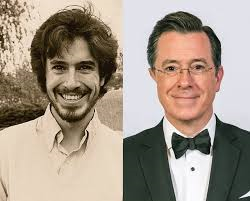
Colbert once explained that both he and his mother became caretakers for one another during this time. Ordinary childhood concerns faded as grief took center stage, leaving a lasting imprint on his emotional development.
Finding Refuge in Imagination and Faith
In the years following the tragedy, Colbert struggled academically and emotionally. He has described a period of disengagement, saying that life felt incomprehensible after losing his father and brothers. During this time, he withdrew inward and found comfort in fantasy literature, particularly the works of J.R.R. Tolkien.
Science fiction and fantasy offered him an emotional refuge—a place where themes of loss, courage, and endurance could be explored safely. Alongside literature, Colbert leaned heavily on his Catholic faith, seeking meaning and understanding in the face of overwhelming grief. This blend of imagination and spirituality would later inform his ability to combine humor with emotional depth.
Discovering Performance as Purpose
Colbert’s interest in theater and performance emerged gradually during his teenage years. Acting and improvisation offered not just an escape, but a sense of direction. He initially enrolled at Hampden-Sydney College in Virginia before transferring to Northwestern University, where he could focus more fully on performance and theater.
College proved to be another emotionally difficult chapter. Colbert has spoken candidly about experiencing deep sadness and physical decline during his freshman year. In a later interview, he described feeling isolated and overwhelmed, forced to sit alone with unresolved grief.
Despite these struggles, his commitment to acting intensified. Performance became both an outlet and a form of healing, laying the groundwork for his future career.

The Turn Toward Comedy
Early on, Colbert envisioned himself primarily as a dramatic actor. Comedy was not his original goal. That perspective shifted after he joined the touring company of Second City, a renowned improvisational theater group.
There, he worked as an understudy for Steve Carell and met collaborators Amy Sedaris and Paul Dinello—creative partners who would play central roles throughout his career. Together, they developed projects such as Exit 57 and later Strangers with Candy, blending sharp satire with absurdist humor.
Second City was a transformative experience, allowing Colbert to refine his improvisational skills, explore character-driven comedy, and develop a distinct comedic voice. This period marked the fusion of his intellect, emotional awareness, and satirical instincts.
Television Success and Satirical Mastery
Colbert’s television career gained momentum with Exit 57, where his collaboration with Sedaris and Dinello showcased his talent for intellectually playful satire. His work caught wider attention when he joined The Daily Show in 1997 as a correspondent.
On the show, Colbert developed a sharp, ironic style of commentary that used humor to dissect politics and media culture. His segments stood out for their intelligence and layered satire, quickly establishing him as a standout performer.
This success led to The Colbert Report in 2005, where he portrayed a fictional conservative pundit—a character designed to parody political commentary itself. The show became a cultural phenomenon, earning multiple awards and redefining political satire for a generation.
Colbert’s ability to entertain while provoking thought set him apart. His influence extended beyond television, including a notable appearance before a U.S. Senate committee in 2007, where he blended humor with civic engagement.

Taking Over Late Night
In 2015, Colbert was named successor to David Letterman as host of The Late Show, marking his arrival at the pinnacle of late-night television. Premiering that September, the show retained traditional elements while offering a more reflective and socially engaged tone.
Unlike his satirical character, Colbert appeared as himself—thoughtful, empathetic, and incisive. His monologues frequently addressed current events, politics, and culture, balancing humor with sincerity.
Under his leadership, The Late Show dominated ratings for nine consecutive seasons. His success translated into significant financial achievement, with an estimated net worth of $75 million, reflecting both popularity and influence.
Family, Health, and Perspective
Away from the spotlight, Colbert has built a stable family life. Married to Evelyn “Evie” McGee-Colbert since 1993, they share three children: Madeleine, Peter, and John. Living in Montclair, New Jersey, Colbert has emphasized the importance of family as a grounding force.
His experiences with loss have shaped his empathy and emotional intelligence. Colbert has spoken openly about grief, stressing the importance of confronting pain rather than suppressing it. Ignoring grief, he has said, allows it to linger and resurface in destructive ways.
Colbert has also faced health challenges, including a ruptured appendix that required emergency surgery and caused severe complications. He has additionally managed benign paroxysmal positional vertigo, a condition that affects balance, through regular therapeutic exercises.
Looking Ahead
Even as The Late Show approaches its scheduled conclusion in May 2026, Colbert’s role in shaping late-night television continues. In 2023, he became an executive producer of After Midnight, hosted by Taylor Tomlinson, allowing him to mentor emerging comedic voices.

This transition reflects Colbert’s long-standing commitment to creative growth and mentorship. By supporting new talent, he helps ensure the continued evolution of comedy and late-night entertainment.
Stephen Colbert’s life and career illustrate resilience, intentionality, and emotional depth. From profound childhood loss to cultural influence, his journey demonstrates how humor, intellect, and empathy can coexist—and how personal tragedy can give rise to lasting creative purpose.