The Childhood Pain That Shaped One of Hollywood’s Most Powerful Stars
Behind the success, the fame, and the unmistakable smile lies a story far more unsettling than most fans ever imagined. The life of this Hollywood icon was forged not just through talent and opportunity, but through fear, conflict, and a deeply rooted childhood trauma that followed him for decades.
Few know that as a young boy, he once wrestled with violent thoughts toward his own father — or that a moment when he was just nine years old became a psychological wound he spent his entire life trying to mend.
A Father Known as “Daddio”
In the early years, life revolved around a man his children did not call “Dad.” He was “Daddio” — a commanding, intimidating presence who ruled the household with rigid discipline and relentless expectations.
Perfection was not encouraged; it was demanded. Simple chores were treated as tests of character. Mistakes were unacceptable.
“Anything less than perfect meant failure,” the actor later recalled. “In his mind, everything was a matter of life or death.”
Although the father worked as a school administrator, his approach to parenting mirrored military order. Discipline, control, and toughness were central values, shaping a home environment defined by fear as much as structure.
Love Mixed With Violence
Punishment could turn physical. Yet the same man who struck fear into his children never missed a recital, a game, or a performance.
“My father was violent,” the actor admitted, “but he was also there for everything. He drank heavily, but he was sober at every premiere of my films.”
This contradiction — cruelty paired with devotion — created emotional confusion that haunted him well into adulthood.
The defining moment came when he was nine years old.
One day, he witnessed his father strike his mother so hard that she fell to the floor, blood in her mouth. Frozen in fear, the child did nothing.
That moment became the core trauma of his life.
“How does a kid live with watching their mother get hit and not stepping in?” he later asked himself. “That shame never leaves you.”
From that day forward, he carried a silent burden — an apology he felt he owed his mother for failing to protect her.
“Everything I’ve done since then,” he said, “has carried that apology with it.”
The Thought He Never Expected
Despite the pain, the bond with his father never fully broke. Love and fear existed side by side.
“He was my hero,” the actor confessed. “And that contradiction shattered my understanding of love.”
Years later, while caring for his father during a terminal illness, he experienced a moment that shocked even himself. Standing at the top of a staircase, anger and resentment surged.
“I realized I could push him — and no one would know,” he admitted.
But he didn’t act on it.
Instead, he chose compassion. He helped his father. He forgave him.
That decision marked a turning point.
“My father’s death started a new chapter in my life,” he said. “One where forgiveness finally became possible — for him and for me.”
Becoming a Different Kind of Father
When he became a parent himself, fear returned — but this time with purpose.
Holding his newborn son, he felt overwhelmed by responsibility. He vowed not to repeat the cycle of control and violence.
“I realized parenting isn’t about domination,” he said. “It’s about creating the environment for a child to become who they already are.”
That philosophy guided how he raised his children — Trey, Jaden, and Willow — choosing encouragement over fear, patience over pressure.
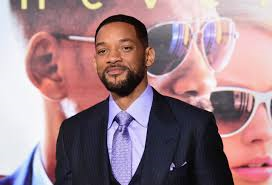
Pain Transformed Into Purpose
The world knows him as a global superstar. His films have earned more than $10 billion worldwide. He became an Academy Award winner for portraying another complex father figure in King Richard, a role that mirrored his own childhood in unexpected ways.
“There’s a certain hardness created by struggle,” he reflected. “But it’s what you do with that hardness that defines you.”
In recent years, deep self-reflection followed one of the most public controversies of his career. After the infamous Oscars incident, he stepped back, confronting parts of himself long buried.
“It felt like a door had been ripped open,” he said. “Parts of me I hadn’t faced before were suddenly visible.”
Though banned from attending the Oscars for a decade, he has continued evolving — musically, creatively, and personally.
At 57, his career remains active, his wealth substantial, and his influence undeniable. But his most meaningful work may be the invisible one: breaking cycles, redefining strength, and choosing healing over bitterness.
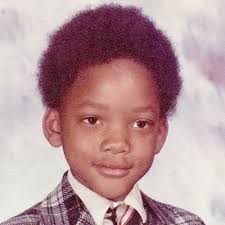
The Man Behind the Legend
The answer to who this story belongs to is Will Smith — a man whose childhood pain shaped his drive, whose trauma fueled his ambition, and whose journey proves that success is often born from survival.
Behind the fame lies a story of resilience, forgiveness, and the courage to become something better than what you were shown.
And that, more than any award, may be his greatest achievement.