“Surviving the Fire That Created a Voice”
James Hetfield’s childhood was marked by isolation, loss, and rules that left little room for comfort. Raised in a deeply strict religious household, he grew up without access to basic medical care — even medicine was forbidden. From an early age, he felt separate from the world around him, like someone watching life from the outside. That sense of alienation deepened when his mother died of cancer after refusing treatment, a loss that shattered him at just sixteen years old.
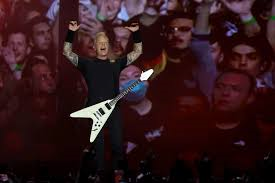
The grief hit hard and stayed buried. James was quiet, socially awkward, and emotionally unequipped to process losing both parents so young. With no framework for mourning and no emotional safety net, he found refuge in the one thing that didn’t abandon him: music. The guitar became his outlet, his therapy, his way of shouting into a world that had taken everything familiar from him. Every aggressive riff and raw lyric was a release valve. Music wasn’t a pastime — it was survival, keeping him from collapsing under the weight of unresolved pain in a home that felt lifeless.
When he helped form Metallica, that pain didn’t disappear — it transformed. He channeled it into something explosive, helping create a sound that was faster, louder, and more confrontational than anything that came before it. As the driving force behind the band, he shaped albums like Master of Puppets, records that would go on to define an entire generation of outsiders. Onstage, Hetfield was unstoppable — commanding, intimidating, and powerful, with a voice that roared like thunder. As Metallica rose from underground clubs to sold-out stadiums worldwide, James stood at the center as both primary songwriter and rhythmic anchor.
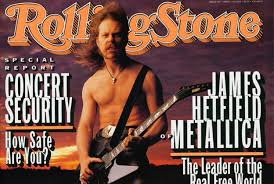
But success didn’t heal him. Even as the Black Album propelled Metallica into global superstardom and songs like Enter Sandman dominated airwaves, the wounds of his past remained open. Fame and money couldn’t replace what he had lost. Instead, alcohol and anger became tools to numb emotions he wasn’t ready to confront, quietly deepening his internal struggle.
By 2001, the damage was impossible to ignore. Years of nonstop touring, emotional repression, and addiction pushed him to a breaking point. He stepped away from Metallica to enter rehabilitation — a decision that shocked fans and fueled fears that the band might not survive. That turbulent period was documented in Some Kind of Monster, which revealed a side of Hetfield the world had never seen: vulnerable, overwhelmed, and deeply human.
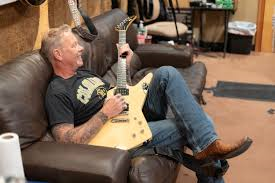
For the first time, he had to face life without substances to lean on. He had to learn how to be present as a husband and father while confronting a temper that had long gone unchecked. The process was painful, public, and humbling. But he didn’t retreat from it. He committed to the unglamorous work of rebuilding himself piece by piece, proving that real strength isn’t about domination or denial — it’s about admitting when you’re broken and choosing to heal.
Today, James Hetfield represents far more than rock stardom. He stands as an example of what it means to survive yourself. Through years of recovery, he has evolved into someone who values self-awareness, discipline, and emotional responsibility over rage and excess. His career now reflects not just longevity, but growth.
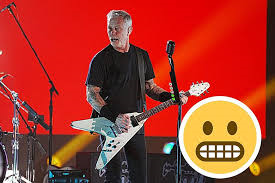
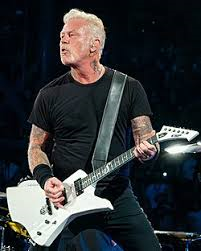
He still tours the world, still plays to massive crowds, but he does so with a grounded sense of gratitude that was absent in his youth. His story resonates with anyone who has felt trapped by their past or defined by pain. It proves that even the heaviest experiences can be reshaped into something meaningful — and that resilience, not perfection, is what truly defines a legend.
James Hetfield’s legacy isn’t only etched into the history of metal music. It’s written in the strength it took to face his demons, stay true to his values, and keep moving forward through the fire.