The Thin Line Between Civilization and Chaos
On May 30, 1431, Joan of Arc—one of the most iconic figures in French history—was captured by the Burgundians, allies of the English, and handed over to English authorities. She was placed before a church court and, at just 19 years old, executed by burning on fabricated charges of heresy. Her death stands as a symbol of medieval injustice, where power, fear, and fanaticism overrode truth and morality.

Centuries later, humanity claims to have progressed beyond such brutality. Modern societies are built on principles of free thought, freedom of expression, justice, equality, and human rights—values considered fundamental to any civilized welfare state. Yet, these ideals have not taken hold everywhere. Instead, echoes of medieval cruelty continue to resurface, creating disturbing precedents that challenge the very foundations of justice, morality, and human rights.
The Constitution of Bangladesh explicitly guarantees equality, justice, and fundamental rights to all citizens. It does not permit discrimination, injustice, or inhumane treatment outside the framework of law. For instance:
-
Article 27 affirms that all citizens are equal before the law and entitled to equal legal protection—forming the cornerstone of justice.
-
Article 31 ensures protection of life, liberty, reputation, and property, stating that no action detrimental to these rights may be taken except in accordance with law, reinforcing Article 27.
-
Article 35 safeguards individuals accused of criminal offenses, prohibiting double punishment for the same crime and ensuring punishment aligns with the law in force at the time of the offense.
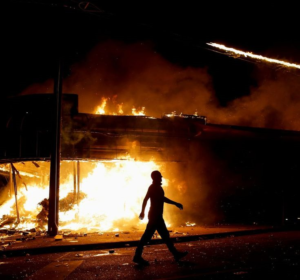
Together, these provisions guarantee that even an accused person has the right to due process, ensuring the innocent are not punished and the guilty are convicted only through lawful procedures. Additionally, Article 102 grants citizens the right to seek justice through the High Court. These constitutional guarantees align with international standards such as Article 10 of the Universal Declaration of Human Rights (UDHR) and Article 14 of the International Covenant on Civil and Political Rights (ICCPR), both of which uphold the right to a fair trial and the rule of law.
Despite these legal protections, Bangladesh has witnessed a troubling rise in mob violence that blatantly violates constitutional rights. Groups are increasingly taking the law into their own hands, attacking individuals or communities based on unverified allegations, often without any evidence. Alarmingly, such violence is disproportionately directed at the minority Hindu Sanatani community.
In Lalmonirhat Sadar Upazila’s Goshala Bazar area, 69-year-old hair stylist Paresh Chandra Sheel and his son Bishnu Chandra Sheel (35) were brutally attacked by a mob over allegations of blasphemy. Even after police rescued them and took them to the local station, the mob surrounded the premises. Later, it emerged that the complainant was not an eyewitness and had merely repeated hearsay. (Source: BBC Bangla)
This was not an isolated case. In 2024, in Khulna, a minor named Utshab Mondal was nearly beaten to death following a blasphemy accusation. Investigations revealed the incident began as a dispute between classmates, where Utshab responded to a derogatory remark about his religion. The other student deleted their own comment, preserved Utshab’s response, and used it to incite mob violence.
Since August, similar incidents have escalated. In Gangachara Upazila of Rangpur, an entire Hindu neighborhood was attacked over alleged blasphemy, leaving homes destroyed. This pattern is not new. During the violent Sharad period of 2021, Durga Puja mandaps were targeted following the so-called “Gada Iqbal” conspiracy, forcing idol immersion to be completed prematurely. In Muradnagar, Cumilla (2020), minority homes were demolished. In Nasirnagar, Brahmanbaria (2016), accusations of religious insult on Facebook led to organized communal attacks, resulting in the destruction of 15 temples and over 100 homes. Despite seven cases being filed, justice has remained elusive for nearly a decade, with most accused released on bail.
Similarly, in Shalla Upazila of Sunamganj (2021), an entire village was devastated, and Jhumon Das was detained for an extended period without trial. These examples are numerous, yet accountability remains absent, and meaningful corrective measures are lacking.
Most recently, in Bhaluka, Mymensingh, garment worker Deepu Chandra Das was beaten to death by a mob over blasphemy allegations. He was reportedly hanged and burned in an act reminiscent of medieval punishment, raising grave concerns that modern brutality may now exceed that of the Middle Ages.
Blasphemy is undeniably a serious offense. Bangladesh’s Penal Code of 1860 and the Cyber Security Ordinance 2025 contain legal provisions to address such crimes. The authority to determine guilt or innocence rests solely with the judiciary, which must act based on evidence and established legal procedures.
However, the growing reliance on mob violence has placed the rule of law, constitutional guarantees, and the vision of a non-discriminatory society in jeopardy. Hatred and hysteria are being cultivated under the guise of “mob justice.” In the Gazipur Metropolitan area, following a staged kidnapping incident involving Muhibullah Miaji, the Khatib of T&T Bazar Jame Mosque and other groups openly incited violence, invoking memories of the 1946 Noakhali riots and genocide-like threats. Chants such as “Catch an ISKCON member, slit their throat” were publicly shouted—yet no decisive action followed.
As a result, violence against Hindus and Sanatanis continues unchecked, culminating in tragedies like the Bhaluka incident. If an individual commits a crime, they must be tried in court, and punishment must follow lawful conviction. No individual or group has the right to take a life based on accusation alone. If mob violence becomes the accepted response, then the legitimacy of Bangladesh’s judiciary itself comes into question.
Where there was once widespread outrage over enforced disappearances and extrajudicial killings, such acts are now occurring openly through mob violence—while perpetrators remain free. This erosion of justice poses a grave threat not only to minority communities, but to the rule of law and humanity itself.