Most People Use a Wrench — Few Know This Trick
For many people, hand tools are something they use occasionally — tightening a bolt, assembling furniture, or fixing a small issue around the house. Because of that, subtle design features often go unnoticed. One example is the open end of a wrench, a detail that looks simple but serves more than one function.
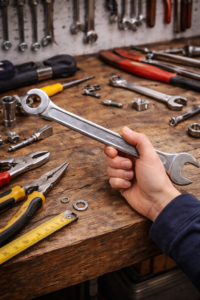
Most beginners assume the open end exists only to grip fasteners in tight spaces where sockets or ring spanners cannot fit. While that is true, experienced mechanics and technicians know it can also be used strategically to increase leverage when additional torque is required.
By inserting the closed end of another wrench over the open end, users effectively extend the handle length. This creates more mechanical advantage, allowing stubborn or corroded bolts to loosen without excessive force. It’s a practical method widely applied in automotive repair, industrial maintenance, and construction environments where specialized extension tools may not be immediately available.
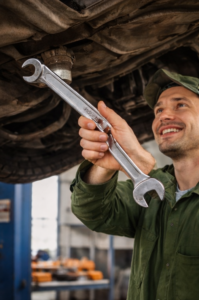
The technique highlights an important principle in tool design and engineering: efficiency often comes from understanding fundamentals rather than relying on brute strength or expensive equipment. Professionals frequently rely on these small insights to save time, reduce physical strain, and minimize equipment wear.
Beyond workshops, this knowledge is useful for homeowners and DIY enthusiasts. Situations where it applies include:
-
Removing seized outdoor hardware
-
Adjusting plumbing fittings
-
Bicycle or vehicle maintenance
-
Furniture assembly and repair
-
Emergency roadside fixes
Understanding proper application is essential. The extension should be positioned securely to prevent slipping, and excessive force should be avoided to protect both tools and fasteners. Safety awareness remains as important as technique.
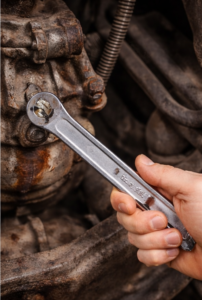
This example reflects a broader lesson in practical literacy. Many everyday tools incorporate multifunctional design elements that remain underutilized simply because users aren’t aware of them. Learning these applications improves efficiency, reduces frustration, and supports safer, more confident problem-solving.
In an era where convenience often means buying new solutions, knowledge itself becomes the most valuable tool. Recognizing how existing equipment can be applied more effectively transforms routine maintenance into informed, strategic action.
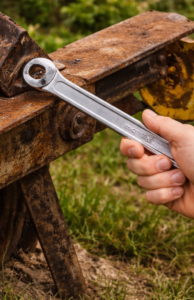
Sometimes expertise isn’t about having more tools —
it’s about understanding the ones already in your hands.