The Hidden Risk Most Drivers Never Notice
Many people grow up with the assumption that danger announces itself loudly. Popular culture reinforces this belief — broken glass, alarms, confrontation, or obvious conflict. We are conditioned to associate noise and chaos with risk, and calm with safety. This mental shortcut provides comfort and works in many situations, but it can also create blind spots.
In reality, risk often appears quietly. It blends into ordinary environments, hiding within everyday routines and objects that seem harmless. Awareness of this subtlety is increasingly recognized in safety research, behavioral psychology, and crime-prevention strategy.
Consider the common experience of parking a vehicle in a nearly empty lot. The setting feels routine — fading sunlight, distant traffic, the smell of fuel in the air. Nothing seems out of place. Drivers lock their doors, retrieve belongings, and step outside without hesitation.
Yet documented incidents show how ordinary moments can contain unexpected vulnerabilities.
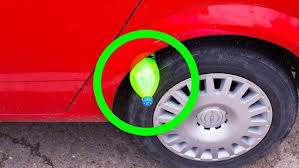
One example frequently cited in safety discussions involves a plastic bottle caught between a tire and the wheel well. On its own, it appears insignificant — merely debris displaced by wind or foot traffic. However, in rare but instructive cases, such objects have been intentionally placed to provoke distraction. The object itself is harmless; the risk lies in the instinctive reaction it triggers.
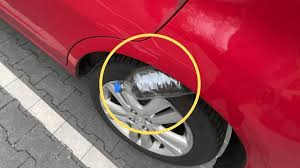
Human behavior relies heavily on pattern recognition and routine. Driving and parking become automatic processes, especially when fatigue reduces conscious focus. When an unfamiliar sound interrupts that routine — the crackle of plastic or the rattle of debris — instinct immediately redirects attention.
Many drivers respond reflexively: stopping, unlocking doors, and stepping out to investigate. In that brief moment, situational awareness shifts away from the surrounding environment. Keys may remain accessible, valuables visible, and doors unsecured. This temporary lapse creates a window of vulnerability.
Behavioral crime prevention research shows that opportunistic theft often exploits timing rather than confrontation. Individuals who understand predictable human reactions may use distraction to their advantage, relying on surprise and inattentiveness rather than aggression. In some documented cases, vehicles or belongings have been taken during these brief interruptions.
Understanding this dynamic is not meant to instill fear, but awareness. Most irregularities encountered while driving are harmless accidents. The goal is mindfulness — recognizing patterns and responding deliberately rather than reflexively.
Several practical habits reduce exposure to distraction-based risks:
Pause before exiting — Take a moment to scan surroundings, noting nearby individuals, vehicles, or unusual activity.
Maintain security basics — Keep doors locked until ready to exit and remove or conceal valuables.
Relocate when necessary — If debris is detected, move to a visible or populated area before addressing it.
Develop situational awareness — Learn to recognize environmental norms and anomalies.
Leverage technology — Cameras, sensors, and alarms provide supplemental awareness and data.
These strategies reflect principles used in personal safety training and risk management frameworks.
Beyond the specific example, the broader lesson concerns human psychology. The startle reflex — a natural protective response — can override deliberate thought, prompting immediate action without assessment. Routine behaviors also reduce attention, placing individuals on “autopilot.” These mechanisms improve efficiency but create openings for unexpected risk.
Conscious practices such as scanning surroundings, verifying conditions, and pausing before reacting counteract these tendencies. Over time, they become habitual safeguards, enhancing both confidence and security.

Environmental design also plays a role. Well-lit spaces, visible activity, and accessible surveillance reduce opportunities for opportunistic crime. Communities, planners, and organizations increasingly emphasize awareness education and infrastructure improvements to support safer environments.
Importantly, awareness does not require anxiety. The objective is balance — remaining present and attentive while maintaining calm. Mindful observation allows everyday activities to remain enjoyable while minimizing vulnerability.
The lesson extends beyond parking lots. Many risks in modern life — traffic incidents, workplace injuries, or property theft — exploit divided attention. Awareness and controlled response reduce these risks across contexts, reinforcing personal autonomy and safety.

Ultimately, safety is built on presence rather than panic. Quiet risks rarely announce themselves dramatically. By recognizing subtle cues and responding thoughtfully, individuals transform routine moments into opportunities for protection and confidence.
The story of a simple object near a tire illustrates a broader truth: preparedness and awareness are powerful safeguards. With mindful habits, everyday life remains ordinary, secure, and predictable — strengthened by informed attention rather than fear.