Trump Moves to Reopen Venezuelan Airspace in Major Shift Toward Diplomatic Reset
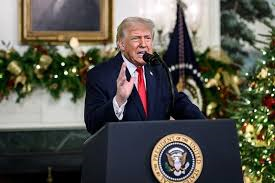
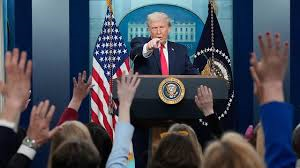
In a move that could reshape relations between Washington and Caracas, President Donald Trump has announced plans to reopen Venezuelan airspace to U.S. commercial and government flights, signaling a dramatic change in America’s long-standing policy toward the South American nation.
For nearly a decade, U.S.–Venezuela relations have been defined by sanctions, airspace restrictions, and diplomatic standoffs. Flights between the two countries were heavily limited as Washington sought to isolate Venezuela’s former socialist government over allegations of corruption, human rights abuses, and election interference. Airlines were forced to reroute or cancel service, businesses suffered, and families were separated by political gridlock.
Now, that chapter appears to be closing.
A Strategic Reset
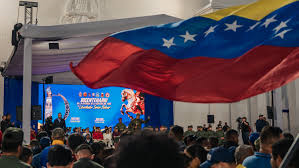
The Trump administration confirmed that the reopening of Venezuelan airspace is part of a broader effort to reset relations with Venezuela’s newly installed acting government, which took power after a transitional agreement between opposition leaders and military officials earlier this year.
Senior White House officials say the U.S. sees an opportunity to re-engage diplomatically and economically — especially as Venezuela seeks to stabilize its collapsing economy and restore international trust.
“This is not an endorsement of the past regime,” one administration official said. “This is about supporting a political transition and giving Venezuela a chance to reintegrate into the global system.”
Allowing U.S. and international airlines to fly freely over and into Venezuelan airspace is seen as one of the fastest ways to restart trade, tourism, humanitarian travel, and business investment.
Why Airspace Matters
Airspace access is more than symbolic. It determines how cargo, medical supplies, aid workers, diplomats, and airlines move across borders. With Venezuelan skies closed to many U.S. carriers, routes became longer, more expensive, and less reliable.
By reopening the airspace, the administration is unlocking billions in potential commerce — from energy contracts to infrastructure investment — while also allowing humanitarian organizations to operate more easily inside the country.
Airlines are already reviewing routes, and aviation regulators expect commercial flights to resume within weeks if the agreement holds.
Energy and Geopolitics at Play
Venezuela sits on the largest proven oil reserves in the world, and U.S. officials have made no secret that energy security is part of the calculation. With global markets under pressure and oil supply unstable in several regions, restoring access to Venezuelan energy is seen as a way to stabilize prices and reduce dependence on adversarial nations.
Trump allies argue this move is about realism, not ideology.
“You can’t ignore a country with that much energy, that many people, and that much regional influence,” one senior adviser said. “Engagement gives America leverage. Isolation never did.”
Critics and Supporters Clash
The decision has drawn mixed reactions in Washington.
Supporters call it bold, pragmatic, and overdue — saying years of sanctions failed to bring meaningful change while only worsening the humanitarian crisis.
Critics warn that reopening relations too quickly could allow corrupt networks to regain influence or weaken accountability for past abuses.
Human rights groups are watching closely, urging that any normalization must be tied to political reform, free elections, and protections for journalists and activists.
A Turning Point for Venezuela
Inside Venezuela, the announcement has been met with cautious optimism. For many citizens, the reopening of airspace means more than flights — it means connection to the outside world, access to medicine, and hope that the country’s long isolation may finally be ending.
After years of economic collapse, hyperinflation, and mass emigration, even small signs of stability feel historic.
What Comes Next
The reopening of airspace is just the first step. Talks are now underway on trade, energy cooperation, debt restructuring, and democratic reforms.
Whether this diplomatic gamble pays off will depend on what Venezuela’s acting government does next — and whether both sides can keep politics from derailing progress.
But one thing is clear: a door that was sealed for years has now been pushed open.
And for the first time in a long while, the skies over Venezuela may soon be busy again. ✈️