The Shiny Mask: A Journey from Silent Trauma to Radical Truth
Julianne Hough has spent much of her life in the public eye embodying brightness, confidence, and boundless energy. Yet the strength behind that image was shaped not by ease, but by early trauma and a culture that demanded composure over confrontation. Born in Orem, Utah, the youngest of five children in a politically active Mormon family, Hough’s childhood was disrupted at an age when safety should have been unquestioned. At just four years old, she was abused by a neighbor — a violation that was never meaningfully addressed. Rather than seeking justice, the response around her was to relocate, reinforcing an unspoken lesson: pain should be avoided, not exposed.

That moment became foundational. Growing up in an environment that valued appearance, optimism, and moral cleanliness, Hough learned to bury distress beneath a polished exterior. The instinct to “pivot” — to move forward without processing what was left behind — became a coping mechanism she would rely on for years. Silence felt safer than truth, a pattern that endured well into adulthood and was not publicly broken until 2024.
A dramatic shift occurred when Hough was sent to London at the age of ten to attend the prestigious Italia Conti Academy of Theatre Arts. Removed from her family and familiar surroundings, she was forced into independence far beyond her years. She navigated the city alone in the early mornings and performed professionally as a sensual ballroom dancer while still emotionally a child. That chapter was defined by isolation and vulnerability, exposing her to emotional and physical mistreatment by adults who took advantage of her circumstances. Still, the same rule applied: adapt, perform, move on.
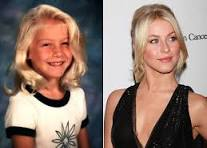
In later reflections, Hough described herself during that time as a deeply distressed child wearing the exterior of a grown professional. She has spoken about the grief of losing her true childhood identity, noting that there are no photographs of her at ten years old as she truly was — free of heavy makeup, costumes, and adult expectations.
Returning to the United States did not bring relief. At the Las Vegas Academy and later at Alta High School, Hough became a target of bullying. Her exceptional talent was often perceived as arrogance, culminating in a particularly painful prom-day prank. These experiences compounded internal struggles with anxiety and depression, even as her career began to accelerate at an extraordinary pace.

Professionally, her ascent was undeniable. She appeared in the Harry Potter franchise, won Dancing with the Stars twice as a competitor, and later returned as a judge. Leading roles in Footloose and Safe Haven established her as a Hollywood fixture. Yet behind the accolades, Hough was quietly enduring chronic pain from endometriosis and navigating the emotional weight of public relationships and breakups. Her work became a place of confidence and control — separate from the unresolved trauma she continued to carry beneath her ever-present positivity.

In 2024, Hough reached a turning point. After decades of silence, she chose to speak openly about her childhood abuse and the emotional consequences of a life built on constant adaptation. That honesty marked the beginning of a deeper healing process, not only for herself but within her family. It allowed her to reconnect with her parents in a more open and vulnerable way, particularly following her divorce.
By 2025, Hough had reshaped her role in the public sphere. As a host and mentor, she placed greater emphasis on emotional awareness, authenticity, and energetic boundaries rather than perfection or presentation. She described her healing as a process of “de-layering” — releasing years of shame, guilt, and protective performance to arrive at a more integrated self.

Today, Julianne Hough’s journey stands as a powerful example of reclamation. Her story shows that true resilience is not found in maintaining a flawless surface, but in the courage to confront buried pain, reclaim one’s narrative, and live fully embodied — honest, exposed, and unapologetically real.