When the Clippers Fell Silent: A Barbershop’s Unspoken Act of Courage
The clippers came alive with a low, steady buzz, filling the small barbershop with a sound that felt louder than it should have been. The young woman sat stiffly in the chair, staring at her reflection under the harsh fluorescent lights. She barely recognized herself anymore. For days — weeks — she had watched her hair thin, strands left behind on her pillow at night and tangled in her brush each morning. Every glance in the mirror had become a reminder of the battle her body was fighting.
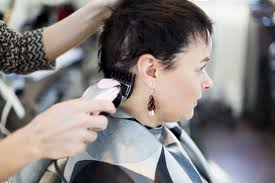
Chemotherapy had taken its toll. Not just on her strength, but on her sense of self.
“I can’t keep doing this,” she had whispered to herself earlier that day, standing in her bedroom with her favorite sweater pulled tight around her. “If this is happening… then I’ll face it. All of it.”
It had taken every ounce of courage she had left to walk into the barbershop — a place filled with men who looked tough at first glance. Tattoos, piercings, stern expressions. But she had known them for years, and she trusted them. Beneath the exterior, there was kindness.
The moment she stepped inside, the usual jokes stopped. The men sensed something was different. She sat down slowly, wrapped her arms around herself, and spoke in a voice that trembled despite her effort to stay calm.
“Guys… my hair is falling out,” she said quietly. “It’s from chemo. I can’t take it anymore. Please… just shave it all off.”
The room fell completely silent.
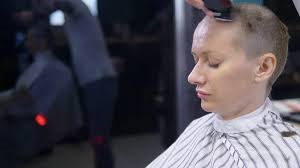
Jake, the barber who had cut her hair for nearly twenty years, didn’t ask questions. He simply nodded, gently turned on the clippers, and began. When the first pass was made, locks of hair slid to the floor like quiet confessions. The cool air touched her scalp, and her breath caught in her chest.
Tears came instantly.
“Oh God…” she sobbed, covering her face with her hands. “My hair… I grew it for so many years…”
Her shoulders shook as she cried — not just for the hair, but for everything it represented. Femininity. Normalcy. Control. Jake rested a steady hand on her shoulder, wanting to comfort her, but no words seemed big enough. Around them, customers looked away, conversations frozen mid-sentence. When the final strands fell, the mirror reflected someone raw and exposed — fragile, yet undeniably real.
Jake knew words alone weren’t enough.
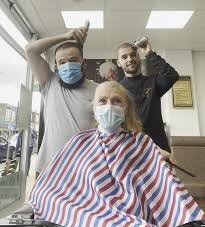
Without saying a single thing, he removed his cap, picked up another pair of clippers, and switched them on. The woman looked up in confusion just as the buzzing cut through his own thick hair. Strands dropped to the floor beside hers.
“Jake… what are you doing?” one of the other barbers asked, stunned.
“Standing with her,” he replied quietly.
One by one, the others followed. Clippers roared together as every man in the shop — young and old, tattooed and clean-cut — shaved his head clean. Hair fell like snow, covering the floor in a sea of color and compassion.
The woman pressed her hands to her mouth, sobbing now not from grief, but from something overwhelming and pure. In the mirror, she no longer saw herself alone. She saw solidarity. She saw strength reflected back at her.
When the clippers finally went silent, Jake met her eyes in the mirror.
“You see?” he said softly. “You’re not alone.”
She laughed through her tears, a sound light and broken like sunlight after a storm. The heavy air lifted, replaced with warmth, quiet smiles, and understanding. As Jake swept the floor, she stood and gently ran her hand over her smooth scalp. The air felt cool — vulnerable, yes — but also freeing.
Outside, sunlight touched her bare head. She closed her eyes and took a deep breath.
That day, it wasn’t just hair that fell to the floor. It was fear. Shame. The weight of hiding.
The barbers didn’t just give her a haircut — they gave her courage, and a reminder that sometimes the most powerful acts of empathy are done without words.