A Father’s Love Stronger Than Blood
I believed I understood every part of the girl I raised. I thought there were no secrets left between us, no pages of her life still hidden from me.
That certainty disappeared on the night of her wedding.
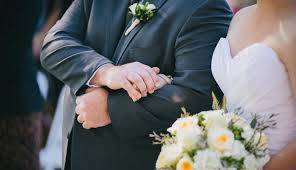
As I stood there, full of pride and peace, convinced my past had finally settled into something whole, a stranger approached and revealed a truth that threatened to undo everything I thought I knew.
My name is Caleb. I am fifty-five years old. And more than three decades ago, my life shattered in a single night.
There was a car accident.
I remember the phone ringing in my quiet house. I answered without fear, without realizing that a life can be split cleanly into two parts—before and after. The voice on the line was steady, professional, gentle in the practiced way people are when they’re delivering news that cannot be softened.
My wife, Mary, and our six-year-old daughter, Emma, were gone.
When the call ended, I stood in my kitchen holding the phone long after the silence returned. I didn’t cry. I didn’t yell. I just stared ahead, unable to connect those words to reality.
What followed wasn’t just quiet—it was emptiness. Meaning drained out of everything. For years, I didn’t live so much as exist. I woke up because mornings came. I went to work because I had to. I returned each night to a house that still carried faint traces of the life I’d lost.
I ate frozen meals without tasting them. I watched television without seeing it.
Friends tried. My sister called every Sunday, asking how I was holding up. I always said the same thing: “I’m fine.” We both knew I wasn’t.
Emma’s drawings stayed taped to the refrigerator long after the paper faded and curled. I couldn’t bring myself to take them down. Removing them felt like erasing her—like admitting she was truly gone.
I never expected to be a father again. That part of my life felt buried with Mary and Emma. I had loved deeply once and failed to protect them. I didn’t believe I could survive another loss.
But life has a way of reaching you when you’re not looking for it.
Years later, on a rainy afternoon, I found myself pulling into the parking lot of an orphanage. I told myself I was just curious. I wasn’t there to replace anyone. I simply wanted to know if I was still capable of caring.
Inside, the building smelled of disinfectant and crayons. Children’s voices echoed through the halls—joy in one direction, tears in another. A caseworker named Deirdre met with me. She was honest and direct, careful not to romanticize anything.
As we walked past a large window overlooking a play area, I saw her.
She wasn’t running or shouting like the others. She sat quietly in a wheelchair, a notebook resting in her lap. Her hair was neatly tied back, her expression far too composed for someone so young.
“That’s Lily,” Deirdre said. “She’s five. She’s been here a long time.”
I asked about the wheelchair.
“Car accident,” she explained. “Her father died. She has an incomplete spinal cord injury. Therapy may help, but nothing is certain.”
“And her mother?”
“She gave up her rights. Said she couldn’t handle the grief—or the medical needs.”
Lily must have sensed us watching, because she turned and looked directly at me. She didn’t smile or wave. She simply watched—like someone waiting to see if another door was about to close.
Something inside me broke open.
I didn’t see limitations or diagnoses. I saw a child who had been abandoned and was still hoping someone might stay. There was something in her eyes that reminded me of Emma—the same quiet seriousness.
Deirdre told me no one wanted to adopt her.
I didn’t need time to think. I asked to begin the adoption process that day.
It took months. Interviews. Home visits. Background checks. I visited Lily often. We talked about books and animals. She showed me her drawings. She loved owls because, as she said, “They see everything.”
When I finally brought her home, she arrived with almost nothing—a worn backpack, a one-eyed stuffed owl, and a notebook filled with sketches.
She explored the house silently, watching me closely, waiting for me to disappear.
One night, while I was folding laundry, she rolled into the room and asked, “Dad, can I have more juice?”
I dropped the towel. That single word changed my life.
From then on, it was just us. Therapy appointments became routine. I celebrated every victory—the first time she stood for a few seconds, the first steps with braces. She worked harder than anyone I’d ever known.
School was difficult at times. Some children didn’t understand her. Some teachers underestimated her. Lily learned early how to advocate for herself. She hated being pitied. She refused to be fragile.
Years passed.
She grew into a brilliant, determined, compassionate woman. She loved science and dreamed of studying biology. One summer, she worked at a wildlife rehabilitation center and helped care for an injured barn owl. She cried when it was released back into the wild.
At twenty-five, she met Ethan in college. He was steady, kind, and patient. Lily tested him in her quiet way. He earned her trust.
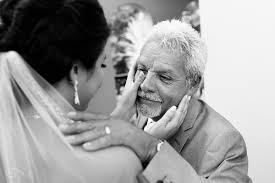
When she told me they were engaged, I nearly choked on my breakfast.
Their wedding was small and beautiful. Lily wore a satin dress that seemed made just for her. White lilies and soft lights filled the room.
As I watched her dance, surrounded by people who had stayed, I noticed a woman standing near the exit.
She didn’t belong there. She watched Lily like she was committing her to memory. When our eyes met, she hesitated—then walked toward me.
“I need to speak with you,” she said. “You don’t know what your daughter has been keeping from you. I’m her biological mother.”
Everything tilted.
She told me Lily had found her years earlier. Asked questions. Sought answers. Then walked away.
“She deserves to know who stayed,” I told the woman. “And who didn’t.”
She left quietly.
Later that night, Lily and I stood beneath the open sky.
“She came, didn’t she?” Lily asked.
“Yes.”
“I needed to meet her,” she said. “But I also needed to leave.”
I took her hand. “You are my daughter. Because we chose each other.”
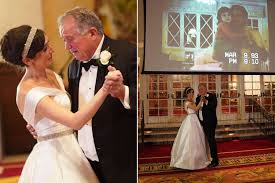
She smiled through tears. “Thank you for choosing me.”
As I watched her dance again that night, I finally understood something it took me decades to learn.
Family isn’t defined by blood.
It’s defined by who stays when everything falls apart—and chooses to stay again the next day.