The Phone Call That Made a Father Drop Everything
Jeremiah’s hands tightened around the steering wheel as his heart raced, the urgency pounding through him with every breath. There was no room for doubt, no space for hesitation. Something was wrong—deeply wrong.
Minutes earlier, his phone had vibrated with a call he would never forget. His daughter’s voice came through in a hushed, trembling whisper. She didn’t need to explain much. Fear carried its own language, and Jeremiah understood it instantly.
His focus narrowed to one unshakable purpose: reach her, protect her, bring her home safe.
Without delay, he contacted the men he trusted most—former Marines who had stood beside him in far harsher situations. When he told them he needed help, they didn’t ask questions. They recognized the urgency in his voice, the same tone used in moments where seconds mattered.
As the city rushed past, Jeremiah’s thoughts replayed every warning sign he had once brushed aside. The pauses in Emily’s speech. The unease in her eyes. The discomfort she tried to downplay whenever she mentioned Shane. Those memories now formed a pattern he could no longer ignore.
Years of military training collided with the raw instinct of a father. This was no longer about assumptions or benefit of the doubt. This was about action.
When they reached the quiet neighborhood, Jeremiah’s instincts took over. The headlights cut through the dark as the group moved with practiced precision, spreading out, watching, listening. The street was calm—too calm. A television murmured somewhere inside the house. A dog barked faintly in the distance.
Every detail felt amplified.
Jeremiah remembered all the conversations he’d had with Emily about trusting her instincts, about speaking up when something felt off. The fear in her voice tonight told him those lessons had met a situation beyond her control.
The house stood before them, ordinary on the outside, but Jeremiah knew better. With a single signal, his team took position. Then he knocked.
The laughter inside stopped abruptly.

The door opened to reveal Shane—unsteady, eyes unfocused, the smell of alcohol unmistakable. His attempt at arrogance crumbled the moment he realized Jeremiah wasn’t alone.
“I’m here for my daughter,” Jeremiah said evenly. “Where is she?”
Shane tried to brush it off, muttering excuses, but his confidence faltered. Jeremiah stepped forward and called out, his voice firm yet calming.
“Emily. It’s Dad.”
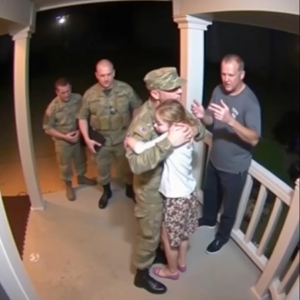
At the top of the stairs, she appeared—pale, shaken, but visibly relieved. She ran to him, and he wrapped her in his arms, holding her as if letting go was no longer an option.
Jeremiah’s team quietly ensured the situation remained contained. There was no shouting, no chaos—just controlled resolve.
As they left the house, Jeremiah felt the weight of what could have happened. Inside the car, Emily trembled as the adrenaline faded. He held her close, speaking softly, promising that she was safe now.
“I knew you’d come,” she whispered.
The drive home was quiet. Jeremiah’s mind moved ahead, already planning the conversations and changes that needed to happen. This wasn’t a single incident—it was a warning.
At the apartment, Emily’s mother met them, relief washing over her face as she took in the sight of her daughter safe in Jeremiah’s arms. That night, the three of them talked openly. Emily finally shared the moments she’d been afraid to mention before—the subtle shifts in behavior, the discomfort she couldn’t name at the time.

Jeremiah listened carefully, validating every word. Together, they created a plan focused on safety, communication, and prevention.
In the days that followed, he took further steps—coordinating with school staff, ensuring emotional support, reinforcing boundaries, and making practical adjustments at home. Not out of fear, but out of responsibility.
Slowly, Emily began to heal. Her laughter returned. Her confidence grew. And the bond between father and daughter strengthened in ways neither had anticipated.
Jeremiah understood now more than ever that parenting wasn’t only about guidance—it was about vigilance. About noticing the quiet signs. About acting when something didn’t feel right.
That night became a turning point, a reminder that love sometimes demands decisive action.
As Jeremiah watched his daughter sleep peacefully weeks later, he felt a calm settle over him. He knew challenges would come again. But the foundation of trust, protection, and communication had been reinforced.
And he would always be ready.
Because when it came to his child’s safety, there would never be hesitation—only action.