A Shadow in the Snow Has Scientists Rethinking Everything
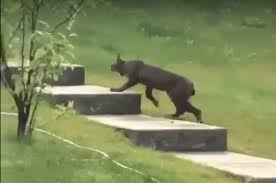
For centuries, the Canada lynx has embodied the spirit of the northern wilderness, easily identified by its tufted ears, oversized paws built for snow, and pale coat that blends seamlessly into frozen forests. That sense of familiarity is precisely why a recent discovery left scientists and wildlife enthusiasts astonished. Researchers in Canada recorded the first known mobile phone footage of a melanistic Canada lynx—an individual whose unusually dark fur defied everything previously documented about the species. Gliding silently through the trees, the lynx appeared almost ghostlike, forcing experts to reconsider assumptions about an animal long thought to be fully understood.
Under normal circumstances, Canada lynx display light gray or reddish-brown coats, coloration that provides critical camouflage in snowy environments where stealth is essential for hunting and survival. This newly documented lynx, however, exhibited melanism—a rare genetic condition that results in excess pigmentation. While melanism is well known in certain species, particularly large cats in warmer regions, it had never before been officially observed in a Canada lynx. The unexpected sighting immediately sparked questions about unseen genetic diversity within the species and raised the possibility that other rare traits may have gone unnoticed in remote wilderness areas for years.

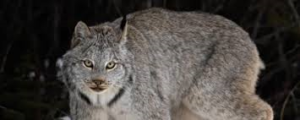
What makes the finding even more compelling is the apparent contradiction it presents. Dark fur in a snow-dominated habitat would seemingly place an animal at a disadvantage, making it more visible to prey and potential threats. Yet the melanistic lynx appeared strong, alert, and fully capable within its environment. This has led researchers to wonder whether the animal has adapted alternative survival strategies, or whether environmental shifts could be influencing the viability of such traits. Some scientists cautiously suggest that changing climates and habitats may play a role in allowing rare genetic variations to persist, though they emphasize that much more research is required.

Beyond its scientific significance, the footage captured widespread public fascination because it delivered something increasingly rare: a genuine moment of surprise in the natural world. Even species studied for generations can still challenge expectations, reminding us how much remains unknown. The melanistic Canada lynx has become a quiet symbol of nature’s hidden complexity and a powerful reminder of why conservation matters—not just to protect what we already recognize, but to preserve the mysteries that still exist. In an era of shrinking wilderness, this rare sighting proves that nature continues to hold secrets worth safeguarding.