Trump Says U.S. Will Temporarily Oversee Venezuela Until “Proper Transition” Takes Place
Former President Donald Trump said the United States would take temporary control of Venezuela, stressing that any American oversight would remain in place only until what he described as a “proper transition” could be completed.
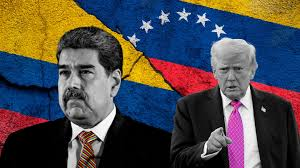
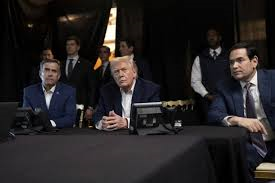
Speaking from his Mar-a-Lago residence in Florida, Trump defended what he characterized as a U.S. military operation carried out on Saturday—an operation he claimed resulted in the capture of Venezuelan President Nicolás Maduro and his wife, Cilia Flores. Trump framed the intervention as limited in scope and purpose, emphasizing that the U.S. presence was intended to stabilize the situation rather than establish long-term control.
“We’re there now, but we’re going to stay until such time as the proper transition can take place,” Trump told reporters. He added that during this interim period, the United States would effectively manage conditions on the ground, arguing that American involvement was necessary to prevent chaos and ensure order.
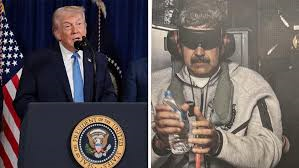
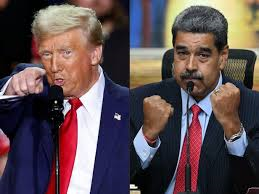
Trump described the sequence of events as fast-moving and intense. Earlier in the day, reports had surfaced of explosions in Caracas, Venezuela’s capital, though details were still emerging. According to Trump, the full scale of the operation only became clear later, when he publicly stated that Maduro and Flores had been taken into custody as part of the mission.
In a subsequent interview on Fox & Friends, Trump claimed the detained Venezuelan leaders were being transported by boat to New York, where they would stand trial. He did not explain under what legal authority such proceedings would occur, nor did he provide independent confirmation of the claim. Still, he presented the move as a culmination of years of U.S. opposition to Maduro’s leadership.
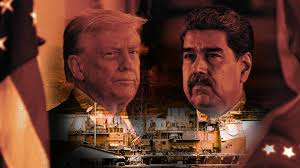
Trump repeatedly emphasized the complexity of the operation, saying he followed it closely as it unfolded. “I watched it like I was watching a television show,” he said, highlighting what he described as the precision and coordination involved. He also stated that while some U.S. personnel were injured, no American lives were lost. According to Trump, the absence of fatalities was remarkable given the scale of the action he outlined and served as proof of careful planning.
Defending the decision to intervene, Trump tied the operation to broader national security objectives, particularly drug trafficking. He argued that previous administrations had failed to address the issue effectively and claimed his administration had made significant progress in stopping drugs from entering the United States. While acknowledging that critics might question the legality or constitutionality of the move, Trump dismissed those concerns as routine political attacks, insisting the results justified the action.
Trump also focused heavily on Venezuela’s oil industry, which holds some of the largest proven reserves in the world. He said U.S. oil companies would be permitted to operate in the country, describing Venezuela’s energy infrastructure as severely damaged and in need of major investment. According to him, American companies would invest billions of dollars to rebuild the oil sector, presenting the arrangement as beneficial both for Venezuela’s economy and for U.S. businesses.
In addition, Trump warned that the U.S. military was prepared to escalate if necessary. He said a second, larger operation could be launched if security conditions deteriorated, emphasizing that the United States would not risk losing control after what he portrayed as a major effort.
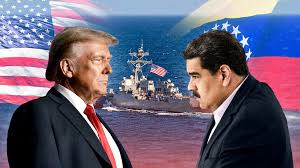
Addressing international considerations, Trump commented on China’s interests in Venezuelan oil. He said he did not expect significant conflict, citing his relationship with Chinese President Xi Jinping. According to Trump, China would continue to have access to oil, but the United States would not allow any foreign power to exert destabilizing control during the transition period.
Although Trump did not outline a detailed plan for governance or regime change, he noted that Venezuela has a sitting vice president and suggested existing political structures could play a role during the transition. He also issued a warning to individuals and institutions that might continue supporting Maduro, saying their future would be “really bad” if they remained loyal. At the same time, he suggested that those who shifted their allegiance could face a different outcome, claiming many had already done so due to what he described as declining support for Maduro.
Taken together, Trump’s remarks laid out his version of events and his vision for Venezuela’s immediate future. However, many elements of his account relied solely on his own statements and had not been independently verified.
In the hours following his comments, debate quickly emerged over the political, legal, and international consequences of what Trump described as a decisive intervention. While he expressed confidence in the operation and repeatedly praised its execution, he did not provide detailed documentation, timelines, or external confirmation to support many of his claims.
Much of the discussion therefore centered not on confirmed developments in Venezuela, but on the implications of Trump’s statements themselves. His repeated emphasis on a “transition” echoed language commonly used in international diplomacy, yet he offered no clear timeline, governance framework, or explanation of how Venezuelan institutions would function during this period. As a result, significant questions remain about how such a transition would unfold and what it would ultimately mean for Venezuela’s future.