Doctors Said His Son Was Brain-Dead. A Father Refused to Believe Them.
In January 2015, a quiet hospital room in Texas became the epicenter of an extraordinary and unsettling ordeal—one that blurred the lines between desperation and defiance, love and law. George Pickering II found himself facing what every parent fears most: doctors had declared that his adult son was beyond saving. According to medical evaluations, the young man met the criteria for brain death, and hospital staff had begun preparing for the next irreversible step—organ donation.
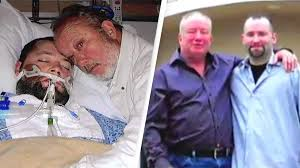
To the medical team, the decision followed established protocols. Brain activity appeared absent. Time was critical. Forms were being signed, procedures discussed, and the machinery of modern medicine moved forward with clinical certainty. To them, the case was nearing its conclusion.
To Pickering, it felt anything but final.
Standing at his son’s bedside, he believed something was being overlooked. Charts and tests told one story, but instinct told him another. He could not reconcile the idea that life was already gone while his son lay before him. Refusing to accept what he felt was a premature judgment, Pickering made a decision that would shock everyone involved.
He pulled out a handgun.
Positioning himself between his son and the medical staff, Pickering demanded that doctors stop. The hospital floor was quickly locked down. Patients and staff were evacuated. Police units arrived, followed by SWAT teams, rifles raised and trained on the room. What had begun as a medical decision had turned into a full-scale hostage standoff inside a place meant for healing.
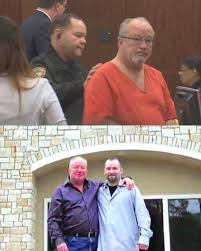
Negotiators attempted to calm him, urging him to lower the weapon and trust the professionals. But Pickering was not acting out of malice or anger—he was driven by fear, love, and the overwhelming sense that time was being stolen from his child. Inside that room, seconds mattered more than anyone realized.
Then, in the midst of the standoff, something unexpected happened.
Pickering noticed a small movement. A faint response. A subtle squeeze of his hand. It was brief, but it was real—and it shattered the certainty that had defined the situation moments earlier. He insisted the doctors look again.
Medical staff paused. Weapons slowly lowered. New tests were ordered.
The results stunned everyone.
The original diagnosis was wrong. The young man was not brain-dead. He still had neurological activity. Life had not slipped away—it had been nearly taken.
The trajectory of the story split in two starkly different directions.
Pickering’s son recovered. Over time, he regained strength and was eventually discharged from the hospital, alive because a final decision had been delayed just long enough to uncover the truth.

Pickering himself was not spared consequences.
Despite saving his son’s life, he was arrested and later sentenced to prison for aggravated assault related to the armed standoff. The law could not ignore the danger his actions posed, even if the outcome had been extraordinary.
The case remains one of the most haunting examples of how thin the line can be between tragedy and miracle. It forces uncomfortable questions to the surface: How absolute is medical certainty? How much should families trust their instincts when decisions are irreversible? And what happens when love drives someone to cross a line no parent should ever face?
Years later, the story still resonates—not because it offers easy answers, but because it reveals how close life and death can exist, separated sometimes by a moment no one thought mattered anymore.