Republican-Controlled House Passes Contentious Bill in 216–211 Vote
On Wednesday, the U.S. House of Representatives narrowly passed a controversial piece of legislation that would make gender-affirming medical care for minors a federal crime. The bill, which targets procedures such as hormone therapy and certain surgeries, would impose serious criminal penalties on healthcare providers who offer such treatments to individuals under 18.
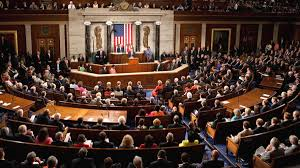
The legislation, known as the Protect Children’s Innocence Act, passed largely along party lines by a vote of 216 to 211, marking one of the most divisive congressional actions on transgender healthcare in recent years. Its approval has sparked intense national debate, drawing strong opposition from civil rights organizations, medical experts, and LGBTQ+ advocates, while being applauded by conservative lawmakers who argue for stricter federal limits on gender-affirming care.
Although the House vote represents a significant step forward for the bill, its future in the Senate remains uncertain, as passage would require bipartisan support to overcome procedural hurdles.
What the Bill Would Do

If enacted, the Protect Children’s Innocence Act would establish a new federal felony for providing gender-affirming medical care to minors. The bill applies to doctors, nurses, and any individual who knowingly performs medical procedures or prescribes medications intended to alter a minor’s physical characteristics to match a gender different from their sex at birth.
Convictions under the bill could result in substantial fines, prison sentences of up to 10 years, or both.
The legislation specifically targets:
-
Puberty blockers used to delay pubertal development
-
Hormone therapies such as estrogen or testosterone
-
Surgeries or medical procedures intended to alter sex-related physical traits
The bill includes narrow exceptions, primarily for rare intersex conditions or medically necessary interventions unrelated to gender identity, provided they are certified by a physician.
Importantly, the legislation does not criminalize minors who receive gender-affirming care. Instead, it places legal responsibility solely on providers and facilitators of the treatments.
The bill also modifies existing federal law related to female genital mutilation, expanding definitions of prohibited practices while reaffirming that minors who undergo such procedures cannot be prosecuted.
Political Background and Vote Breakdown
The measure was introduced by Republican Representative Marjorie Taylor Greene of Georgia, a longtime critic of gender-affirming care for minors. After years of attempting to bring the proposal to the House floor, Greene secured a vote by agreeing to support the National Defense Authorization Act, a critical defense bill, in exchange for leadership backing.
The final vote reflected the chamber’s narrow margins. Nearly all Republicans supported the bill, while most Democrats opposed it. Three Democrats—Henry Cuellar and Vicente Gonzalez of Texas, and Don Davis of North Carolina—voted in favor. Four Republicans—Gabe Evans of Colorado, Brian Fitzpatrick of Pennsylvania, Mike Lawler of New York, and Mike Kennedy of Utah—voted against it.
The outcome highlights the influence of the party’s most conservative faction, which has prioritized national restrictions on gender-affirming care.
Supporters’ Arguments
Supporters of the bill argue that federal intervention is necessary to protect children from what they describe as irreversible medical decisions. They contend that minors lack the capacity to consent to treatments with long-term physical consequences and accuse parts of the medical system of promoting such care prematurely or for ideological reasons.
During floor debate, Rep. Greene framed the bill as fulfilling campaign promises and described it as a moral obligation to protect children. She cited examples of minors undergoing procedures such as breast reduction surgery as justification for a nationwide prohibition.
Other supporters echoed these views, asserting that gender-affirming treatments for minors are not lifesaving and should be restricted in favor of safeguarding physical development.

Opposition and Criticism
Opponents argue the bill represents an unprecedented federal intrusion into private medical decision-making. Democrats, civil rights groups, and major medical organizations warn that the legislation would undermine parental authority, disrupt doctor-patient relationships, and remove evidence-based healthcare options for transgender youth.
Medical associations including the American Medical Association, American Academy of Pediatrics, and American Psychological Association generally support gender-affirming care when provided as part of individualized treatment plans determined by medical professionals in consultation with patients and families.
Critics warn that restricting access to such care could worsen mental health outcomes and increase risks for vulnerable adolescents.
Representative Jamie Raskin of Maryland questioned whether lawmakers should override parental judgment in deeply personal healthcare decisions. Representative Mark Takano of California noted that the surgeries cited by supporters are extremely rare and argued that the bill’s broader effect would be to ban widely used medications.
Representative Sarah McBride of Delaware, the first openly transgender member of Congress, criticized what she described as disproportionate political focus on transgender Americans, who represent a small fraction of the population.
Civil liberties groups, including the American Civil Liberties Union, have vowed to challenge the bill in court, calling it unconstitutional and discriminatory. The ACLU also raised concerns that the legislation targets transgender youth while allowing certain non-consensual surgeries on intersex infants.
Related Legislation and Broader Context
In addition to this bill, House Republicans are advancing a separate measure that would prohibit Medicaid coverage for gender-affirming care for minors, which critics say would disproportionately impact low-income families. That proposal is expected to come up for a vote later this week.
The House action fits into a broader national trend. More than two dozen states have enacted laws restricting gender-affirming care for minors, with penalties varying widely. Some states now classify the provision of puberty blockers or hormone therapy to minors as a felony.
In 2025, the U.S. Supreme Court upheld a Tennessee law restricting gender-affirming care for minors, strengthening the legal foundation for similar measures. At the federal level, regulatory proposals affecting Medicare and Medicaid coverage are also under consideration, potentially reshaping healthcare practices nationwide.
What Comes Next
Despite clearing the House, the bill faces steep odds in the Senate, where a 60-vote threshold makes passage unlikely without major concessions or bipartisan support.

Regardless of whether it becomes law, the Protect Children’s Innocence Act has already become a major flashpoint in the national debate over transgender rights, healthcare policy, and the role of government in family and medical decisions. Its passage underscores the deep political and cultural divisions shaping the conversation around LGBTQ+ issues in the United States.