“I Found This in My Grandfather’s Garage… and It Wasn’t What I Expected”
I found it on the highest shelf of my grandfather’s garage, tucked behind boxes no one had touched in years. A heavy brass device with a handle, a pressure valve, and a strange nozzle on top. It looked like something between a lantern and a machine. Dust coated it so thick it looked fossilized.
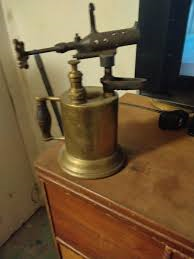
Written in pencil on the shelf above it were three words:
“DO NOT USE ALONE.”
My grandfather had been a mechanic, but this didn’t match any tool I’d ever seen. It wasn’t for fuel, water, or air. When I picked it up, it hummed faintly, as if something inside was still alive.
Later that night, I found the truth in his old workshop journals.
The device was called a Temporal Compression Canister.
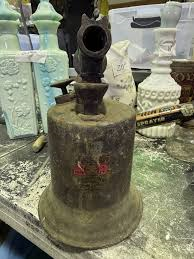
He hadn’t invented it — he had salvaged it during his years working as a contractor on classified government sites in the 1960s. According to his notes, the canister was designed to store kinetic time — moments of motion that could be released all at once.
Not energy.
Not steam.
Time that had been captured while things were moving.
When the valve was turned, the device could briefly release that stored motion, forcing objects to repeat a split second of their past movement — even if they were now still.
That’s why the screw had moved.
It had once rolled.
The canister remembered.
My grandfather used it for one reason only: to save lives.
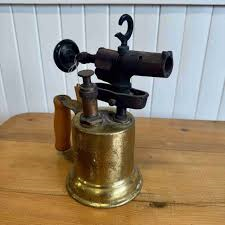
In the 1970s, he was trapped inside a collapsed workshop during an explosion. With seconds before the roof caved in, he activated the canister and forced the falling beam to replay its previous position — just long enough for him to escape.
He wrote:
“It doesn’t stop time. It replays it. And it doesn’t care what it brings back.”
Over the years, he used it to:
-
Pull people away from falling objects
-
Reverse deadly impacts
-
Rewind the final moments of small mechanical failures
But every use weakened its containment.
Because it wasn’t just storing movement.
It was storing everything that moved when it was active.
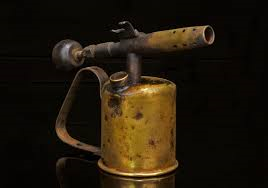
Including people.
His final journal entry was the most disturbing:
“I think something is still inside it. Something from 1983. It tries to come back when I turn the valve.”
I now understand why he hid it.
This wasn’t a tool.
It was a time trap.
And it was still humming.