“A One-Word Message That Left the World Guessing”
In an institution defined by centuries of tradition, careful language, and symbolic gestures, it only takes a single unexpected moment to capture global attention.
The papacy is built on history, where every phrase is weighed and even the smallest pause can become meaningful. In that setting, imagine a striking moment: just days after being elected, a fictional pope—Pope Leo XIV—gave a response so short and deliberate that it instantly made headlines around the world.
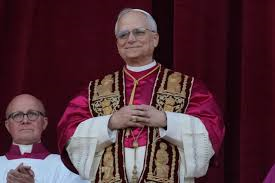
A Press Conference and One Powerful Word
During a Vatican press briefing watched closely by international media, Pope Leo XIV was asked a question many in the United States were waiting for: “Do you have a message for America?”
The imagined Chicago-born pope, known for his background in social service and dialogue, paused thoughtfully. Then he smiled gently and replied with just one word:
“Many.”
He followed it with a traditional blessing and moved on as if nothing unusual had happened. Yet that single word quickly became the focus of worldwide attention.
Within minutes, the clip spread online, prompting discussion, interpretation, and debate across social platforms and news outlets everywhere.
A Wave of Global Reaction
In a world filled with long speeches and carefully crafted statements, Pope Leo XIV’s one-word reply felt refreshingly bold. Some viewed it as an example of wisdom and restraint, while others saw it as an invitation to think rather than be told what to believe.
Commentators immediately began exploring what “many” could mean. For some, it pointed to America’s many strengths—its influence, its economy, and its role on the global stage. For others, it hinted at the country’s many struggles, from social challenges to moral responsibilities.
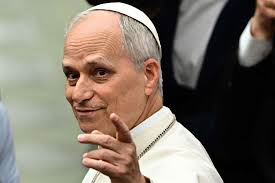
The Meaning Behind “Many”
The brilliance of the response lay in its openness. By saying so little, Pope Leo XIV created space for reflection. The word was neither praise nor criticism—it encouraged people to think about the United States in all its complexity.
Those familiar with the pope’s imagined background noted that he had always promoted compassion, responsibility, and dialogue. That made the word feel purposeful, not evasive. It invited people to consider global ethics, leadership, and the shared human experience.
The Fictional Pope’s Background
In this imagined story, Pope Leo XIV had spent decades working in education, humanitarian causes, and interfaith cooperation. His experience taught him that every word matters.
So when he used only one word to describe a nation as complex as the United States, it wasn’t random—it was intentional. He showed that sometimes reducing a message to its simplest form can make it more powerful.
The Papacy in the Digital Era
The moment resonated even more because of today’s fast-moving digital world. A single word can circle the globe in seconds, reaching millions.
“Many” became a spark for conversation. Social media users, journalists, and religious scholars all offered interpretations, turning the moment into a worldwide discussion. It demonstrated how even ancient institutions can connect with modern audiences through simplicity.
The Strength of Saying Less
This imagined exchange highlights a timeless truth: carefully chosen words can carry immense power. In a time when leaders often say too much, a brief statement can cut through the noise and invite deeper thought.
By keeping his response short, Pope Leo XIV encouraged people to engage, reflect, and form their own understanding rather than being handed a fixed message.

Leadership Through Intent
The single-word reply also reveals something about leadership. Influence isn’t about how much someone says—it’s about how meaningful their words are. A thoughtful leader can inspire more reflection with one sentence than another might with an entire speech.
In this case, “Many” became a mirror, reflecting both the hopes and the challenges people associate with the United States.
What This Moment Teaches
This fictional scenario offers several lessons:
-
Fewer words can be more powerful than many.
-
Ambiguity can encourage meaningful discussion.
-
Simplicity works especially well in a digital world.
-
Thoughtful communication creates lasting impact.
A Broader Message
Although this moment is imaginary, it shows how modern leaders—religious or otherwise—can communicate in an age of instant global connection. A single word, when chosen carefully, can spark debate, inspire reflection, and cross cultural boundaries.
Final Thoughts
The imagined moment of Pope Leo XIV answering with just one word reminds us that precision and restraint can be just as powerful as long speeches.
In a world where every word can be instantly shared and analyzed, sometimes the quietest response carries the greatest meaning. It leaves room for dialogue, reflection, and connection—proving that even one word can change the global conversation.