Trump Won’t Attend Super Bowl 60—and Here’s Why
President Donald J. Trump has confirmed that he will not attend this year’s Super Bowl, a notable shift from his highly visible appearance at the game last season. In a recent interview with the New York Post, the 79-year-old president explained his reasoning and used the opportunity to sharply criticize the event’s entertainment lineup.
Super Bowl 60 is scheduled for Sunday, February 8, 2026, and will take place at Levi’s Stadium in Santa Clara, California, located in the San Francisco Bay Area. The West Coast venue places the game far from Washington, D.C., where Trump currently resides, as well as from Florida, where much of his political base is centered.
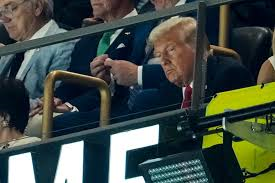
Trump’s decision marks a contrast to last year’s Super Bowl in New Orleans, where he made history as the first sitting U.S. president to attend the championship game in person.
Distance and Logistics Take Center Stage
According to Trump, geography and travel logistics played the largest role in his decision. During the interview, he emphasized that the distance to California and the time required to travel were significant factors. While he did not rule out attending future Super Bowls, he suggested that proximity would be key.
“It’s just too far away,” Trump said, adding that he would consider attending if the location were closer. He also remarked that his presence at the Super Bowl has generally been welcomed, but noted that the travel commitment this year was impractical.
While logistical concerns are common for presidents attending large public events, Trump’s comments also made clear that other issues—particularly the entertainment choices—factored into the conversation.
Criticism of the Entertainment Lineup
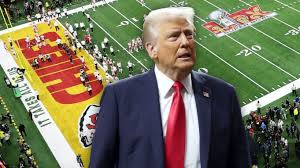
Beyond travel concerns, Trump openly criticized the performers selected for Super Bowl 60, singling out Bad Bunny and Green Day.
Bad Bunny, the Puerto Rican artist set to headline the halftime show, is among the most streamed musicians globally. Known for blending Latin trap and reggaeton with socially conscious themes, he has been outspoken on immigration and social justice issues. His public positions have frequently clashed with conservative viewpoints, including those held by Trump and many of his supporters.
Green Day, the veteran rock band scheduled to perform during the opening ceremony, has a long history of political expression. Frontman Billie Joe Armstrong has repeatedly criticized Trump in the past, and the band has altered lyrics in live performances to reflect contemporary political issues.
“Anti-Them”: A Blunt Assessment
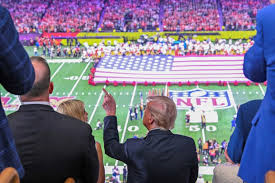
Trump’s strongest remarks came when he addressed the performers directly. Asked about Bad Bunny and Green Day, he responded, “I’m anti-them. I think it’s a terrible choice. All it does is sow hatred. Terrible.”
The phrase quickly circulated online, drawing attention for its bluntness and for signaling more than simple disagreement with the lineup—it conveyed an outright rejection of the artists themselves.
Although Trump reiterated that the performers were not the main reason he chose not to attend the game, his comments made clear that he views the entertainment selections unfavorably.
Cultural and Political Context
The debate surrounding the Super Bowl performers extends beyond music, reflecting broader political and cultural divisions in the United States. High-profile artists increasingly use their platforms to engage in social and political commentary, making their inclusion in major events like the Super Bowl a focal point for public debate.
Despite the controversy, NFL leadership has defended the lineup. Commissioner Roger Goodell and league officials emphasized that performers such as Bad Bunny and Green Day attract diverse audiences and reflect the global reach of the Super Bowl.
Fan reactions have been mixed. Supporters of the artists welcomed the selections as representative of modern culture and broad appeal, while some conservative commentators echoed Trump’s criticism. The differing responses highlight how deeply entertainment and politics have become intertwined.
A Shift From Last Year
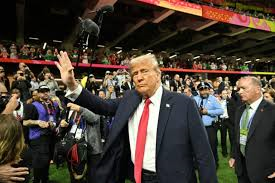
Trump’s absence from Super Bowl 60 stands in contrast to his attendance at Super Bowl 59 in New Orleans, where his presence marked a historic moment and was met with a positive reception from fans.
While that appearance signaled Trump’s willingness to engage with major cultural events, his decision to skip this year’s game reflects a shift—one influenced by distance, logistics, and a clear disapproval of the entertainment lineup.
The Bigger Picture
Trump’s remarks come during a time when sports, politics, and entertainment increasingly overlap. Performers like Bad Bunny and Green Day are not viewed solely as musicians, but as public figures whose political views shape how they are received on national stages.
Although Trump maintains that travel considerations were the primary factor behind his decision, his strong language has intensified discussions about the role of political expression in major cultural events. The episode underscores how the Super Bowl—long seen as a unifying spectacle—continues to serve as a mirror for the country’s broader cultural and political divides.