No One Else Noticed the Baby in the Car… So I Acted
The day began like any other in Ms. Alvarez’s fourth-grade classroom. Morning light streamed through the tall windows, warming the rows of neatly arranged desks covered in colorful student projects. The room buzzed with familiar sounds—quiet conversations, the whir of ceiling fans, chairs scraping softly across the floor. Everything felt normal. Predictable.
But I couldn’t focus. My notebook lay open in front of me, untouched, as a strange sense of unease tugged at my thoughts. I tried to ignore it. School was supposed to be orderly and safe, a place where nothing unexpected happened. I had no idea how quickly that illusion would shatter.
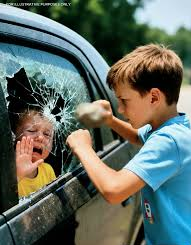
From my seat near the window, something outside caught my attention. In the parking lot, a bright red car stood out, awkwardly positioned among the others. I leaned closer to the glass, squinting. That’s when I saw it—a baby strapped into a car seat in the back.
My stomach dropped.
The engine was running, but no adult was in sight. The baby was alone. A woman—presumably the mother—had stepped away, distracted by her phone, leaving the infant behind. Panic surged through me as I noticed the baby’s flushed face and weak movements. I’d read about how quickly heat and lack of oxygen could become deadly for a child trapped in a car.
I froze for a split second, hoping someone else would notice. No one did.
Every second mattered.
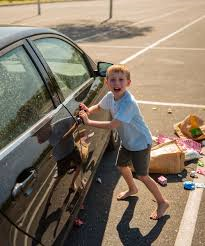
Ms. Alvarez was collecting worksheets, and my classmates were absorbed in their work. There was no time to explain or ask permission. My heart raced as I made a decision that felt terrifying—but necessary.
I stood, slipped out of the classroom, and sprinted down the hallway toward the front doors, my backpack bouncing against my side. By the time I reached the parking lot, my hands were slick with sweat.
The baby was still inside. The mother was nowhere to be seen.
I tested the door. Locked.
My mind raced. Break the window or risk the baby’s life? The answer was instant. Rules didn’t matter anymore.
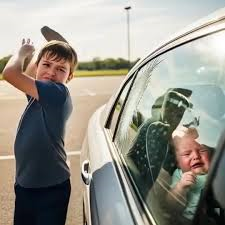
Grabbing a nearby rock, I took a breath and smashed it against the passenger window. Glass exploded onto the pavement. I flinched, then reached inside, unlocked the door, and carefully unbuckled the car seat.
The baby was warm, trembling, but alive. She let out a soft gurgle as I held her, and relief washed over me. Still, I knew we needed help—fast.
As I hurried toward the school entrance, I heard my name.
“Ethan!” Ms. Alvarez called, rushing toward me, confusion written across her face.
“I had to,” I said breathlessly, clutching the baby. “She was trapped. She could’ve—” I couldn’t finish the sentence.
Inside the school, a police officer had just arrived, followed closely by a woman whose face crumpled with fear and relief the moment she saw the baby. She reached out, tears spilling down her cheeks, and held her child tightly.
The officer knelt in front of me. “Are you Ethan Miller?”
I nodded, suddenly nervous. Had I done something wrong? Would I be punished for breaking the window?
Before I could say anything, the woman whispered, “Thank you. You saved my daughter’s life.”
The officer explained that paramedics confirmed the baby had been minutes away from serious harm. Ms. Alvarez’s expression softened, guilt and pride mixing in her eyes.
“You did something extraordinary,” she said quietly.
Soon, the principal arrived, smiling. I was awarded a Golden Star and nominated for the Young Hero Award. The rest of the day blurred into handshakes, congratulations, and classmates eager to hear every detail.
That evening, my parents listened as I told them everything. My mom hugged me tightly. “You trusted your instincts,” she said. “We’re proud of you.”
I hung the certificate on my bedroom wall. Every time I looked at it, I remembered what that day taught me.
Rules exist for a reason—but compassion, courage, and quick action matter more when a life is at risk.
In the days that followed, I learned more about the baby’s mother. She hadn’t meant to leave her child behind. Stress and distraction had taken over. Her gratitude was genuine, and her promise to be more careful stayed with me.
I also learned what heroism truly means. It isn’t about recognition or fearlessness. It’s about acting despite fear. It’s about responsibility, empathy, and choosing to do what’s right—even when it’s uncomfortable or risky.
That morning changed me. It taught me that courage doesn’t roar; sometimes it whispers, urging you to step forward when no one else does.
I’ll always remember the red car, the shattered glass, and the tiny life in my arms. And I’ll carry the lesson with me forever: bravery isn’t the absence of fear—it’s the choice to act anyway.