She Was a Household Name Before She Was Ten — And It Nearly Destroyed Her
From Rock Bottom to Reinvention: Drew Barrymore’s Unlikely Rise
Hollywood has seen its share of cautionary tales, but few journeys are as raw—and ultimately as victorious—as Drew Barrymore’s. Today, she is a beloved actress, a successful producer, a daytime television fixture, and a symbol of resilience. Yet her ascent came only after enduring experiences that would have shattered most adults, let alone a child. Her life story reads like a screenplay no studio would dare pitch: a child star drinking before middle school, rehab at 13, legal emancipation at 14, and a complete career collapse before she was old enough to drive.
Fame Before Childhood
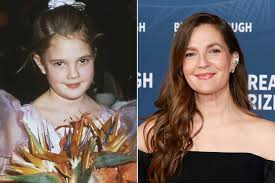
Drew Barrymore’s introduction to show business began almost at birth. She appeared in a dog food commercial at just 11 months old, becoming a working actress before she could form memories. By age seven, she was a global phenomenon. Her role as Gertie in Steven Spielberg’s E.T. the Extra-Terrestrial (1982) made her one of the most recognizable children on the planet.
Audiences adored her infectious charm, especially during appearances like her unforgettable visit to The Tonight Show, where she captivated viewers with her wit and high-pitched laugh. But behind the scenes, her life was unraveling. The image of the cheerful child star masked deep confusion and emotional neglect. “I didn’t understand what was good or bad,” Barrymore later reflected. “I think I was chasing joy—but not real joy. I was just too young to know the difference.”
A Legacy of Chaos
Barrymore was born into Hollywood royalty—but also into generational dysfunction. The Barrymore family name carried immense prestige, alongside a long history of addiction and instability. Her father, John Drew Barrymore, struggled with alcoholism and was largely absent. Her mother, Jaid, became Drew’s primary caregiver, but boundaries were nonexistent.
After her parents divorced when she was nine, Drew was thrust into an adult world. Nightclubs replaced playgrounds. Studio 54 became familiar territory. By age nine, she was exposed to drugs, celebrities, and nightlife few adults could handle. “I parented myself,” Barrymore later admitted. “I don’t blame my parents—I was disappointed in the lack of parenting altogether.”

Addiction and Collapse
The descent was swift and devastating. Alcohol entered her life by age nine. Marijuana and cocaine followed by 12. At 13, she attempted suicide and was institutionalized in a psychiatric facility for 18 months. It was the lowest point of her life.
“I was completely alone,” she said later. “And it felt unbearable.”
Following her release, she spent time living with musician David Crosby and his wife, Jan Dance. Crosby, a recovering addict himself, recognized the importance of sobriety and structure. Though Drew still wrestled with anger and rebellion, the groundwork for survival had begun.
A Harsh Lifeline
Ironically, Barrymore credits the psychiatric institution—where her mother placed her—with saving her life. The environment was rigid and unforgiving, but it introduced boundaries she had never known.
“It taught me discipline,” she later explained. “Before that, I had none.”
At 14, under professional guidance, she made an extraordinary decision: she legally emancipated herself from her parents. She entered court as a child and left as a legal adult. By 15, she was living alone—emotionally scarred, financially uncertain, and already labeled “damaged” by the industry that once celebrated her.

From Spotlight to Survival
Hollywood turned its back. Casting doors closed. Drew Barrymore became unemployable. To survive, she worked ordinary jobs—waiting tables, cleaning houses, and scrubbing toilets. The glamour vanished, replaced by humility and anonymity.
She often recalled her father’s blunt advice: “Expectations are the mother of deformity.” That period, far from destroying her, became the foundation of her reinvention.
Reclaiming Her Career
Barrymore’s return wasn’t immediate or smooth. Her late teens and early twenties were marked by rebellion, public scrutiny, and missteps—including two brief marriages and headline-making moments like her famous dance on David Letterman’s desk. But slowly, she rebuilt.
She founded Flower Films and reclaimed control over her career, starring in box-office successes like Scream, The Wedding Singer, Never Been Kissed, Charlie’s Angels, and 50 First Dates. She didn’t just return—she reshaped the image of the modern romantic lead. Audiences connected with her vulnerability, humor, and authenticity.
Choosing Motherhood—and Facing Backlash
In 2012, Barrymore made another unexpected pivot: she stepped back from leading film roles to focus on raising her daughters, Olive and Frankie. The decision shocked Hollywood and sparked controversy—especially after she spoke candidly about the limits of “having it all.”
“I wasn’t saying women can’t do anything,” she clarified later. “I realized I can’t do everything at once. And that upset people.”
The criticism, particularly from other women, was fierce—but Drew stood firm.

Ending the Cycle
Her parenting choices were shaped by her own childhood. Determined not to repeat the chaos she endured, Barrymore created a structured, grounded home environment. Screen-free time, clear boundaries, and emotional safety became non-negotiable.
“I didn’t have parents—I was the parent,” she once said. “Everything was upside-down.”
The Second Act
As she approaches 50 in 2025, Drew Barrymore is no longer defined by survival. With an estimated net worth of $85 million, she balances acting with entrepreneurship, real estate, and her nationally syndicated Drew Barrymore Show. Now based in Manhattan, she embraces what she calls “intelligent optimism.”
In a recent essay, she wrote: “Sometimes you feel it in your bones—you’re stepping into a new season. That’s me. Fifty years old. And I love it here.”
From Studio 54 to psychiatric wards, from scrubbing floors to running a media empire, Drew Barrymore’s life proves that a chaotic beginning does not demand a tragic ending. Her story is not just one of recovery—but of reinvention, autonomy, and earned joy.