America’s Quiet Power Struggle: How Redistricting Is Reshaping the Political Map
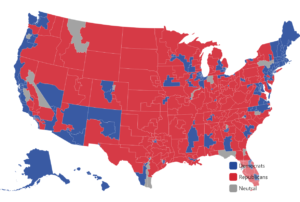
Away from the noise of campaign rallies and televised debates, a quieter but highly influential process is reshaping the political landscape of the United States. The redrawing of congressional district lines—often done with little public attention—is once again playing a decisive role in determining political power, in some cases influencing representation more profoundly than any individual campaign ever could.
By law, every ten years following the U.S. Census, the 435 seats in the House of Representatives are reapportioned among the states based on population shifts. Redistricting, the process of drawing new boundaries for those seats, typically follows that decennial schedule. However, the current political climate has disrupted this norm. In several states, lawmakers have moved to redraw districts in the middle of the decade—an uncommon and controversial move that has intensified partisan tensions nationwide.
Why Redistricting Matters Now
In theory, redistricting exists to ensure equal representation by adjusting districts to reflect population changes so that each vote carries roughly the same weight. In practice, however, the way lines are drawn can strongly favor one political party, sometimes locking in advantages for years. As a result, redistricting has evolved from a technical exercise into a powerful political strategy.
States such as North Carolina, Texas, Missouri, and California have become focal points in this battle. What might appear to be routine mapmaking has instead turned into a calculated effort to secure electoral advantages and protect incumbents from shifting public opinion.
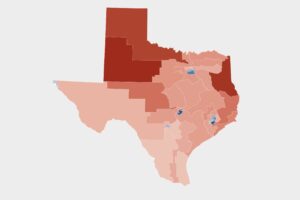
In Republican-controlled states like Texas, North Carolina, and Missouri, new congressional maps approved in 2025 were designed to boost the GOP’s chances of winning additional House seats. In Texas, for example, lawmakers passed a plan aimed at creating up to five more Republican-leaning districts ahead of the 2026 elections—even though statewide voting patterns suggest a more competitive political environment.
These changes carry national consequences. Control of the House often depends on a narrow margin, and even a gain or loss of one or two seats can determine whether a president’s agenda advances or stalls. As a result, decisions made in state legislatures about district boundaries can directly shape federal policy outcomes.
The Rise of Mid-Decade Redistricting
Historically, states have redrawn congressional maps once per decade, after the census. Voluntary mid-decade redistricting was extremely rare; between the 1970s and 2024, only a handful of states took such steps.
That changed in 2025. Republican leaders in Texas, Missouri, and North Carolina pushed forward mid-cycle redistricting efforts explicitly aimed at strengthening GOP control of the House before the 2026 midterms. National party leaders, including former President Donald Trump, openly encouraged these moves.
Texas provides one of the clearest examples. After pressure from Republican leadership in Washington, the Texas Legislature convened a special session to redraw districts. The resulting map reconfigured several Democratic-held seats into Republican-friendly ones, potentially adding up to five GOP seats. Legal challenges followed, with critics arguing the map amounted to unconstitutional racial gerrymandering. After a series of court rulings and disputes over election timelines, the U.S. Supreme Court ultimately allowed the map to be used in 2026.
Missouri followed a similar path, passing a new map during a 2025 special session. That map has since faced lawsuits and a referendum effort that could suspend it until voters weigh in. In North Carolina, a federal panel approved a map expected to flip a competitive district in Republicans’ favor.
Democratic Countermoves and California’s Shift
These Republican-led efforts prompted a strategic reassessment among some Democratic leaders. Rather than relying solely on independent redistricting commissions—long championed as a reform to reduce partisan bias—Democrats in certain states began considering more aggressive responses.
California stands out. For years, it was viewed as a national model for independent redistricting, with lawmakers removed from direct control over mapmaking. That changed in 2025, when voters approved Proposition 50. The measure temporarily modified the state’s commission system, allowing the legislature to adopt new congressional maps designed to produce up to five additional Democratic seats.
Despite legal challenges from Republicans alleging racial discrimination, a federal appeals court upheld the maps in early 2026. If used, they could shape elections through 2030. California’s move marked a significant departure from its reform-driven approach, reflecting growing concern that unilateral restraint could leave Democrats at a structural disadvantage nationwide.
Similar debates are playing out elsewhere. In Virginia, Democratic lawmakers advanced a constitutional amendment that would return redistricting authority to the legislature, effectively sidelining previously established bipartisan or independent systems. Supporters argue this is necessary to counter Republican tactics; opponents warn it undermines voter-approved reforms. In Maryland, Democratic Governor Wes Moore has advocated for new congressional maps in response to redistricting elsewhere, though some lawmakers worry such efforts could backfire.
A National “Redistricting Arms Race”
Together, these actions have triggered what many observers describe as a redistricting arms race. States that once treated mapmaking as a once-a-decade obligation now see it as an ongoing struggle for political control. More than one-third of congressional districts could have new boundaries in place for the 2026 midterms, potentially confusing voters and upending established political expectations.
The surge in redistricting has also produced a wave of lawsuits, grassroots campaigns, and public debate. Critics argue that mid-decade redistricting undermines democratic norms by locking in outcomes before voters have a chance to weigh in. Several legal challenges are moving through federal courts, with some likely headed to the Supreme Court.
Polling suggests the public is skeptical of these efforts. Majorities across party lines oppose mid-decade redistricting and favor independent commissions over legislative control, indicating a disconnect between voter preferences and political strategies.
Democracy and the Power of the Map
At its core, the redistricting fight raises fundamental questions about representation. While voters are told they choose their representatives, the power to draw district lines means politicians often shape the choices available to voters. When maps are engineered to favor one party, critics argue, elections become less competitive and less reflective of the electorate.
Analysts note that aggressive gerrymandering has contributed to political polarization by creating “safe” districts where incumbents face little competition. This reduces incentives to appeal to a broad range of voters and can deepen legislative gridlock.
Although both parties have engaged in partisan redistricting over the years, the current wave of mid-decade redraws—and the retaliatory measures they’ve sparked—represents one of the most intense periods of mapmaking conflict in modern U.S. history. These battles influence not only who holds office, but also public trust in the fairness and legitimacy of democratic institutions.
What Lies Ahead
The future of redistricting remains uncertain. Court rulings, voter referendums, and shifting political strategies will shape the next few years. Some states may recommit to independent commissions, while others may continue asserting legislative control whenever it offers an advantage.
At the federal level, proposals to establish national redistricting standards or ban mid-decade map changes altogether are under discussion, though their chances remain unclear in a divided Congress.
What is certain is that the struggle over who draws the lines—and how those lines shape political power—will continue to influence American democracy long after the 2026 elections.