The Man Who Carves Sanctuaries Beneath the Earth
In an age shaped by constant screen time, rapid innovation, and a culture of instant results, the work of Ra Paulette offers a striking contrast. His life’s work stands as a reminder of patience, intention, and the enduring power of human hands shaping the natural world.
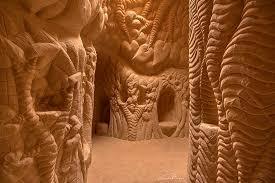
Now in his late sixties, Paulette has spent nearly forty years carving extraordinary underground spaces into the sandstone hills of northern New Mexico. His material is deceptively simple—the rock beneath the surface—but his vision transforms it into something deeply moving. Using only hand tools, physical endurance, and artistic intuition, he sculpts immersive subterranean environments that inspire awe, introspection, and a profound connection to nature.
Revealing What the Stone Already Holds
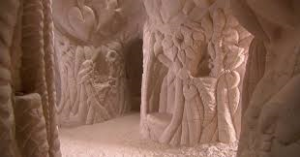
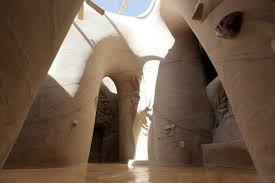
Calling Paulette’s work “cave carving” barely captures its essence. Each project feels less like construction and more like discovery, as though the spaces were waiting within the stone to be uncovered. Those who experience his caves often remark on their organic flow: walls ripple gently like water, columns rise naturally from the ground, and alcoves invite stillness and quiet thought. Arched passageways guide the eye upward, creating a sense of movement and wonder.
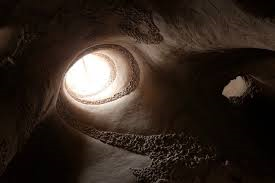
Carefully positioned openings allow sunlight to filter into the chambers, bathing the interiors in warm, shifting tones throughout the day. This dance of light and shadow gives the caves a sense of life, transforming them into sanctuaries rather than excavations.
Walking through one of Paulette’s creations feels like entering living architecture. Every element is deliberate yet seamless. Benches are carved directly from the rock, offering places for rest and reflection. Niches appear almost instinctively shaped for solitude. Smooth, flowing surfaces contrast with untouched stone, inviting visitors to engage both visually and physically. Many describe the experience as timeless, as though the caves exist beyond the rush of modern life.
Working With Nature, Not Against It
At the heart of Paulette’s process is respect for the natural world. He does not attempt to dominate the sandstone; instead, he listens to it. “I’m not carving the cave,” he has said. “I’m revealing it.” This philosophy demands patience, humility, and close observation.
Before carving begins, Paulette studies each site carefully. He walks the land, examines natural contours and fractures, and imagines how light will move through the space. The stone itself dictates the design. Its strengths, weaknesses, and patterns guide every curve and corridor.
His tools remain simple—chisels, hammers, and hand drills. There are no machines, no shortcuts, no explosives. Every surface is shaped by hand, leaving behind subtle imperfections that blend naturally with the rock’s own irregularities. The result feels collaborative, as though the stone and artist created the space together.
Water often becomes part of the design as well. Paulette incorporates natural channels and streams, guiding water gently through the rock. The sound of flowing water enhances the atmosphere, adding another sensory layer that deepens the meditative quality of the caves.
Art Meant to Be Experienced
Despite the extraordinary nature of his work, Paulette has never chased fame or commercial success. His caves are not gallery pieces or commodities; they exist to be entered, touched, and lived in. They are interactive spaces—art that unfolds as one moves through it.
Recognition eventually came through the documentary Cavedigger, which captures both the beauty of the finished caves and the intense physical labor required to create them. Viewers witness the exhaustion, focus, and perseverance behind each carved surface.
Even so, Paulette remains grounded. He continues working not for acclaim, but for the joy of creation and the fulfillment that comes from shaping spaces that encourage reflection and peace.
Challenges Carved Into Stone
Working entirely by hand in sandstone is demanding and unpredictable. While the material is soft enough to shape, it can fracture unexpectedly if misjudged. Paulette must constantly assess the rock’s stability, balancing artistic ambition with structural integrity.
Each cave becomes an exercise in problem-solving. When the stone resists, he adapts. Obstacles become opportunities for innovation, pushing both his technical skill and creative vision forward. Every project teaches him something new.
Having completed more than a dozen caves, Paulette approaches each one as a journey rather than a final destination. Unexpected turns are not failures but discoveries, reinforcing his belief that art is a living, evolving process.
Sanctuaries for Solitude and Community
Some of Paulette’s caves were commissioned as private retreats, designed for meditation, prayer, or spiritual reflection. Others were created for public enjoyment, allowing broader audiences to experience their quiet power. Regardless of purpose, each cave shares a unifying theme: sanctuary.
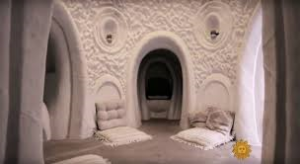
In one early project, Paulette transformed a modest sandstone hill into a spiraling underground space with vaulted ceilings and winding corridors. Visitors often stop mid-step, overwhelmed by the tactile beauty and gentle choreography of light. Benches and niches offer places to sit, think, and simply be.
Another cave integrates water flowing from natural springs, guiding it through carved grooves in the rock. The soft sound of trickling water mingles with footsteps and faint echoes, creating an atmosphere many describe as deeply grounding and emotionally restorative.
Emotional and Psychological Resonance
One of the most striking aspects of Paulette’s work is its emotional impact. Visitors frequently report feelings of calm, humility, and awe. For some, entering one of his caves feels like a wordless meditation—an opportunity to release stress and reconnect with themselves.
Research has shown that environments shaped by organic forms, gentle curves, and natural light can reduce stress and support mental well-being. Paulette’s caves embody these principles intuitively. The tactile surfaces encourage touch, while the natural flow of space slows movement and invites mindfulness.
Honoring Craft in a Mechanized World
In a time dominated by automation and speed, Paulette’s dedication to hand tools and manual labor stands as a quiet celebration of traditional craftsmanship. His work demonstrates that patience, skill, and deep material knowledge can create something machines cannot replicate.
The process is slow and demanding. Each curve requires strength, focus, and endurance. Yet the result is a seamless union of human creativity and natural beauty—a space that feels both intentional and ancient.
By choosing this path, Paulette offers an unspoken critique of modern culture’s obsession with efficiency. His caves remind us that meaningful creation takes time, care, and commitment.
Creativity as Transformation
For Paulette, carving is more than physical labor; it is a form of meditation. Each cave demands complete presence and intuition. He often describes moments when the stone itself seems to guide him, suggesting the next shape or opening.
This transformation extends beyond the artist. Visitors often leave his caves inspired, reminded of the power of patience and the beauty that emerges when one listens rather than rushes.
Legacy and Lasting Influence
Over nearly four decades, Paulette has created a body of work that challenges conventional ideas of architecture and art. His caves are not built for commerce or habitation but for experience—spaces that prioritize sensation, emotion, and connection to the earth.
Artists, architects, and designers have drawn inspiration from his approach, embracing organic forms and natural light in their own work. The documentary Cavedigger helped introduce his philosophy to a global audience, capturing both the labor and the quiet joy of creation.
Unlike many artists, Paulette measures success not by recognition or profit, but by fulfillment—the act of creating beauty and sharing it with others.
A Quiet Invitation to Slow Down
More than anything, Paulette’s caves offer an invitation. In a fast, digital world, they encourage slowness, attention, and reflection. Visitors are asked to move deliberately, to notice texture, light, and space.
Within these underground sanctuaries, time feels suspended. Technology fades away. What remains is a conversation between human hands and the earth.
Transforming Stone—and the Human Spirit
Ra Paulette’s life’s work is a powerful testament to patience, creativity, and respect for nature. His caves are not just carved spaces; they are living environments that change both the stone and those who enter.
By working in harmony with his material rather than imposing upon it, Paulette shows that art can be a collaboration—between human and earth, intention and intuition.
His sandstone sanctuaries remind us that the deepest beauty often lies beneath the surface, waiting patiently to be revealed.