Four Months After Tragedy: Erika Kirk’s New Relationship Sparks Debate About Grief and Healing
Just four months after the heartbreaking death of her husband, Erika Kirk has again found herself in the public spotlight—this time because of reports about her personal life. News that she may have started a new romantic relationship has ignited widespread discussion online, drawing responses that range from compassion and understanding to skepticism and criticism.

The killing of Kirk’s husband was a tragic event that prompted an outpouring of sympathy and intense media attention. Many people expressed sorrow for her loss, recognizing the profound pain of losing a spouse in such a sudden and violent manner. In the months that followed, Kirk largely stepped away from public view, focusing on her family and navigating the difficult process of rebuilding her life.
Recently, however, photos and reports suggesting she is seeing someone new have brought renewed attention to her private world. For some, this development represents a natural and healthy step forward. For others, it has raised questions about timing and propriety, fueling broader conversations about grief, healing, and the expectations society often places on those who have lost a partner.
Grief specialists frequently note that there is no single, correct way to mourn. Healing does not follow a straight line, and each person processes loss differently. In some cases, forming a new emotional bond can be part of recovery rather than a betrayal of the past or a replacement for what was lost.
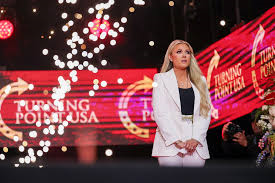
Many supporters of Kirk have echoed this view, emphasizing that moving forward does not negate the love she shared with her late husband or lessen the impact of her loss. Online messages have stressed that she deserves peace and happiness after enduring such trauma, reminding critics that grief looks different for everyone.
At the same time, some observers have expressed unease, arguing that the relationship may be too soon. These voices often focus on public perception and the idea that a longer period of mourning is expected, particularly for someone whose life has been so visible. Their reactions reflect how grief—especially when experienced publicly—is often measured against rigid and unrealistic standards.
The discussion has also revived a long-standing conversation about gender and grief. Social research suggests that widows are frequently judged more harshly than widowers when they choose to move forward. While men are often encouraged to rebuild their lives after loss, women may face pressure to demonstrate prolonged mourning as proof of loyalty or respect.

Another important factor is the presence of children in Kirk’s life. Many supporters argue that children benefit from seeing their parent find strength, stability, and emotional support. When approached carefully, a healthy relationship can provide reassurance and security rather than disruption.
Kirk has not publicly addressed the reports or the reactions surrounding them. Her decision to remain silent may reflect a desire to safeguard her privacy during an already emotionally demanding time. In an era where personal lives are frequently scrutinized online, choosing not to respond can be a deliberate and meaningful boundary.
Ultimately, Erika Kirk’s situation highlights how quickly private grief can become a matter of public debate. It raises broader questions about empathy, judgment, and the right to pursue happiness after loss.
As the conversation continues, many are urging compassion instead of criticism. Tragedy alters lives in unpredictable ways, and healing does not adhere to a fixed timeline. Whether through time alone, family support, or new love, the journey forward belongs to the person living it.
At its core, Erika Kirk’s story is not simply about a new relationship—it is about resilience, healing, and the deeply human need for connection after profound loss.