Officials Confirm Cause of Death for Two Young Colorado Hunters
Deep within the expansive wilderness of Colorado’s Rio Grande National Forest—an area defined by towering elevations, remote valleys, and unforgiving terrain—authorities have confirmed the cause of death for two young hunters whose disappearance stunned the outdoor community.
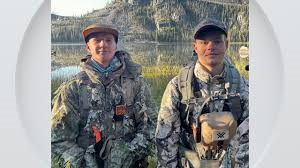
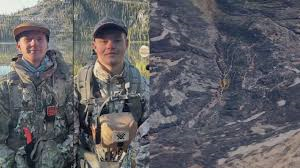
Andrew Porter and Ian Stasko, both 25 years old, were lifelong friends and highly experienced outdoorsmen. To those closest to them, they were known not only for their love of the mountains but also for their discipline, caution, and respect for nature’s power. When they ventured into the high country for what was expected to be a familiar hunting trip, they were well equipped and well prepared, carrying advanced navigation tools, emergency supplies, and communication equipment suited for backcountry travel.
Their destination was the Rio de Los Pinos Trailhead—an area they knew well after years of exploring Colorado’s rugged wilderness. But what began as a routine excursion ended in tragedy when an unpredictable and violent natural event struck.
Conejos County Coroner Richard Martin later confirmed that the two men died as a result of a direct lightning strike—an extraordinarily rare but devastating occurrence in high-altitude environments.
The Invisible Force Behind the Tragedy
According to officials, the physical evidence at the scene revealed only minimal external injuries. Coroner Martin described small burn marks that resembled faint scorch patterns, emphasizing how misleading the outward appearance of lightning fatalities can be.
“In cases like this, the damage you see on the surface is often insignificant compared to what happens internally,” Martin explained. Lightning can instantaneously disrupt the heart’s electrical system or cause catastrophic nervous system failure, leading to immediate death.
While full autopsy results are still pending, authorities believe both men died instantly, without prolonged suffering.
Southern Colorado’s mountainous regions are especially vulnerable to rapidly forming thunderstorms caused by elevation-driven atmospheric changes. Storms can develop quickly and without warning, particularly in the afternoon hours, catching even experienced outdoorsmen off guard.
A Relentless Search Effort
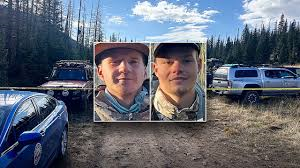
When Porter and Stasko failed to return as expected, a large-scale search operation was launched by the Conejos County Sheriff’s Office. The multi-day effort tested the limits of both personnel and technology.
Search teams utilized drones to scan steep ravines and forested areas unreachable on foot, while ground crews and volunteers combed miles of difficult terrain under challenging conditions. The operation concluded when the men were found near one another—an indication of their close bond and shared commitment to staying together in the wilderness.
Their proximity at the time they were located reinforced what friends and family already knew: these were men who relied on one another deeply and lived by the principle that partners never separate in the backcountry.
Why High Elevations Increase Risk
Although lightning-related deaths are statistically uncommon, mountainous regions are known hotspots due to their proximity to storm clouds. According to the National Weather Service, millions of lightning strikes occur annually in the United States, but elevated and exposed terrain dramatically increases danger.
Several factors contribute to heightened risk in alpine environments:
-
Elevation reduces the distance between the ground and storm clouds.
-
Ridges and open areas can attract electrical discharge.
-
Metal equipment, such as firearms or gear frames, may conduct electricity.
-
Wet clothing and gear increase the body’s ability to carry current.
Even with awareness and preparation, lightning remains one of nature’s most unpredictable threats.
A Loss Felt Across the Outdoor Community
The deaths of Porter and Stasko sent shockwaves through Colorado’s hunting and mountaineering circles. Tributes poured in from friends, fellow hunters, and community members who emphasized not recklessness—but experience, caution, and deep respect for the land.
“They loved the mountains, and they understood the risks,” one family member shared. “They respected the wilderness in every sense.”
Their story has since become a powerful reminder that preparation can reduce risk—but never eliminate it entirely.
Remembered as Mentors and Stewards
Beyond their technical skill, Porter and Stasko were widely regarded as mentors. They often guided less experienced hunters and emphasized ethical practices, environmental stewardship, and teamwork.
They taught others that:
-
Preparation begins long before entering the wilderness.
-
Ethical hunting requires respect for wildlife and ecosystems.
-
Trust in your partner can be the difference between life and death.
Their lives—and final moments—reflected those values fully.
The Mountains Remain, Changed Forever
As autumn settles over the Rio Grande National Forest, the same ridgelines and valleys that once symbolized freedom and adventure now carry deeper meaning for those who knew the two men. Familiar trails have become quiet memorials, reminding visitors of both beauty and risk.
The tragedy has also highlighted the importance of coordinated search-and-rescue efforts, demonstrating how community, technology, and volunteer dedication come together in moments of crisis.
Today, Porter and Stasko’s story is frequently cited in wilderness safety education across the state—an example of how even expert-level knowledge cannot always overcome nature’s raw power.
A Final Reflection
Lightning does not distinguish between novice and expert, preparation and inexperience. It is one of nature’s most impartial forces.
The loss of Andrew Porter and Ian Stasko underscores a sobering truth: no matter how skilled or cautious we are, the wilderness operates by its own rules.
Yet within the heartbreak lies inspiration. Their loyalty to one another, their respect for the land, and the way they lived fully in the environment they loved continue to resonate.
For those who walk Colorado’s high-country trails today, the mountains stand not only as geological wonders—but as living reminders of two young men who embraced adventure, honored nature, and left behind a legacy of courage, connection, and reverence for the wild.