That Penny in Your Drawer Could Be Worth $85,000
Most people barely glance at loose pennies, letting them pile up in jars, drawers, or old containers, assuming they hold no real value. Yet hidden among that everyday change could be one of the most extraordinary coins ever produced in the United States — the 1943 copper wheat penny.
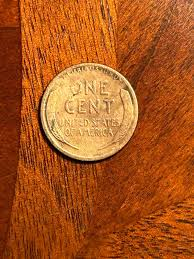
During World War II, copper was urgently needed for ammunition and military equipment, prompting the U.S. Mint to manufacture pennies from zinc-coated steel instead. Under normal circumstances, copper pennies should not exist for that year at all. However, a rare error occurred. A small number of leftover copper blanks from earlier production were accidentally fed into the presses, resulting in a tiny batch of copper pennies struck in 1943.
Today, fewer than 25 authentic examples are believed to exist, and collectors are willing to pay staggering sums — often between $60,000 and $85,000 — for a genuine one. With such high value comes widespread counterfeiting. Some fakes are created by altering a 1948 penny so the “8” is reshaped to resemble a “3.” Others involve copper-plating standard 1943 steel pennies to mimic the rare version.
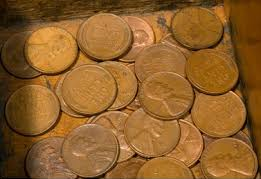
Fortunately, spotting a fake doesn’t require expert training. A simple magnet can tell you a lot. Steel pennies will stick to a magnet, while genuine copper will not. If a supposed copper 1943 penny is magnetic, it’s almost certainly counterfeit. If it isn’t, you may have something truly special.
What surprises many people is that these rare coins may still be hiding in plain sight. Over the decades, returning soldiers casually kept coins, families stored jars of spare change, and inherited collections were tucked away and forgotten. As a result, valuable pennies may still be sitting in old wallets, attic boxes, or kitchen containers rather than locked away in museums.
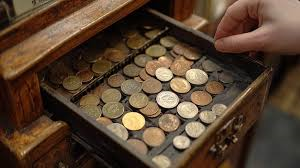
To check, look for four things: the 1943 date, the wheat-ear design on the reverse, a copper appearance, and no magnetic attraction. If your penny meets all of these criteria, the next step is professional evaluation. Certified coin graders can verify whether you possess one of the few surviving examples of this wartime minting mistake.
The 1943 copper penny is proof that even the smallest, most overlooked objects can carry enormous worth. Taking a few minutes to examine your loose change could uncover a hidden fortune — and turn an ordinary penny into a life-changing discovery.