Trump Administration Prepares Tariff Backup Plan Ahead of Supreme Court Ruling
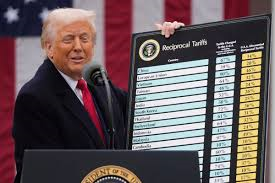
The Trump administration is preparing contingency plans to reimpose tariffs if an upcoming U.S. Supreme Court ruling strikes down the current ones.
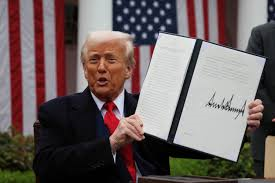
According to a report by the Financial Times, officials have developed multiple backup strategies that would allow tariffs to be reinstated using alternative legal authorities and existing trade mechanisms. Diplomats and trade lawyers familiar with the matter say the administration intends to move forward regardless of how the court rules.
The specific legal path will depend on the scope of the Supreme Court’s decision. If the court determines that the administration improperly relied on emergency powers to justify the tariffs, officials are expected to pivot to other statutes that could support similar trade measures.
At the same time, attention is growing around President Trump’s proposal to issue $2,000 stimulus-style payments funded by tariff revenue, a plan he has said could be rolled out in mid-to-late 2026 as the election cycle approaches. The proposed rebates would be targeted toward low- and middle-income Americans and financed through proceeds generated by broad import tariffs.
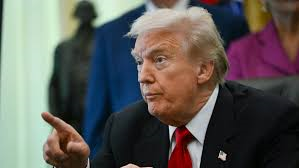
Significant hurdles remain, however. The Supreme Court case could directly affect the legality of the tariffs themselves. There is also uncertainty about whether tariff revenue would be sufficient to support large-scale payments, along with the requirement that Congress approve any such program.
Although Trump has publicly promoted the idea since July, its implementation is far from guaranteed. Several Republican lawmakers have raised concerns, questioning both the practicality of the proposal and its chances of passing through Congress.
Ohio Senator Bernie Moreno has been among the skeptics, arguing that tariff revenue would be better used to address the nation’s roughly $38 trillion debt rather than distributed as rebate checks.
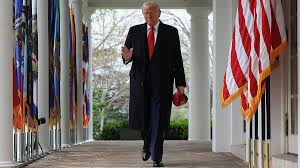
Members of the administration have offered varying perspectives on the proposal. Treasury Secretary Scott Bessent has suggested limiting eligibility to households earning $100,000 or less, while Commerce Secretary Howard Lutnick has voiced support for the concept of tariff-funded payments.
More recently, White House economic adviser Kevin Hassett acknowledged that the plan’s future remains uncertain. Speaking on Face the Nation, Hassett said the proposal ultimately hinges on congressional action.
Treasury Secretary Bessent has repeatedly emphasized that any rebate program would require legislation, stressing the importance of using tariff revenue to reduce the federal deficit.
“We’ll see what happens,” Bessent said in an interview with Fox News. “This would require legislation.”
Questions surrounding the proposal intensified after Trump announced that U.S. military members would receive a “Warrior Dividend” for Christmas. That announcement raised expectations about whether similar payments would be extended to the broader public.
Initially, Trump suggested the dividend would go to nearly everyone except high-income earners. However, on November 12, Bessent clarified that eligibility would be limited to families earning $100,000 or less.
Meanwhile, Vice President JD Vance has acknowledged growing public skepticism about the administration’s economic performance. Speaking at a Breitbart News event, Vance urged patience, predicting that current policies would eventually lead to an economic upswing.
He argued that reversing the effects of inflation experienced under the Biden administration would take time, even if early signs of improvement are emerging.
“We hear the frustration,” Vance said. “There’s been progress, but it’s going to take time for people to truly feel it.”
His remarks reflect the White House’s broader effort to sharpen its economic messaging ahead of next year’s midterm elections, particularly following Republican losses in traditionally Democratic states such as New Jersey and Virginia.
Vance also acknowledged that high living costs continue to weigh heavily on voters, especially everyday expenses like groceries.
“If you’re working hard, paying taxes, and trying to give your kids a better future, and the price of eggs jumps from $2 a dozen to $8, then only falls back to $6.50,” Vance said, “that still feels like a major problem.”
The administration’s challenge now is convincing voters that its economic strategy — including tariffs and potential rebates — will ultimately ease those pressures rather than add to them.