Why Reggie White Risked Everything to Sue the NFL
Reggie White challenged the NFL from inside its walls.
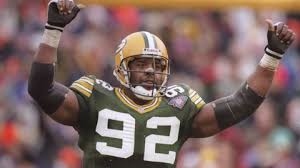
He didn’t retire first.
He didn’t wait for safety.
He sued the league while still wearing its uniform.
At the time, the NFL did not have true free agency. Players could perform at an elite level, fulfill every obligation, and still be held indefinitely by their teams. Movement wasn’t earned through excellence — it was granted by ownership.
The league called it stability.
Players called it control.
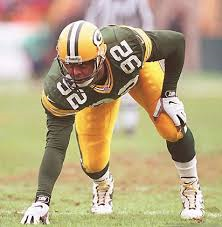
Under the NFL’s “Plan B” system, teams could protect most of their roster and block players from negotiating freely with other franchises. Contracts were portrayed as sacred commitments — except when teams decided to cut players without hesitation. Loyalty, it turned out, only flowed in one direction.
Reggie White saw this clearly.
By the late 1980s and early 1990s, White wasn’t just another star. He was one of the most dominant defensive players the league had ever seen. Quarterbacks feared him. Offensive lines built entire game plans around slowing him down. He was a Pro Bowler, a sack leader, and the emotional anchor of his team.
But he was also something else.
White was a deeply religious man, an ordained minister who believed that silence in the face of injustice was a moral failure. His faith shaped how he viewed power, responsibility, and fairness. To him, contracts that bound players without consent weren’t just unfair — they were wrong.
So when the league’s labor structure prevented players from controlling their own careers, he didn’t limit himself to private frustration.
He led the lawsuit.
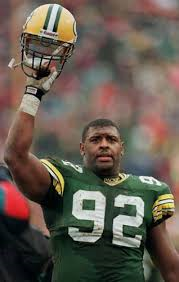
White v. National Football League.
It was an extraordinary risk. Suing the NFL while actively playing in it meant potential fines, hostile media coverage, and quiet retaliation from front offices that controlled jobs and reputations. Owners expected stars to play, not to challenge the system that enriched them.
White was warned.
He was pressured.
He was told to step back and let others handle it.
He refused.
Standing before cameras and reporters, White said out loud what many players whispered behind closed doors. He pointed out that owners preached loyalty while cutting players without remorse. That they treated athletes as assets, not men. That a league built largely on the labor of Black players was governed almost exclusively by white executives who controlled movement, money, and opportunity.
These weren’t popular statements at the time. Many fans preferred the illusion that sports existed outside politics, economics, or race. The league fought hard to preserve that illusion — and its power.
But the legal challenge didn’t fade.
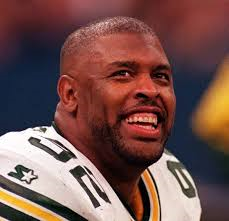
In 1993, the courts ruled in favor of the players. The NFL’s system was found to violate antitrust laws. The decision dismantled Plan B and opened the door to true free agency.
The league had to adapt.
Free agency became reality.
The salary cap followed.
Player movement, negotiation, and market value were fundamentally redefined.
White’s own career reflected the shift. He signed with the Green Bay Packers for a then-record $17 million contract — a deal that symbolized the new era. But the money was never the point.
What mattered was that players now had leverage.
Choice.
Agency.
Every contract negotiated freely today traces back to that moment.
Yet history often smooths uncomfortable edges.
Most fans remember Reggie White as the “Minister of Defense” — the dominant pass rusher, the Hall of Famer, the champion. Far fewer remember him as a labor activist who challenged billionaires while still collecting checks from them.
That part of the story is easier to forget.
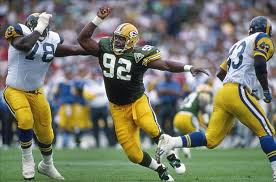
The real injustice wasn’t that he sued the NFL.
It was that it took a man of faith in shoulder pads to force one of the richest leagues in the world to treat its players as human beings instead of property.
Reggie White didn’t just change games on the field.
He changed the rules that governed everyone who played them.