Why These Strange Tools Once Sat on Almost Every Table
Anyone who has ever explored their grandparents’ home knows the feeling: drawers filled with unfamiliar objects, tools whose purpose is no longer obvious, and items that seem oddly intimidating without context.
Many of these objects once played a regular role in everyday life. Over time, as habits changed and convenience took over, their purpose faded from common knowledge. What remains is confusion — and curiosity.
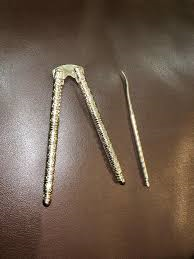
That curiosity recently exploded online after someone posted a photo of several small metal tools arranged in a nut-shaped bowl. At first glance, they didn’t resemble anything familiar to modern eyes.
Instead, they looked sharp, narrow, and vaguely threatening.
Naturally, the internet responded with guesses.
Some people suggested they were dental instruments. Others joked they were used to find cavities or scrape teeth after meals. A few thought they belonged in a medical kit rather than a kitchen.
But the real answer was far simpler — and deeply nostalgic.
They were nut picks.
The Forgotten Partner of the Nutcracker
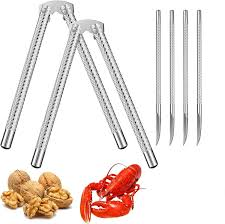
Nut picks were once a common companion to the nutcracker, a household tool that predates the famous holiday ballet by centuries.
Long before toy soldiers danced across stages, nutcrackers were practical devices found in many kitchens and dining rooms. Their job was simple: break open the hard shells of nuts without destroying what was inside.
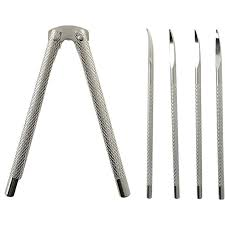
Traditional nutcrackers typically resembled metal pliers, with hinged arms and ridged jaws designed to grip nuts securely. By applying just the right amount of pressure, users could crack the shell cleanly and preserve the nut meat.
Nutcrackers came in many forms. Some were handheld, others were tabletop models with levers for added force. Decorative versions — often shaped like soldiers or figures — eventually became holiday staples, especially in Europe and later the United States.
Despite their ornamental appearance, many were fully functional.
When Cracking Nuts Was Part of Daily Life
Today, grocery stores sell nuts already shelled, chopped, and ready to use. That level of convenience wasn’t always available.
In earlier decades, families bought nuts whole, still sealed inside their shells. If you needed walnuts for baking or pecans for dessert, you cracked them yourself.
This process often became a shared activity, especially during colder months and holidays. Families gathered around tables, cracking nuts while talking, laughing, and passing time together.
One person commenting online recalled that bagged, pre-cracked walnuts simply didn’t exist when they were growing up. Preparing nuts was slower — but also more social.
Cracking the shell, however, was only part of the task. Once broken, the edible nut often remained wedged inside jagged shell pieces. Fingers alone weren’t always enough to remove it neatly.
That’s where nut picks came in.
Small Tools With a Precise Purpose
Nut picks are slender tools designed to extract nut meat from cracked shells. Most are made of metal and feature a pointed or slightly curved tip that can reach into narrow spaces.
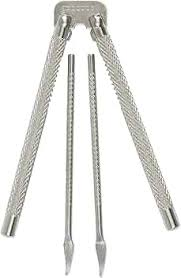
They allowed users to loosen and remove nuts without crushing them, preserving their shape and keeping hands clean.
Nut picks were often sold as part of a set, along with a nutcracker and sometimes a bowl for shells. These sets were commonly brought out when entertaining guests or serving nuts after meals.
In some homes, they were considered proper tableware, especially during holidays or formal gatherings.
Nut picks came in a variety of designs. Some were purely functional, while others featured decorative handles meant to match fine dining pieces. Metal versions were especially popular for their durability and ease of cleaning.
More Uses Than You Might Expect
Over time, people found that nut picks were useful beyond cracking nuts.
Their narrow, pointed design made them ideal for extracting meat from shellfish such as lobster and crab. Reaching into tight joints and legs became much easier with a nut pick.
Several online commenters mentioned growing up in coastal areas where nut picks were routinely used during family seafood dinners.
Others noted that the tools worked well for serving olives at gatherings. Olive picks allowed guests to spear olives without touching them directly — an etiquette-friendly solution that kept fingers clean.
Because of this, some people refer to them as olive picks, though the tools themselves are essentially the same.
Creative minds also discovered alternative uses. Artists and hobbyists have repurposed nut picks for sculpting clay, carving fine details, or cleaning small crevices in delicate projects.
Their sturdy yet precise shape made them surprisingly versatile.
Why the Internet Was Confused
Without context, the tools’ sharp appearance easily led to humorous speculation. Many joked they looked like dental or medical instruments, highlighting how unfamiliar such tools have become.
In today’s world of disposable utensils and pre-packaged foods, specialized kitchen tools from the past can seem unnecessary or strange.
Yet their design reflects a different mindset — one focused on reusable objects, patience, and hands-on preparation.
A Window Into Changing Habits
The decline of nutcrackers and nut picks mirrors larger changes in how people eat and live. Modern kitchens prioritize speed and convenience, often at the cost of rituals that once brought people together.
Cracking nuts wasn’t just about food. It slowed life down. It encouraged conversation. It created shared moments, especially during holidays.
These tools also represent an era when households invested in items meant to last for decades. Many still surface today because they were built to endure — cleaned, stored, and reused year after year.
Why They Still Matter
Although no longer essential, nut picks still hold value for those who enjoy traditional cooking, hosting, or serving whole nuts and shellfish.
More than that, they carry emotional weight. Finding a nut pick in a relative’s home can trigger memories of family gatherings, holiday tables, and simpler routines.
Collectors and vintage enthusiasts appreciate antique nutcracker sets for their craftsmanship, often admiring intricate details that reflect the design sensibilities of another time.
Objects like these remind us that history isn’t only preserved in museums. It lives in everyday items passed down through generations.
And when one of those objects resurfaces online, it opens the door to conversation — turning confusion into understanding, and a strange-looking tool into a small piece of shared history.