At 78, Sally Struthers Looks Back With Clarity, Not Regret
At 78, Sally Struthers no longer feels compelled to revisit her past in order to reshape it or make it more palatable to public opinion. Instead, she speaks with the calm assurance of someone who has lived fully through fame, transition, and reinvention — and emerged with perspective rather than regret.

Her reflections aren’t fueled by controversy or second-guessing. They are grounded in experience — the kind earned only through time, resilience, and a willingness to evolve.
When Struthers looks back on her early years in television, she remembers an industry filled with enthusiasm and possibility. It was an era when young actors believed that talent, dedication, and teamwork could build lasting careers. The atmosphere felt optimistic, even simple by today’s standards.
Creative relationships were built on trust. Success felt collective rather than calculated. Fame hadn’t yet become inseparable from branding, and the work itself was the focus.
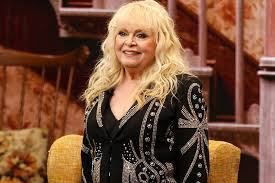
Born in Portland, Oregon, Struthers showed an early interest in performance. After studying drama and developing her skills, she moved to Los Angeles with hopes familiar to many aspiring actors of her generation.
Television at the turn of the 1970s was shifting. Sitcoms were beginning to tackle social issues with honesty and courage, opening doors for performers eager to participate in meaningful storytelling.
That shift led Struthers to the role that would define her career. In 1971, she was cast as Gloria Stivic on All in the Family — a groundbreaking series that would reshape television by confronting topics such as class, politics, gender expectations, and generational divides.
For Struthers, the experience was intense and formative. The cast worked closely, driven by a shared sense of purpose. There was a belief that they were contributing to something important, something new.
In those early years, she trusted the process and the people around her. Like many young performers, she assumed success would naturally bring stability and long-term opportunity.

But reality proved more layered.
As All in the Family grew into a cultural phenomenon, the pressures surrounding it intensified. Fame brought scrutiny, expectations, and complicated professional dynamics. Working alongside well-known colleagues such as Carroll O’Connor, Jean Stapleton, and Rob Reiner offered invaluable experience — but also revealed the challenges of sustaining creative relationships under constant public attention.
What once felt effortless began to require emotional awareness and adaptability. Ambitions evolved. Careers branched. Collaboration became more complex.
Struthers has acknowledged that she was forced to develop resilience earlier than she anticipated. In an industry defined by unpredictability, even success offers no guarantees. Roles shifted, opportunities fluctuated, and the certainty she once felt slowly gave way to realism.
As the years passed, she encountered challenges common to many actors who find early fame — typecasting, changing audience tastes, and the arrival of younger performers reshaping the landscape.

Rather than resisting those changes, Struthers adjusted. She continued working across television, film, and theater, expanding her range and finding fulfillment beyond any single role.
Today, she looks back without bitterness.
Time has reframed moments that once felt confusing or discouraging. She views setbacks not as failures, but as essential chapters in her growth. Each phase — successful or uncertain — helped shape her understanding of independence, boundaries, and self-worth.
Her reflections on colleagues and collaborators are measured and generous. She recognizes that creative partnerships evolve under pressure, influenced by timing, ambition, and circumstance. Rather than revisiting old tensions, she sees those experiences as part of a broader learning process.
Beyond acting, Struthers became widely recognized for her humanitarian work, particularly her long-standing involvement with Save the Children. For decades, she used her visibility to advocate for education, hunger relief, and global poverty awareness.
While public attitudes toward celebrity activism have shifted over time, her commitment remained steady. For Struthers, purpose was never limited to professional achievement. It was rooted in connection, service, and using her voice in ways aligned with her values.
As she moved into later stages of life, Struthers became more selective about how she engaged with her past. She no longer felt the need to justify decisions or explain every turn her career took.

Instead, she focused on honoring her journey as it unfolded — accepting both its successes and its constraints.
Age, she suggests, brings freedom. At 78, the pressure to meet external expectations has faded. The need to please critics or audiences has been replaced by quiet confidence and self-acceptance.
She now understands that longevity in entertainment isn’t about constant visibility. It’s about adaptability, perspective, and inner strength.
When she speaks of her early optimism, it’s with appreciation rather than naïveté. That trust was genuine and necessary. Without it, she may never have taken the risks that led to her most meaningful work.
Her story reflects a broader truth about creative careers: success is rarely linear, and endurance requires emotional flexibility as much as talent.
Industries change. Audiences evolve. Artists must adapt.
Those who last are often those who learn when to hold on — and when to let go.
Today, Sally Struthers speaks from reflection, not reaction. Her words carry the weight of decades spent observing, learning, and redefining herself.
She doesn’t dwell on unanswered questions or imagined alternatives. Instead, she emphasizes growth, clarity, and the quiet satisfaction of having navigated an industry that never stops shifting.
Her perspective resonates far beyond television. It speaks to anyone who has faced reinvention, disappointment, and change over a long career.
At 78, Struthers offers something more lasting than nostalgia or controversy. She offers understanding — of where she has been and who she has become.
Her legacy is no longer tied to a single role or era, but to a lifetime of adaptation, resilience, and self-trust.
And that hard-earned clarity may be her most meaningful achievement of all.