When Being “Cute” Wasn’t Enough: Mara Wilson’s Hollywood Exit
In the early 1990s, audiences everywhere were captivated by Mara Wilson, the bright and charming child star who appeared in beloved family films such as Mrs. Doubtfire and Miracle on 34th Street. With her wide-eyed innocence and natural talent, Wilson quickly became one of Hollywood’s most recognizable young faces.
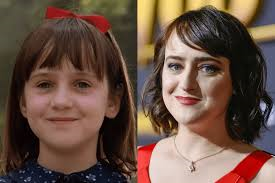
Now 38, having celebrated her birthday on July 24, Wilson once seemed destined for a long and successful acting career. Instead, as she grew older and no longer fit the industry’s definition of “cute,” her presence on the big screen quietly faded.
“Hollywood was burned out on me,” Wilson has said. “If you’re not cute anymore, if you’re not beautiful, then you’re worthless.”
Her rise began in 1993, when five-year-old Wilson won hearts as Robin Williams’ youngest child in Mrs. Doubtfire. Born in California, she had already appeared in commercials before landing the role in what would become one of the highest-grossing comedies of all time.
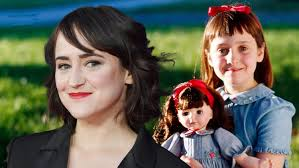
Despite the sudden fame, her parents worked hard to keep her grounded. “My parents were proud, but they made sure I stayed realistic,” Wilson recalled. “If I ever said something like, ‘I’m the greatest,’ my mom would say, ‘You’re just an actor. You’re just a kid.’”
Following her breakout performance, Wilson was cast as Susan Walker in the 1994 remake of Miracle on 34th Street, taking on the iconic role once played by Natalie Wood. Writing later for The Guardian, Wilson reflected on her audition, recalling that she told the filmmakers she didn’t believe in Santa Claus — though she did believe in the tooth fairy, whom she had named after Sally Field, her on-screen mother in Mrs. Doubtfire.

In 1996, Wilson starred as the gifted young heroine in Matilda, acting alongside Danny DeVito and Rhea Perlman. That same year, her life changed in a far more painful way. Her mother, Suzie, died after battling breast cancer.
The loss deeply affected Wilson. “I didn’t really know who I was,” she later said. “There was who I was before that, and who I was after that.” She described her mother as a constant presence in her life and admitted that the grief was overwhelming. More than anything, she longed to be a normal child — especially after her mother’s death.
Although she was at the height of her fame, Wilson says those years were some of her unhappiest. Acting became exhausting, and the attention that once seemed exciting began to feel suffocating.
At age 11, she reluctantly took on her final major film role in the 2000 fantasy Thomas and the Magic Railroad. By then, she felt disconnected from the parts being offered. “The characters were too young,” she said. Reading the script, she remembers thinking, “Ugh. How cute.”
Her departure from Hollywood, however, was not entirely by choice.
As Wilson entered her teenage years and went through puberty, acting roles began to disappear. The industry no longer saw her as the charming child it once adored. She described herself at the time as a “weird, nerdy, loud girl with bad teeth and bad hair,” someone whose appearance no longer fit Hollywood’s narrow expectations.
“At 13, no one had called me cute or complimented my looks in years,” she said — at least not in a positive way.
The rejection was painful, even as she felt increasingly burned out by the industry. “I had internalized this Hollywood belief that if you weren’t cute or beautiful anymore, you were worthless,” Wilson explained. She tied that belief directly to the end of her acting career. “Even though I was tired of it, and Hollywood was tired of me, rejection still hurts.”
Today, Wilson has found fulfillment outside of acting. She reinvented herself as a writer and published her first book, Where Am I Now? True Stories of Girlhood and Accidental Fame, in 2016. The collection explores her experiences growing up in the spotlight — from learning about sex on the set of Melrose Place to realizing as a teenager that she was no longer considered marketable by Hollywood.
She later authored Good Girls Don’t, a memoir reflecting on her life as a child actor and the pressures of meeting expectations.
Looking back, Wilson has made peace with the path her life took. “Being cute just made me miserable,” she wrote in The Guardian. For years, she assumed she would one day walk away from acting on her own terms. “I always thought it would be me giving up acting,” she admitted — “not the other way around.”