“Let Kids Be Kids”: Why Kindergarten Is Starting to Feel Like Too Much
“The expectations placed on elementary school children have become overwhelming. In many ways, their childhood is slipping away.”
Parents have long voiced concerns about the growing demands placed on their children in school. What once meant a small amount of homework or simple classroom expectations has expanded into lengthy to-do lists, early testing, and pressure that now reaches even the youngest students. What’s striking is that this concern isn’t limited to parents anymore—teachers are sounding the alarm too.
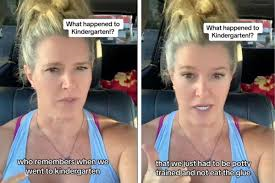
A veteran kindergarten teacher, Ms. Kelli, recently reflected on how dramatically early education has changed over the course of her 20-year career. Looking back, she recalled that kindergarten once required little more than basic independence and social readiness.
“When we were kids,” she explained, “the biggest expectations were being potty trained and knowing not to eat glue.”
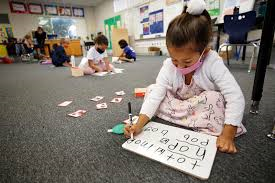
Today, she says, the bar has been raised far beyond what many young children are developmentally prepared for. She expressed heartbreak over the countless videos and guides instructing parents on extensive academic skills children are now expected to master before even starting kindergarten.
Kelli emphasized that while standards have shifted, children themselves have not.
“Human development hasn’t changed,” she noted. “What a five- or six-year-old is capable of physically, emotionally, and cognitively is the same as it’s always been. But the expectations placed on them are not.”
She worries that this disconnect is costing children something essential.
Rather than pushing academics too early, Kelli encourages parents and educators to trust the natural learning process.
“The learning will come,” she said. “The letters, the numbers, writing—all of it will come in time. Curriculum will happen. Development will happen.”

Instead, she advocates for a slower, more nurturing approach—one that prioritizes play, emotional growth, and social connection.
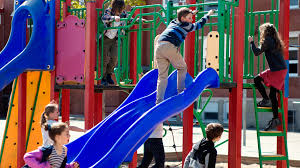
She urges adults to let children explore friendships, learn how to cope with separation from parents, experience disappointment and comfort, and discover joy through creativity. Whether it’s transforming a cardboard box into a robot or laughing so hard with friends that their stomachs hurt, these moments, she argues, are foundational to healthy development.
In other words: let children be children.
Her message resonated strongly with parents and teachers who feel that childhood is increasingly being sacrificed in the name of productivity—especially when it comes to homework.
One parent shared that her five-year-old struggled in kindergarten and was still assigned homework. “The teacher said he had trouble paying attention,” she wrote. “He’s five—of course he did.”
Another echoed the sentiment, saying the expectations for young students have become unreasonable and that childhood has been stripped away.
Others pointed out how kindergarten evaluations used to focus on physical and social skills—things like balance, coordination, and basic counting—rather than academic performance.
Research on early academics paints a nuanced picture. A 2019 study published in the American Educational Research Journal found that academically focused kindergarten programs can offer long-term benefits, both academically and socially.
However, that doesn’t necessarily justify the heavy workload many young students face outside of school. Another study revealed that elementary-aged children are often given three times the recommended amount of homework.
This concern led Kelli to share why she doesn’t assign homework in her own classroom.
“We already spend five or six hours a day together,” she explained. “If we can’t accomplish what we need during that time, we’re not going to get the best out of them late in the evening when they’re tired and should be with their families.”
The one exception she supports is encouraging a love of reading—but even that looks different for young children. Instead of worksheets, it means cozy bedtime routines, shared stories, and parents reading aloud.
At its core, school should help prepare children for the future. But Kelli poses an important question: if that preparation comes at the cost of a child’s short, irreplaceable childhood, is it truly worth it?