I Went Incognito in My Own Supermarket to Find the Person Who Truly Deserves My Legacy
At ninety years old, I decided to test the very empire I had built. I disguised myself as a homeless man and walked into one of my own supermarkets, determined to see who would treat me with kindness when they believed I had nothing. What I discovered that day changed everything.
My name is Mr. Hutchins. For seventy years, I poured my life into building the largest grocery chain in Texas. It all began with a single corner shop after the war a modest store with creaky floors, a hand-painted sign, and shelves that barely held enough to feed the neighborhood. I worked from dawn until midnight, sweeping floors, stocking bread, and learning the rhythms of human need.
By the time I turned eighty, my stores stretched across five states. People called me the “Bread King of the South.” My name was printed in magazines, my face appeared in business journals, and my fortune was whispered about in boardrooms. But none of that filled the silence of my home. My wife had passed away in 1992, and we never had children. Success had given me everything except the one thing I longed for most: connection.
One night, sitting alone in my study surrounded by ledgers and photographs, I asked myself a question that would not leave me: When I’m gone, who truly deserves everything I’ve built? My managers were loyal, my accountants were efficient, but none of them had ever shown me the kind of humanity that mattered beyond profit.
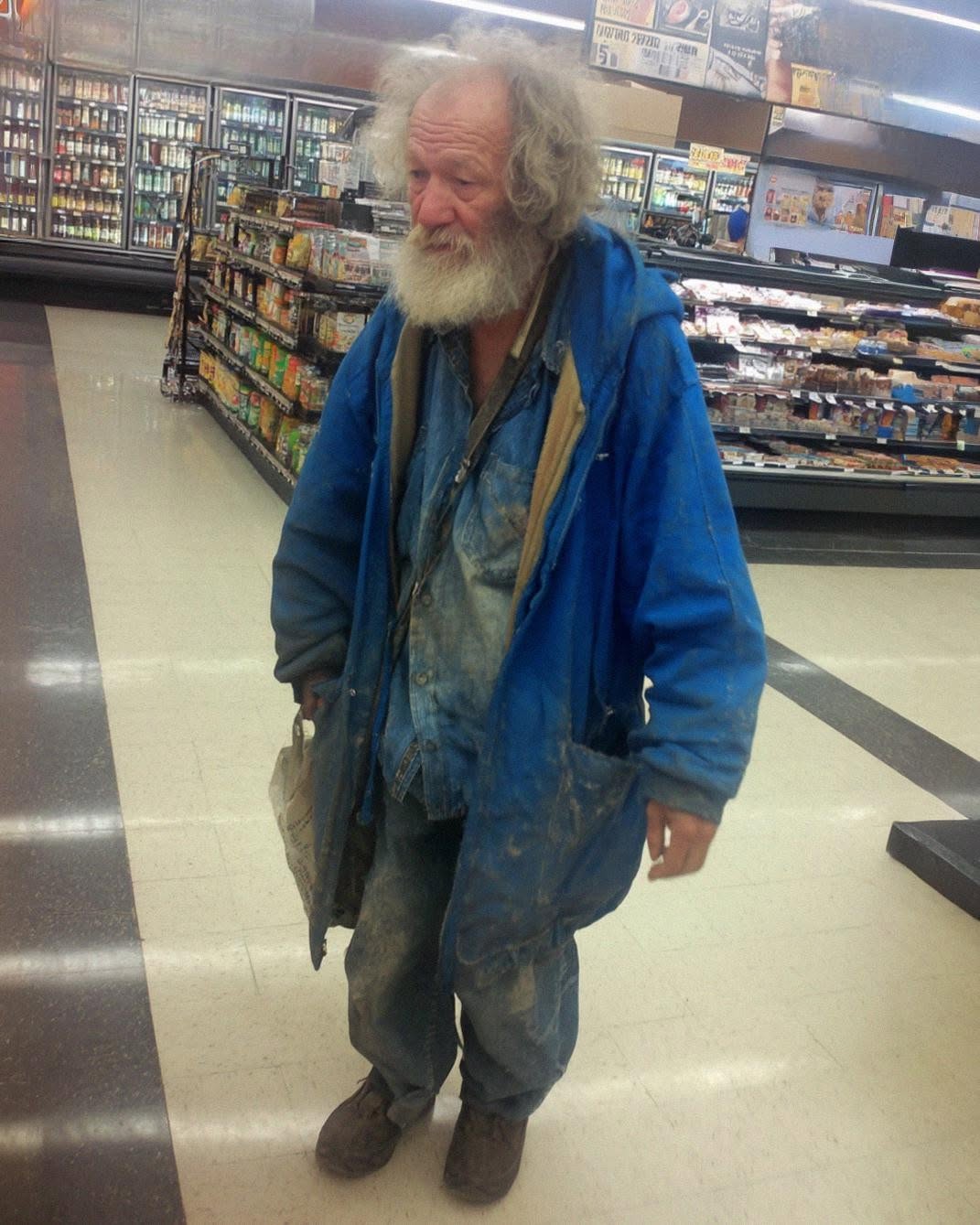
So I hatched a plan. I dressed in ragged clothes, left my face unshaven, and walked into one of my own supermarkets as a stranger. I shuffled past the aisles, leaning on a cane, watching the way people looked at me. Some avoided my eyes. Others whispered. A few employees brushed me off, telling me not to loiter.
But then came Lewis. He was a young administrator, barely thirty, with tired eyes that still carried warmth. He approached me without hesitation, offering me a cup of coffee and a sandwich. He didn’t ask for my name, didn’t question why I was there he simply treated me with dignity. In that moment, I felt something I hadn’t felt in decades: hope.
That night, I sat at my desk and rewrote my will. My entire empire, every store, every dollar, would go to Lewis. Not because he was perfect, but because he had the character I valued most.
A week later, I returned to the store openly as myself. The staff scrambled, adjusting their posture, rushing to greet me. But Lewis remained steady. He recognized me, and instead of fawning, he quietly affirmed what mattered most: integrity and compassion.
Later, I learned a minor detail from Lewis’s past a mistake, a misstep from his youth. But I realized it didn’t change who he had become. His kindness was not a performance; it was his nature.
Lewis didn’t want my money. He told me plainly: “I just want people to remember that respect costs nothing.” Those words struck me harder than any business lesson I had ever learned.
So I created the Hutchins Foundation for Human Dignity. Its mission was simple: to turn kindness into action. Scholarships for students who had nothing but dreams. Shelters for families who had lost their homes. Food banks for communities where hunger still lingered. And I appointed Lewis as its director not for money, but for heart.
At ninety, I found my heir not in blood or wealth, but in a man who understood that true value is measured not by what you own, but by how you treat others. My empire was built on bread, but my legacy would be built on dignity.