Federal Authorities Arrest Suspect Accused of Plotting Contract Killing of Border Patrol Leader
For federal investigators, the case unfolded with the unsettling intensity of a crime drama—revealing a disturbing plot that underscored the growing dangers faced by officials leading the nation’s most contentious immigration enforcement efforts. In the fall of 2025, authorities announced they had disrupted an alleged murder-for-hire scheme aimed at Gregory Bovino, the Border Patrol’s prominent “Commander at Large.”
The accusation—centered on cryptic social media messages, alleged gang references, and cash bounties—sent shockwaves through Washington and ignited a high-stakes legal fight now unfolding in a Chicago courtroom.
A High-Profile Target
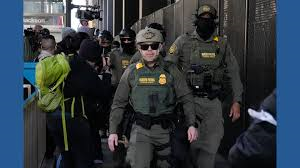
Gregory Bovino has become one of the most visible faces of the Trump administration’s aggressive immigration strategy known as “Operation Midway Blitz.” As a senior Border Patrol official overseeing large-scale enforcement actions in cities such as Los Angeles and Chicago, Bovino has drawn both praise from supporters and fierce opposition from critics.
According to federal court filings, Bovino allegedly became the target of a planned attack in early October 2025. Investigators say a suspect used Snapchat to offer $2,000 for information leading to Bovino’s “capture” and as much as $10,000 for anyone willing to kill him.
Uncovering the Alleged Plot
The case began when Homeland Security Investigations received a tip from a confidential informant. The source provided screenshots of Snapchat messages posted by a user known as “Juan,” whose username allegedly included references commonly associated with the Latin Kings, a Chicago-based street gang.
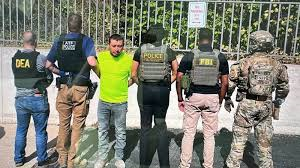
Alongside a photograph of Bovino, the messages included Spanish-language text offering money for locating him, as well as a blunt statement promising a larger payout for carrying out an attack. Federal agents traced the account to Juan Espinoza Martinez, a 37-year-old Mexican national who had lived in the United States for approximately 30 years and resided in the Chicago suburb of Burr Ridge.
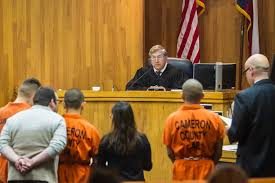
Martinez was arrested on October 6, 2025, and charged with solicitation of murder-for-hire.
Courtroom Scrutiny and Shifting Claims
As the case advanced toward trial in January 2026, prosecutors encountered significant judicial resistance to portions of their original narrative. While the government initially described Martinez as a high-ranking member of the Latin Kings, prosecutors later acknowledged they lacked direct proof of active gang membership.
U.S. District Judge Joan Lefkow issued several key rulings that reshaped the case:
-
Gang claims excluded: The prosecution was barred from describing Martinez as a gang member, with the judge ruling that such assertions would unfairly prejudice jurors without solid evidence.
-
Intent becomes central: The trial now hinges on whether Martinez’s messages represented a genuine solicitation to commit murder or were merely reckless, inflammatory speech made during a period of heightened tension.
-
Context permitted: Defense attorneys emphasized that the messages were sent amid widespread unrest in Chicago, shortly after Bovino was filmed using tear gas on protesters—an incident for which another judge later criticized him for misleading testimony.
Competing Narratives
Federal officials describe the alleged plot as a grave threat to law enforcement and democratic order. DHS leadership has labeled the scheme “depraved,” warning that threats against federal officers will trigger swift and forceful prosecution.
The defense, however, paints a far different picture. Martinez’s attorneys describe him as a nonviolent carpenter and father of three with no criminal history, arguing he is being unfairly portrayed as a dangerous extremist to justify aggressive federal tactics. They contend the Snapchat messages amounted to angry rhetoric rather than an actionable plan.
As jurors were seated at the Dirksen Federal Building, the case narrowed to a stark question: do a few lines of digital text and emojis amount to criminal intent?
The Broader Context: Operation Midway Blitz
The alleged plot emerged during the peak of Operation Midway Blitz, a sweeping, multi-agency immigration crackdown launched in Chicago in September 2025. Coordinated by ICE, Border Patrol, and other federal agencies, the operation targeted undocumented immigrants with criminal records.
Conducting such an initiative in a sanctuary city sparked immediate controversy. Protests erupted, clashes with federal agents followed, and public outrage intensified. Federal officials argue that, within this volatile environment, political opposition escalated into dangerous threats.
They contend the alleged plan against Bovino represented not only a personal attack, but a broader challenge to federal authority.
Federal Response: “A Direct Assault on the Rule of Law”
Senior officials at DHS and the Department of Justice responded forcefully following Martinez’s arrest. At press briefings, leaders framed the case as a necessary stand for officer safety and institutional integrity.
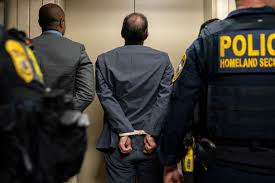
U.S. Attorney Andrew S. Boutros stated plainly that placing a monetary bounty on a law enforcement officer constituted “an attack on the rule of law,” pledging to pursue the case to the fullest extent allowed under federal law.
National Implications
Beyond the individual defendant, experts view the case as part of a troubling nationwide pattern. Federal agencies report an increase in threats directed at immigration officers, particularly in cities where enforcement operations are most visible.
The case has further polarized public debate:
-
Law enforcement supporters argue it demonstrates the need for expanded protections and intelligence resources.
-
Civil liberties advocates counter that aggressive enforcement strategies deepen mistrust and contribute to escalating tensions that endanger everyone involved.
What Comes Next
As pretrial proceedings continue into 2026, prosecutors face the challenge of proving that Martinez’s online messages crossed the line from rhetoric into criminal solicitation. A conviction could result in a sentence spanning decades, as targeting a senior federal official is among the most serious crimes under U.S. law.
Why the Case Matters
The prosecution of Juan Espinoza Martinez highlights how modern threats increasingly originate online, where social media platforms can rapidly amplify hostile rhetoric into perceived danger. It also raises critical questions about how courts should interpret digital speech in charged political climates.
While investigators say swift coordination prevented potential tragedy, the outcome of this trial will help define how the justice system navigates the intersection of online expression, public safety, and the rule of law in an era of deep national division.