House Committee Moves to Hold Bill and Hillary Clinton in Contempt Over Subpoena Defiance
WASHINGTON — A House committee voted Wednesday, with support from both parties, to cite Bill and Hillary Clinton for contempt of Congress, setting the stage for a full House vote in approximately two weeks that could lead to potential criminal consequences.
The House Oversight Committee approved a contempt resolution against former President Bill Clinton by a 34–8 vote after he declined to comply with a subpoena seeking testimony about his past association with the late sex trafficker Jeffrey Epstein.
According to the resolution, Bill Clinton obstructed the committee’s investigation into how federal authorities handled inquiries involving Epstein and his longtime associate Ghislaine Maxwell. Lawmakers also accused him of hindering efforts to examine the circumstances surrounding Epstein’s death, the operation of sex-trafficking networks, how Epstein and Maxwell allegedly used influence to shield their activities, and possible violations of ethics rules.
A detailed report accompanying the resolution stated that Bill Clinton’s refusal to appear constituted contempt of Congress and warranted referral to the U.S. attorney in Washington, D.C., for prosecution under federal law.
In a separate vote, committee members also approved a contempt citation against Hillary Clinton, the former first lady and secretary of state, by a margin of 28–15.
Both Clintons have denied wrongdoing, arguing that the subpoenas were invalid and unenforceable and maintaining they had no knowledge of Epstein or Maxwell’s criminal conduct.
Other high-profile figures — including former Cabinet members and senior White House advisers — have previously faced similar contempt findings. However, only a small number ultimately served prison sentences after refusing to testify before congressional committees.
If the House adopts the resolutions and federal prosecutors pursue charges resulting in convictions, the Clintons could face jail sentences ranging from one month to one year, along with fines between $100 and $1,000.
The Oversight Committee initially authorized subpoenas for both Clintons last July. Despite months of negotiations between their attorneys and committee leadership, neither appeared for the requested depositions.
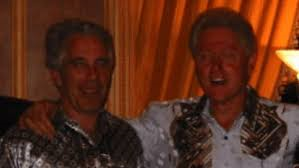
Committee leaders have emphasized that the former couple’s relationship with Epstein and Maxwell is central to the investigation. In sworn written statements submitted recently, both Clintons denied socializing with the pair.
Bill Clinton stated that his interactions with Epstein were limited and related to humanitarian initiatives, including travel on Epstein’s private aircraft between 2002 and 2003. Both Clintons denied ever visiting Epstein’s private island in the U.S. Virgin Islands, while acknowledging that Maxwell once sought a personal relationship with a mutual acquaintance.
A former contractor who worked on the island previously alleged seeing Bill Clinton there, though the former president has denied this claim. In their sworn statements, both Clintons said they could not recall specific interactions with Epstein or Maxwell during the 1990s and denied any awareness of their later criminal activities.
Bill Clinton stated he did not remember speaking with Epstein for more than a decade before Epstein’s arrest in 2019. Neither Clinton addressed photographs showing Maxwell attending their daughter Chelsea’s wedding in 2010.
Despite internal party disagreements, several lawmakers crossed party lines to support the contempt resolutions. During hours of debate, members argued over whether a last-minute proposal from the Clintons’ legal team — offering a limited, transcribed deposition in New York under strict conditions — was sufficient.
Committee leadership rejected the proposal, arguing that it amounted to a demand for preferential treatment. They also cited Bill Clinton’s past record of narrowly interpreting testimony under oath and his impeachment during his presidency.
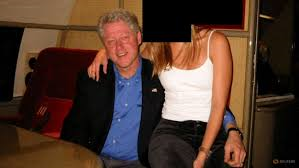
To date, only a small number of former federal officials have appeared before the committee. In some cases, lawmakers accepted written statements instead of live testimony, and health concerns prevented at least one former official from appearing at all.
Legal scholars have noted that prosecuting a former president for ignoring a congressional subpoena presents complex constitutional and institutional challenges, which could discourage the Justice Department from bringing charges.
Representatives for the Clintons did not provide immediate comment following the committee’s vote.