House Passes Nearly $180 Billion Funding Package to Avert Shutdown
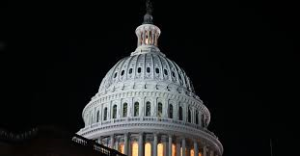
The House of Representatives has approved a federal funding package totaling nearly $180 billion, moving Congress one step closer to preventing a government shutdown expected at the end of the month.
The legislation includes just over $174 billion to fully or partially fund several federal departments, including Commerce, Justice, Interior, and Energy. It also establishes budgets for key agencies and initiatives such as NASA, the FBI, and federal nuclear energy programs.
The package consists of three appropriations bills and passed with broad bipartisan support, clearing the House by a vote of 397–28. Opposition came from 22 Republicans and six Democrats. The vote followed internal resistance earlier in the week from conservative Republicans, particularly members of the House Freedom Caucus and others aligned with the party’s right wing.

Much of the criticism centered on the Commerce-Justice-Science (CJS) spending bill. Conservative lawmakers argued that rank-and-file members were excluded from meaningful input during negotiations. The CJS bill is one of the 12 annual appropriations measures Congress must pass each fiscal year. Leadership initially grouped it with two other bills into a three-bill package, which, if approved by both chambers, would complete half of the required funding legislation.
Tensions escalated further on Wednesday during a procedural vote, as conservatives objected to a community funding project requested by Rep. Ilhan Omar of Minnesota. The proposal would have allocated $1,031,000 to Generation Hope’s Justice Empowerment Initiative, a program aimed at helping justice-involved residents of Minneapolis access job training and support services.
Opponents argued that the funding could enable misuse of taxpayer dollars, particularly given Minnesota’s ongoing struggles with large-scale fraud cases involving public service programs. Some conservatives claimed the earmark disproportionately benefited a specific community without sufficient safeguards.
Community project funding, often referred to as earmarks, allows lawmakers to direct federal funds toward projects in their districts. Critics within the GOP have long argued that such provisions invite corruption and lack transparency.

During the procedural standoff, Speaker Mike Johnson spent nearly half an hour negotiating with conservative lawmakers on the House floor to prevent the package from failing before debate could begin. As part of the compromise, House GOP leaders agreed to remove the disputed earmark and hold a separate vote on the CJS bill.
The CJS bill was voted on first, followed by a combined vote on the remaining two measures, and then a final vote merging all three before advancing the package to the Senate. Despite the changes, some members of the House Freedom Caucus indicated they still expected opposition to the CJS portion.
Ultimately, the legislation passed with bipartisan backing. Democratic leaders on the House Appropriations Committee praised the bill for avoiding controversial provisions that could have derailed negotiations. The funding levels exceed the administration’s initial request but fall below what would have been allocated under a continuation of previous fiscal-year spending levels.
The White House has expressed support for the package, which will be consolidated into a single bill before consideration in the Senate.
Congress now faces a Jan. 30 deadline to resolve the remaining six appropriations bills in order to prevent another government shutdown.