Why Mark Knopfler Walked Away From Success
Mark Knopfler walked away from one of the most successful bands on the planet while it was still generating enormous money, attention, and momentum.
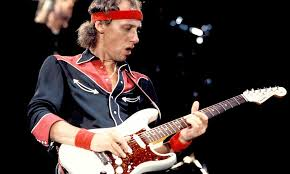
There was no implosion.
No public fallout.
No loss of ideas.
Dire Straits didn’t end because it failed.
It ended because it succeeded too completely.
By the late 1980s, the band had crossed a threshold few artists ever reach — and even fewer escape. Stadium tours were routine. Global radio rotation was guaranteed. Brothers in Arms sold tens of millions of copies and became one of the defining albums of the CD era. Knopfler’s guitar tone and voice weren’t just popular — they were everywhere, embedded into MTV playlists, advertising, and corporate-scale touring.


At that level, the system doesn’t ask what you want.
It assumes continuation.
Momentum becomes obligation. Growth becomes policy.
The expectation was clear: repeat the formula. Expand the tours. Increase the scale. Keep the machine running. From an industry perspective, Dire Straits wasn’t a band anymore — it was infrastructure. You don’t shut down infrastructure. You optimize it.
But the cost of that optimization was already visible.
Relentless touring had flattened the creative process. Writing no longer felt exploratory; it felt scheduled. Performing wasn’t an expression — it was a requirement. Each album wasn’t a question, but a response to demand. The success of Dire Straits required Knopfler to live inside a version of himself that no longer matched how he wanted to work, travel, or exist.
The industry didn’t recognize this as a problem.
It framed it as success.
From the outside, walking away would have looked irrational. He could have repeated the cycle indefinitely. Bigger tours. Longer runs. Higher guarantees. Few artists ever receive permission to coast at that altitude.
Instead, after the 1991 tour, Knopfler did something almost unthinkable.
He ended Dire Straits completely.
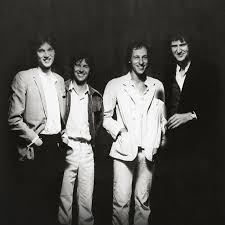
There was no grand farewell, no multi-year “final tour,” no carefully managed reunion window. He didn’t dismantle the band slowly or leave the door open for nostalgia economics. He shut it down because continuing would have required turning music into maintenance — and that was the one thing he refused to do.
The effects were immediate.
The scale collapsed. Stadiums vanished. Media attention narrowed. Solo records arrived quietly, met with respect but without the cultural dominance Dire Straits once commanded. There was no replacement machine waiting to absorb the loss. Just smaller venues, slower schedules, and creative autonomy.
The industry responded the way it always does: politely, then elsewhere.
Knopfler never reversed course. He never cashed in on reunion tours. He never rebuilt the machine under a different name. He accepted a permanent reduction in reach in exchange for authorship.
His later career moved toward what the system doesn’t reward at scale: nuance, restraint, and patience. He focused on storytelling, on fingerstyle guitar work, on songs that didn’t compete for mass attention. He wrote film scores. He collaborated selectively. He played theaters instead of arenas. The work became quieter — and entirely his.
Years later, Knopfler explained that he wanted to be able to walk down the street and live like a human being.
That wasn’t nostalgia.
It was a boundary.
What unsettles people about this story isn’t that he walked away from fame. Artists do that all the time in theory.
What’s unsettling is that the only way for him to protect the integrity of the music was to dismantle the very system built to amplify it.
Success had grown larger than the work itself.
And once that happens, staying successful becomes the most expensive choice of all.
Sometimes the cost isn’t failure.
It’s remaining visible after the work no longer belongs to you.