For the First Time Ever, a Child Beats One of the Deadliest Cancers
Few moments are more devastating for a parent than sitting in a doctor’s office and hearing news that changes everything. The pain becomes even heavier when that diagnosis comes with little hope for effective treatment — when families are told that all they can do is prepare for the worst.
One of the most feared diagnoses in pediatric medicine is diffuse intrinsic pontine glioma, commonly known as DIPG. This rare and aggressive brain cancer primarily affects children and has long been considered universally fatal. Fewer than 10 percent of patients survive beyond two years after diagnosis. The tumor grows rapidly in critical areas such as the brain stem and spinal cord, making surgical removal nearly impossible. Despite attempts using radiation, chemotherapy, and surgery, no child had ever been cured of DIPG.
Until now.
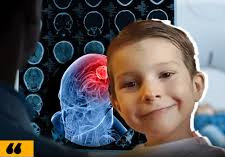
For the first time in medical history, a young patient has defied the odds. Lucas Jemeljanova, a 13-year-old boy from Belgium, has become the first known child to fully recover from DIPG.
Lucas was diagnosed at just six years old. His doctor, Jacques Grill, delivered grim news to his parents, Cedric and Olesja, explaining that Lucas’ chances of long-term survival were extremely low. Refusing to surrender to that prognosis, his parents sought other options and traveled with Lucas to France so he could take part in an experimental clinical trial known as BIOMEDE, which was designed to test new drug therapies for DIPG.
As part of the trial, Lucas was randomly assigned to receive everolimus — a chemotherapy medication that targets a protein called mTOR. This protein plays a key role in cancer growth by helping tumor cells divide and form new blood vessels. Everolimus works by blocking mTOR, cutting off the tumor’s blood supply and slowing cell reproduction. The drug is taken once daily and is already approved in the United States and the United Kingdom to treat several cancers, including those affecting the breast, kidneys, stomach, and pancreas. However, before the BIOMEDE trial, it had never been used to treat DIPG.
Doctors were uncertain how Lucas would respond. But over time, the results became extraordinary.
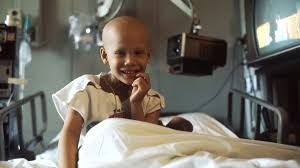
“Over a series of MRI scans, I saw the tumor completely disappear,” Grill recalled. Even more astonishing, the cancer never returned. Now 13, Lucas is officially considered cured of DIPG — an outcome once thought impossible.
Even after the tumor vanished, Grill hesitated to discontinue treatment. With no precedent to guide him, Lucas continued taking everolimus daily until about a year and a half ago.
“I didn’t know when to stop or how,” Grill explained. “There was no reference anywhere in the world.”
Lucas remains the only child in the BIOMEDE trial whose tumor has fully disappeared. However, the treatment showed promise in others as well. Seven additional children were classified as “long responders,” meaning their tumors did not progress for more than three years after beginning everolimus therapy.
Researchers believe Lucas’ remarkable response may be linked to an extremely rare genetic mutation within his tumor that made it unusually sensitive to the drug. In other patients, the medication’s effectiveness may be explained by unique biological characteristics of their tumors.
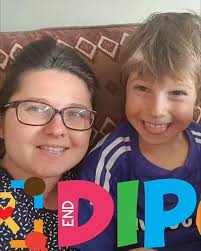
While everolimus is not considered a universal cure for DIPG, the results of the trial have brought genuine hope to families facing the diagnosis. Scientists are now working to understand why Lucas’ tumor responded so dramatically and how similar results might be reproduced using tumor organoids — lab-grown cells that mimic real tumors. According to BIOMEDE researcher Marie-Anne Debily, the next goal is to identify treatments that can work just as effectively across more patients.
Additional progress has also emerged from newer trials. One recent study tested an experimental immunotherapy in children with DIPG, producing encouraging results. Many participants experienced tumor shrinkage, and several showed improvements in daily function and quality of life. Among them, one patient — a young man known only as Drew — has remained tumor-free for more than four years, a result comparable to Lucas’ success.
Once regarded as a certain death sentence, DIPG now carries a sense of possibility for the first time. While extensive research and development are still needed, Lucas’ case has reshaped expectations and renewed hope.
“Lucas’ story gives real hope,” Debily said.