Congress Condemns Socialism as Trump Meets New York’s Mayor-Elect
In a rare display of unity on Capitol Hill, Democrats and Republicans came together to pass a resolution condemning socialism — an unusual moment of bipartisan cooperation on one of the nation’s most divisive ideological fault lines. The vote unfolded against the backdrop of heightened political attention, just ahead of a closely watched meeting between President Donald Trump and New York City mayor-elect Zohran Mamdani, amplifying national debate over economic ideology and the role of government.
As New York City prepared for a historic change in leadership in late November 2025, Mamdani emerged as a focal point of national political conversation. Fresh off a decisive mayoral victory — making history as the first Muslim and first South Asian individual elected to lead the nation’s largest city — Mamdani found himself navigating a complex political moment that connected local governance, national ideological disputes, and federal power dynamics.
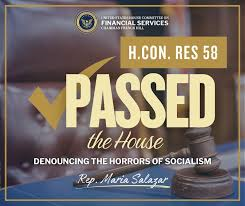
On November 21, the U.S. House of Representatives passed a symbolic, nonbinding resolution denouncing what lawmakers described as the “horrors of socialism.” The timing was striking: the vote occurred just hours before Mamdani was scheduled to meet President Trump at the White House.
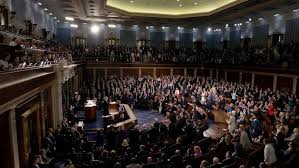
The measure passed by a margin of 285–98, with unanimous Republican support and 86 Democrats voting in favor. The outcome highlighted a rare moment of cross-party alignment on a charged ideological issue. Supporters framed the resolution as a defense of capitalism and democratic institutions, arguing that the United States must clearly distinguish itself from authoritarian regimes historically associated with socialist systems.
Several lawmakers who backed the resolution pointed to personal or family experiences under socialist governments — particularly in countries like Cuba — as evidence of the dangers they believe such systems pose. Among the Democrats joining Republicans were prominent New York representatives, including Hakeem Jeffries, Ritchie Torres, Gregory Meeks, Grace Meng, and Tom Suozzi.
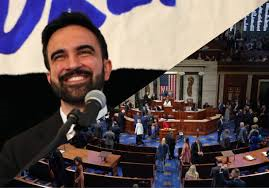
Their votes underscored persistent divisions within the Democratic Party, revealing a widening gap between its centrist leadership and a growing progressive faction that views democratic socialism as a viable response to entrenched economic inequality. Suozzi’s support for the resolution carried particular weight, given his earlier efforts during the mayoral campaign to distance himself from Mamdani and push back against the party’s leftward momentum.
Progressive lawmakers, including Representative Maxine Waters, criticized the resolution, arguing that symbolic ideological battles distract from urgent economic challenges facing Americans. They maintained that Congress should prioritize addressing rising housing costs, stagnant wages, and healthcare affordability rather than issuing condemnations of broad political philosophies.
Mamdani responded calmly to the House vote, choosing not to inflame tensions. He dismissed the resolution’s practical impact and reiterated his focus on governing pragmatically. Ahead of his trip to Washington, he emphasized that his administration would center on tackling housing affordability, cost-of-living pressures, public services, and economic security — the same issues that defined his campaign.
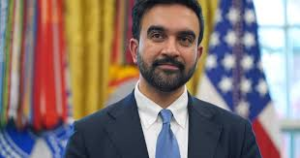
That same day, Mamdani arrived at the White House for his first in-person meeting with President Trump, an encounter many expected to be contentious. Throughout the campaign, Trump had repeatedly criticized Mamdani, labeling him a “communist” and warning that his leadership could harm New York City. At times, Trump had even threatened to restrict federal funding or intervene in city affairs.
Contrary to expectations, the Oval Office meeting struck a notably cordial tone. Images of the two leaders smiling and engaging in discussion surprised observers, and both sides described the conversation as substantive and constructive. Trump publicly expressed confidence in Mamdani’s ability to govern, saying he believed the new mayor “can do a very good job” and emphasizing his desire to see New York City thrive.
Their discussion focused on shared concerns such as the city’s soaring cost of living, housing stability, and public safety — areas where federal-local cooperation could play a role. Both leaders indicated a willingness to collaborate where interests align, despite clear ideological differences. Trump even suggested Mamdani might “surprise some conservative people” with his approach to leadership.
Mamdani echoed that sentiment, describing the meeting as practical and solution-oriented rather than ideological. While reaffirming his identity as a democratic socialist, he stressed that his responsibility as mayor is to represent all New Yorkers and to work with any partner — including the federal government — when it serves the public good.
Taken together, the House vote, the bipartisan but contentious resolution, and the unexpectedly cordial Trump-Mamdani meeting highlighted the layered complexity of the current political moment. They demonstrated how symbolic gestures in Congress, ideological struggles at the national level, and the realities of local governance can intersect to shape political narratives and policy outcomes.
At its heart, the week illustrated a defining moment in American politics: a divided legislature making a symbolic statement, a newly elected mayor challenging conventional economic frameworks, and a high-profile meeting between two figures whose rivalry has drawn national attention. How Mamdani balances ideological conviction with pragmatic governance may well become one of the most closely watched political stories of this era.