She Finally Fixed “The Chair” — The Everyday Problem No One Realized Could Be Solved
The idea is surprisingly clever.
There’s a quiet, universal problem many people face at the end of the day: what to do with clothes that aren’t dirty enough for the laundry but not clean enough to go back in the closet. Socks and underwear are an easy decision, but items like jeans worn once or a sweater tossed over a T-shirt for a few hours fall into a gray area.
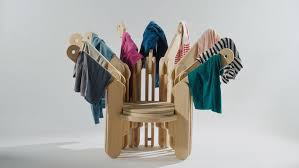
Inventor Simone Giertz humorously points out that most people solve this problem the same way—by using a chair in their bedroom. It’s the place where “almost-clean” clothes pile up, too worn for drawers but not worn enough for the laundry basket. This familiar piece of furniture is so common it’s earned a nickname of its own: “The Chair,” sometimes jokingly called a “chairdrobe.”
Giertz admitted she had one too, but she wasn’t happy with it. The cluttered look bothered her, and instead of accepting it, she decided to redesign it. Her goal was simple but ambitious: create a chair that’s actually meant to hold those in-between clothes without looking messy.

Her solution was a rounded chair with a rotating arm or rack that allows clothes to be hung and then discreetly tucked behind the seat. Along the way, she questioned everything—whether it would look awkward, how the rotating mechanism would work, and whether it would truly improve on the original chair people already use. Building the prototype meant answering each of those questions through trial and experimentation.
Watching her work reveals the full creative process. She handles every step herself, from engineering the mechanism to shaping the wood and upholstering the chair. The final result is a clean, modern-looking piece of furniture that doesn’t advertise its hidden purpose.
When she places it in her bedroom and demonstrates the swiveling rack, the concept truly shines. Even loaded with many pieces of clothing, the chair looks tidy once the rack is turned out of sight. Compared to the usual cluttered chair, the difference is striking.
Giertz was clearly proud of what she’d created, expressing disbelief that she managed to build it using intuition, plywood, and determination. She joked about wishing it were already a product people could buy.
Viewers quickly agreed. Many praised the design and encouraged her to turn it into a real, marketable item, suggesting partnerships with furniture companies and even imagining large-scale collaborations. Comments highlighted how practical, elegant, and refreshingly simple the chair was—no gimmicks, no unnecessary technology, just a smart solution to a common problem.
A great invention often comes from recognizing a problem everyone accepts as normal and finding a better way to handle it. The Chair is something nearly everyone has, and this redesigned version offers a thoughtful, stylish answer to a shared daily frustration.