“They Didn’t Know Who My Father Was”
The hallway always smelled the same—industrial cleaner, leftover pizza grease, and cheap body spray layered into a nausea-inducing fog. I hugged my history book tight against my chest and stared at the floor, counting the tiles as I walked.
One. Two. Three.
Breathe.
Just reach third period.
I knew the rules by heart. Don’t look up. Don’t respond. Don’t exist.
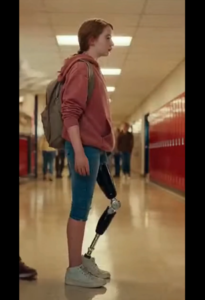
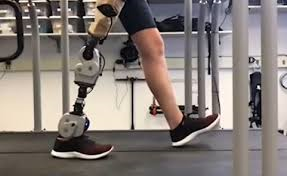
Behind me, I heard it anyway—the unmistakable rhythm of heavy boots… followed by the mechanical whirr of my left leg.
“Well, look who’s clanking today,” Tyler’s voice cut through the crowd. Creekwood High’s golden quarterback. Untouchable. Wrapped in a varsity jacket and immunity.
“Oil yourself, Carter!” Brad laughed. “You’re squeaking!”
Their friends exploded with laughter, tossing a foam football between them like this was all part of the game.
I clenched my jaw. I was fifteen. I didn’t want revenge. I didn’t want justice. I just wanted to disappear. But you can’t disappear when every step announces you to the world.
I walked faster. The carbon-fiber prosthetic my dad had built with his own hands compressed and hissed as I moved. Months of work. Precision engineering. Right now, it felt like dead weight.
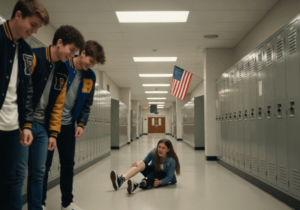
Three feet from the stairwell.
Three feet from teachers.
Three feet from safety.
Something moved beside me.
A foot hooked my ankle—my real one.
It wasn’t a stumble. It was deliberate.
I slammed into the floor. My books skidded away. Papers burst free and drifted through the air.
Then came the sound that silenced everything.
CRACK.
Not bone.
Metal.
Titanium shearing apart under force. A sharp, hollow snap—like a gunshot.
My prosthetic was twisted beneath me, bent at an impossible angle. The main support strut had snapped clean through.
The laughter came instantly.
“She’s broken!” Tyler shouted. “System error! Call tech support!”
I tried to stand. The leg collapsed. I fell again, skin burning, palms scraped raw. My vision blurred—pain, humiliation, and fury colliding.
Phones were up. Recording. Always recording.
Tyler kicked my history book down the hall.
“Tell your dad to build it tougher next time,” he said, already walking away.
No one helped.
Some stared. Some turned away.
None of them knew what that leg meant.
None of them knew who my father had been before the garage, before the quiet life.
Breaking that prosthetic wasn’t bullying.
It was a declaration.
The Assessment
I dragged myself to the nurse’s office, the ruined leg grinding with every step. Mrs. Gable gasped and reached for the phone.
“Please,” I whispered. “Just call my dad.”
Reporting Tyler never worked. His father sat on the school board. His uncle wore a badge. Complaints only made things worse.
My dad arrived in his rusted Ford pickup. One look at the wheelchair. One look at the broken prosthetic in my lap.
He didn’t raise his voice.
He went still.
At home, in the garage that always smelled like oil and safety, he examined the damage under bright lights.
“This didn’t happen by accident,” he said quietly.
“I tripped,” I said.
“No.” He measured the break with calipers. “This alloy fails at three thousand pounds of vertical force. This fracture is lateral. Someone kicked it.”
When he met my eyes, there was no anger—only cold focus.
“Who?”
I told him everything.
He opened the locked drawer of his tool chest. Inside weren’t tools, but files. A lockbox. An old satellite phone.
“We have a problem,” he said into it. “Code Black. Family involved.”
Then he kissed my forehead.
“I’ll fix the leg tonight,” he said. “You’re staying home tomorrow.”
“Dad… don’t go to the school,” I begged.
He smiled—tired, sharp.
“I won’t be alone.”
The Arrival
The next morning, my phone buzzed nonstop.
SARAH: LOOK.
The photo showed three black Suburbans parked in front of Creekwood High. Government issue. Tinted windows.
My dad stood beside them in a suit, flanked by men who looked carved from stone.
The principal looked like he might collapse. Tyler’s father looked worse.
In the conference room, my dad sat at the head of the table.
“This is ridiculous,” Mr. O’Connell snapped. “Boys roughhouse. I’ll pay for the leg.”
My dad slid a folder forward.
“The prosthetic costs eighty-five thousand dollars,” he said calmly. “But we’re not here for property damage.”
A video played. Security footage. Clear. Undeniable.
Dad leaned forward. “I also know about your zoning violations.”
Silence.
Then he looked at Tyler.
“You’re smart. Assault charges don’t look good on Ivy League applications.”
“What do you want?” O’Connell whispered.
“I want my daughter safe,” Dad said. “And I want him gone.”
The Ghost in the Hallway — The End
Tyler never came back.
No announcement. No explanation. His locker was cleared overnight. His name vanished from rosters and social media like he’d never existed.
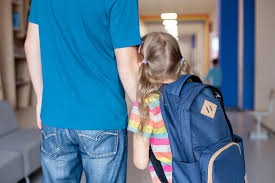
At school, the halls felt different. People stepped aside when I walked. No laughter. No whispers.
Power had shifted.
Fear lingered—but so did peace.
I ate lunch without flinching. I walked without bracing. And when my new prosthetic arrived—stronger, sleeker, unbreakable—I stood taller than I ever had before.
They used to see a target.
Now they saw the echo of consequences.
And they never tested it again.