“That Purple Paint Isn’t Decoration — It’s a Warning”
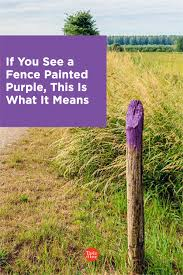
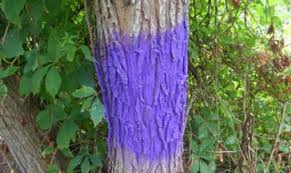
While walking along a rural road, a forest path, or the edge of a small town, you may spot something unusual painted on a tree or fencepost — a bright stripe of purple. At first, it might seem decorative, even intentional in an artistic way. In reality, that mark is neither random nor ornamental. Across many areas of the United States, purple paint carries a specific legal meaning: it signals private property.
This simple stripe functions the same way as a “No Trespassing” sign. It delivers a clear message without words, warning that you are nearing land where entry is not permitted. For hikers, hunters, and anyone who enjoys exploring outdoors, recognizing this symbol can help avoid awkward encounters, citations, or more serious legal consequences.

The practice exists for practical reasons rather than symbolism. Posted signs can be torn down, weathered, or removed over time, which often leads to disputes about whether a warning was visible. Purple paint solves that problem. It lasts for years, remains noticeable through changing seasons, and is difficult to overlook once its meaning is understood.
There are legal guidelines governing how these markings must be applied. Typically, the paint appears as vertical lines at least one inch wide and eight inches long, placed three to five feet above ground level. To be effective, the marks are repeated at set distances — often about every 100 feet — along the boundary. When used correctly, these markings remove uncertainty and establish a legally recognized line that cannot be easily disputed.
Many states have officially adopted what are known as “purple paint laws.” States such as Texas, North Carolina, Illinois, Kansas, Missouri, Indiana, Florida, Pennsylvania, and Arkansas recognize this method, with other states using similar standards. Although the exact rules vary, the meaning remains the same everywhere: purple paint means do not cross.

The color itself was chosen because it stands out naturally in outdoor environments and is rarely confused with other markings. Over time, it has proven to be an effective, low-maintenance way for landowners to protect their property without relying on constant sign replacement or visual clutter.
For property owners, purple paint allows boundaries to be asserted calmly and clearly, without confrontation. For those passing by, it serves as an important reminder that land which appears open or untouched may still be privately owned. When you see purple paint, it’s a cue to pause, reconsider your path, and respect the line.
It isn’t a hostile message — it’s a quiet one. Each purple mark represents stewardship, care, and responsibility for the land it protects. Understanding what it means helps ensure that shared spaces remain respectful, lawful, and peaceful for everyone who travels through them.