The world’s wealthiest individual appears ready to offer the struggling Republican Party a crucial boost — even if the party itself has yet to prove it deserves the help.
Elon Musk — the billionaire behind Tesla, SpaceX, and the social platform X, and a former ally of President Donald Trump — has already contributed large sums of money to support Republican efforts ahead of the 2026 midterm elections, with more financial backing expected.
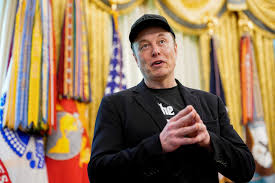
Given Musk’s extraordinary wealth, the development is significant. With an estimated net worth of $674.2 billion, his fortune nearly matches the combined wealth of the next three richest people on the planet. By contrast, Republicans are facing growing political headwinds. Polling data shows Democrats leading the generic congressional ballot by 3.5 points.
In short, Republicans need Musk far more than Musk needs them.
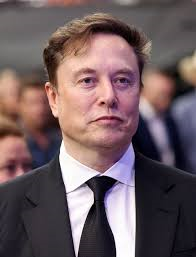
That reality makes his renewed engagement even more notable, especially considering the friction earlier this year between Musk and Trump. Upon returning to office, Trump appointed Musk to head the Department of Government Efficiency, an initiative that initially showed promise but was ultimately dismantled by entrenched bureaucratic resistance.
Tensions escalated further when Musk and Trump publicly clashed over the president’s so-called “Big Beautiful Bill,” a dispute that became increasingly personal and even led Musk to float the idea of forming a new political party. Though the two later appeared to mend fences at a September memorial honoring conservative figure Charlie Kirk, Trump does not appear to be the driving force behind Musk’s renewed political involvement.
Reports say that Musk met privately last month with Vice President J.D. Vance, who helped arrange a dinner at his official residence in Washington, D.C. Observers on X may have noticed that Musk’s political commentary has intensified in recent weeks — a shift many conservatives welcome given his strong advocacy for free speech.
Musk has also positioned himself as a vocal opponent of what he views as Marxist-inspired cultural ideology, reinforcing his appeal to the conservative base. That support, however, contrasts sharply with the performance of congressional Republicans, who often speak boldly but deliver little in terms of results. There is scant evidence, critics argue, that GOP lawmakers share Musk’s priorities — including meaningful government efficiency reforms.
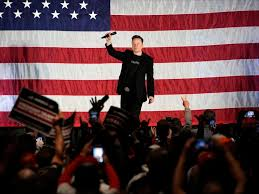
Adding to the internal tension, Vanity Fair published the first installment of an interview Tuesday with White House Chief of Staff Susie Wiles, who attended the Musk-Vance dinner. In the interview, Wiles reportedly described Vance as insincere and a “conspiracy theorist,” while also suggesting that Musk struggles with drug use.
These remarks underscore what many see as an impending power struggle within the GOP once Trump exits the political stage. On one side are Vance and the America First faction; on the other, establishment figures like Wiles, eager to move past Trumpism altogether.
That internal battle, critics warn, carries enormous stakes. Losing it could fundamentally reshape the party’s future.
For now, conservatives can take some comfort in the fact that Musk appears aligned with their cause — especially his commitment to free speech. Without that influence, many fear censorship would have advanced even further.
Still, the irony remains: congressional Republicans are poised to receive desperately needed support from Musk — assistance that, according to critics, they have done little to earn.