She has been labeled a billionaire – so she MUST be bad!
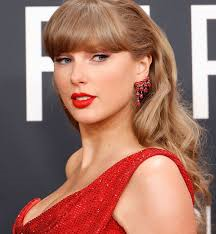
Every time I write about Taylor Swift, someone eventually drops the same line into the comments like it’s a mic-drop: “There are no ethical billionaires.”
Swift has been labeled a billionaire, therefore she must be unethical. Case closed.
Except… no case was actually made.
What people think they’re saying is that extreme wealth is inherently immoral. What they’re actually doing is collapsing a complex economic reality into a slogan they’ve never bothered to interrogate.
When most people hear the word “billionaire,” they picture a cartoon villain: a person sitting on a literal pile of cash, hoarding money they could easily distribute to fix the world’s problems but simply choosing not to. A dragon guarding gold. Scrooge McDuck swimming laps in a vault. A checking account with nine zeros and a clenched fist.
That image has almost nothing to do with how wealth actually functions.
Taylor Swift’s net worth is estimated to have crossed the billion-dollar mark in 2024 and is now speculated to be around $1.6 billion. Important word: speculated. She has never released tax returns, and net worth calculations are guesses based on the projected future earnings of assets she owns—not piles of spendable cash.
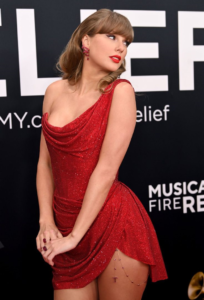
Most of that valuation comes from her music catalog. The songs she wrote. The recordings she performed. Assets that generate income over time.
She famously paid around $360 million to buy back her original masters from Shamrock Capital—a move that increased her net worth on paper, because those recordings generate more than $100 million a year from streaming alone. She has publicly stated that the money to do that came from the Eras Tour. She couldn’t buy them earlier because she didn’t have that amount of liquid cash. So she went out and earned it.
Add in her publishing rights (which are separate from master rights), real estate, concert film revenue, and ownership stakes—and you get a massive number. On paper.
That “no ethical billionaires” argument usually refers to a very specific kind of wealth: money accumulated through exploitation, tax avoidance, wage suppression, and resource hoarding. And when applied to certain tech moguls or hedge fund managers, it’s a fair critique.
But applying it to someone whose wealth exists primarily because she owns the rights to songs she created herself exposes a glaring logical hole.
What, exactly, is the ethical alternative here?
The only way Taylor Swift stops being a billionaire is if she sells her catalog. And then what happens?
The songs don’t vanish. The wealth doesn’t evaporate. Ownership simply transfers—most likely to a private equity firm or corporate conglomerate with far fewer scruples and far less transparency.
Meanwhile, Swift has shown repeatedly what she does with actual cash when she has access to it.
During the Eras Tour, she paid out $197 million in bonuses to her crew on top of regular salaries. Truck drivers received $100,000 each. Dancers, technicians, caterers, riggers, security, wardrobe—everyone—received substantial bonuses accompanied by handwritten notes. Many of them cried on camera in her documentary.
She donated to food banks in nearly every city on the tour. She gave $5 million to Feeding America after Hurricanes Helene and Milton. $1 million to Tennessee tornado relief. $4 million to establish an education center at the Country Music Hall of Fame. $250,000 to Kesha during her legal battle. $100,000 to the family of the woman killed at the Chiefs’ Super Bowl parade.
This isn’t hidden information. It’s just inconvenient.
The “no ethical billionaires” slogan works best when someone is sitting on massive liquid wealth they could deploy to help people and simply refuses. It makes far less sense when the wealth is tied up in ownership of creative work, the income from that work is actively being shared, and the alternative would place those assets in far worse hands.
There is a meaningful difference between Jeff Bezos and Taylor Swift.
One built a trillion-dollar empire while warehouse workers urinate in bottles to meet quotas. The other wrote songs, performed them, fought publicly to own her work, and distributes the proceeds generously to the people who help make it possible.
If your definition of “ethical” requires an artist to give her life’s work to a corporation so her net worth number looks better on Twitter, you might want to rethink what you’re actually advocating for.