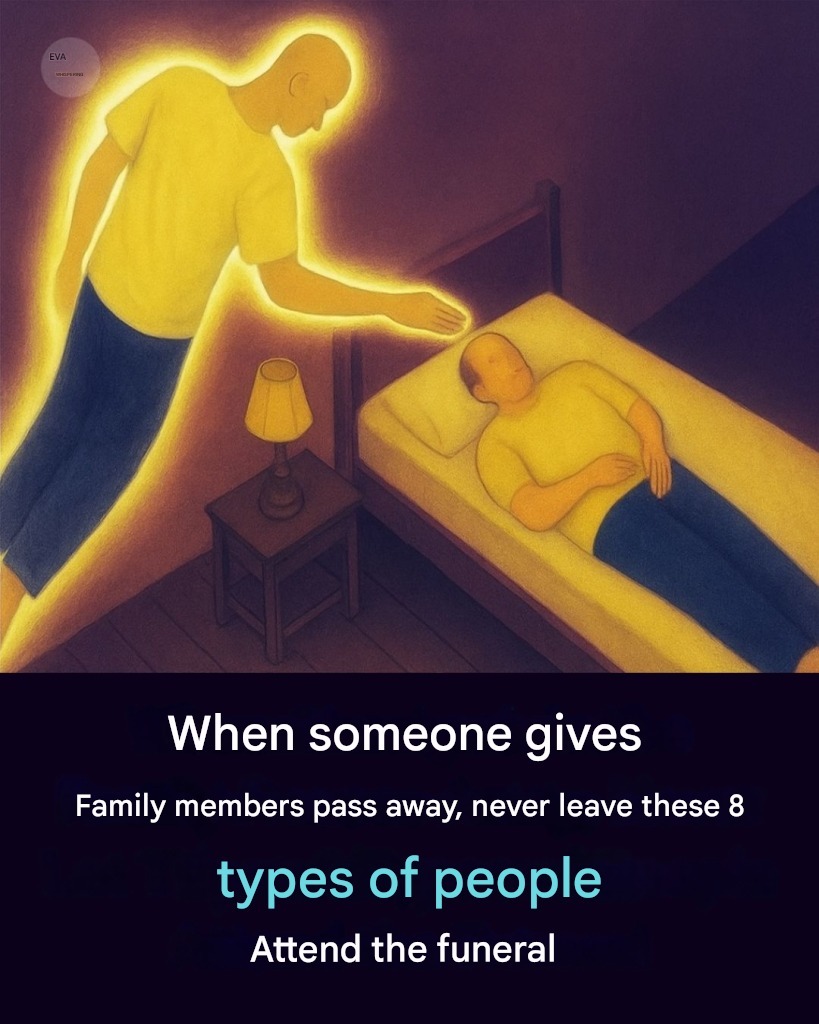
When a family member passes away, never let
When a loved one passes away, protecting the dignity of the funeral—and the emotional well-being of the bereaved family—is a priority.
Sometimes it is perfectly appropriate to prevent certain people from attending the ceremony. Their presence could cause harm, create unnecessary conflict, or dishonor the memory of the deceased.
Here are eight types of people you might consider excluding from a funeral — and why :

1. People who caused harm to the deceased.
Anyone who has abused, neglected, betrayed, or deeply hurt the deceased—whether emotionally, physically, or otherwise—should not have the privilege of “paying tribute.”
Their presence may seem hypocritical and even retraumatize those who loved the person.
2. Toxic or abusive family members
Family members with a history of manipulation, abuse, or constant drama can disrupt the peace of the gathering.
A funeral should be a place of unity and comfort — not a stage for toxic behavior.

3. Individuals who create conflicts
Some people thrive on creating tension. If you know someone who is likely to:
- Initial arguments
- Reopening old wounds
- To interrupt or attempt to take control of the service.
…the best thing to do is ask them not to attend. Funerals should be solemn, not battlefields.
4. People who show up for the wrong reasons.
Some arise from curiosity, gossip, to maintain appearances in public, or for self-promotion.
Instead of offering comfort, they exploit grief for their own ends. Protecting the funeral of these people preserves its sincerity.

5. Former partners or estranged friends (case by case)
Sometimes, ex-spouses, former lovers, or estranged friends may feel compelled to attend.
But if their presence causes discomfort — especially for the spouse, children, or parents of the deceased — it is perfectly reasonable to refuse.
Example: An ex-spouse showing up uninvited, which would deeply hurt the widow/widower
6. Anyone under the influence of alcohol or drugs.
Funerals require dignity and respect. If someone arrives drunk or unstable due to drug or alcohol use , their behavior can ruin a sacred space.
Taking the initiative to ask them not to come helps maintain the integrity of the service.

7. People who seek attention
Funerals are for honoring the deceased, not for highlighting other people.
People who make dramatic displays, monopolize conversations, or turn the event into a spectacle distract from the purpose of the meeting.
8. People who disrespected the family after the death.
If someone has previously demonstrated cruelty, insensitivity, or public disrespect —through social media posts, fights, or legal disputes—allowing that person to attend is unnecessary.
They have already revealed that they will not treat the occasion with the honor it deserves.For illustrative purposes only (iStockphoto)
How to enforce this respectfully.
- Communicate in advance : Inform the funeral director, pastor, or coordinator if someone is not welcome.
- Have someone at the door : A trusted friend or family member can discreetly redirect unwanted visitors.
- Maintain privacy : You are not obligated to hold a public wake. A funeral for invited guests only is perfectly appropriate.
In short: a funeral is not about pleasing everyone. It’s about protecting the dignity of the deceased and ensuring that their loved ones can grieve in peace.