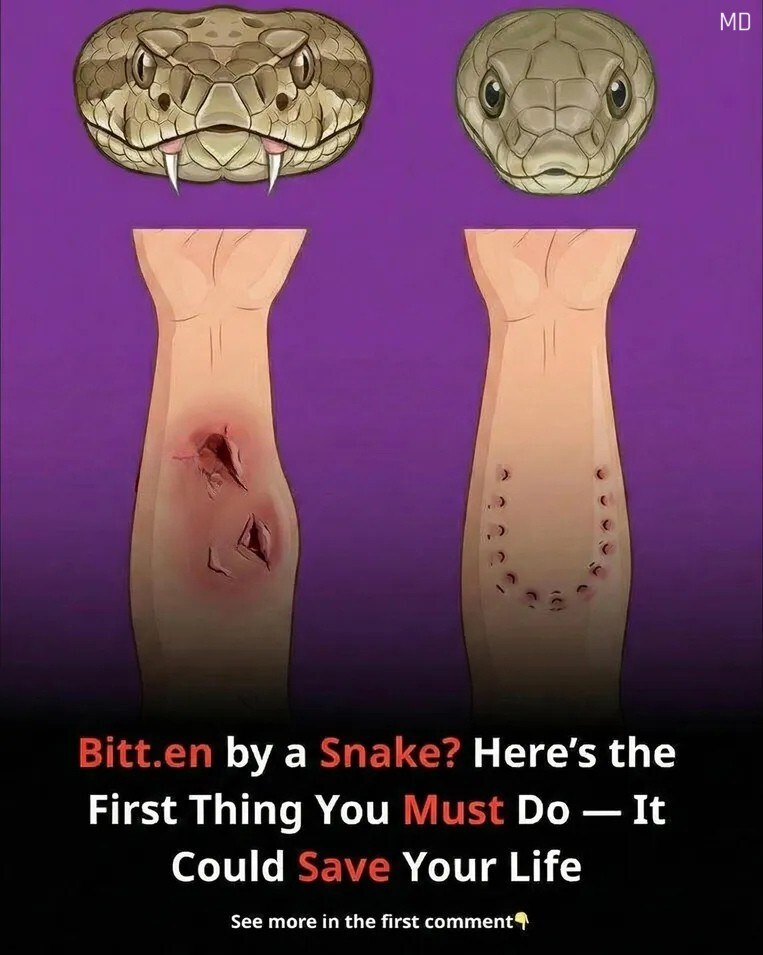
What to Do Following a Snakebite: Crucial First Aid Procedures That May Help
Although being bitten by a snake can be terrifying, acting calmly and intelligently can make a big difference. Knowing basic first aid is crucial in outdoor environments like farms, gardens, and hiking trails—especially in the summer months when snakes are more active. Reducing complications and improving results can be achieved by acting swiftly while maintaining composure. Anyone who spends time outdoors, whether for job or pleasure, needs to be prepared and educated.
For instance, thousands of snakebite incidences are reported annually by Australian health authorities, although only a small percentage of these incidents result in hospital admission. Certain species account for a greater proportion of confirmed bites, especially in rural and semi-rural areas, according to research from national monitoring initiatives. Additionally, statistics show that a large number of casualties are adults who work or participate in outdoor activities. It’s interesting to note that many bites happen near home rather than far out in the wilderness, frequently during routine activities like gardening, strolling through long grass, or trying to drive a snake away from a property.
Prevention plays a major role in reducing risk. Snakes are often drawn to areas with accessible water sources, shelter, and rodents, which serve as prey. Keeping yards tidy, trimming dense vegetation, sealing gaps in sheds, and managing rodent populations can make residential areas less attractive to wildlife. When working outdoors, wearing protective clothing—such as sturdy boots, long trousers, long sleeves, and gloves—provides an added layer of safety. Since most bites affect the arms or legs, covering these areas is especially important. Simple precautions can greatly lower the likelihood of a dangerous encounter.
If a snakebite does occur, it is critical to treat every bite as potentially serious, even if symptoms seem mild at first. Some bites may cause immediate pain, redness, or swelling, while others can initially appear minor. In certain cases, a snake may strike without injecting venom, but it is impossible to confirm this without medical evaluation. The recommended response includes keeping the person as still as possible, calling emergency services immediately, applying a firm pressure bandage to the affected limb, and immobilizing it with a splint if available. Avoid washing the wound, as medical teams may need to identify the venom. Prompt professional care significantly improves recovery chances. With awareness, prevention, and correct first aid knowledge, communities can stay safer while continuing to enjoy outdoor life responsibly.