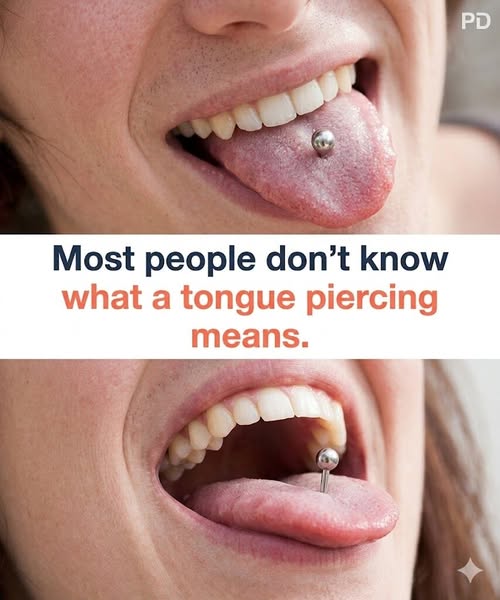
Tongue piercings, which represent spiritual dedication, have historical roots in the customs of societies like the Maya and Aztec civilizations. They still reflect concepts of individuality, revolt, and cultural impact, but today they mostly serve as a means of self-expression, fashion, or identification.
Tongue piercings have carried meaning for far longer than most people realize. While many people today see them simply as bold fashion choices or elements of alternative style, their origins reach deep into ancient cultural traditions. In several early societies, body modification was closely connected to spirituality, status, and personal endurance. Tongue piercing, in particular, was not performed casually; it often required ritual preparation and strong personal commitment. Ancient civilizations such as the Maya civilization and the Aztec civilization practiced forms of tongue piercing as part of sacred ceremonies intended to communicate with the divine. In these rituals, the tongue was pierced to produce blood offerings believed to open a spiritual channel between humans and the gods. Priests, leaders, and devoted participants would perform these acts during important religious gatherings to demonstrate devotion, courage, and connection to the spiritual world. What might appear extreme through a modern lens was, in those societies, considered a powerful act of reverence and faith. The practice reflected a belief that physical sacrifice could strengthen spiritual awareness and bring communities closer to their deities.
For these ancient cultures, the act of piercing the tongue held deep symbolic meaning. It represented personal strength, discipline, and a willingness to endure pain for something greater than oneself. Participants believed that through ritual sacrifice they could gain wisdom, protection, or guidance from divine forces. The tongue itself carried symbolic weight because it is tied to speech, expression, and communication. Piercing it during ceremonies symbolized the idea of offering one’s voice and identity to the gods. The rituals often took place in temples or sacred locations and were performed with careful attention to tradition and meaning. Over time, these ceremonial practices became embedded in the cultural identities of these civilizations. Although the rituals were spiritual in nature, they also reinforced social bonds within communities. Those who participated were often seen as brave, disciplined, and spiritually committed. The significance of these ceremonies reminds us that body modification historically served purposes far beyond appearance. Instead, it functioned as a powerful cultural language through which people expressed devotion, courage, and belonging.
As centuries passed and societies evolved, the meaning attached to tongue piercings gradually shifted. Many ancient ritual practices faded or transformed as cultures encountered new religions, social systems, and colonial influences. For long periods of history, tongue piercings were rarely seen in mainstream societies and were often misunderstood or forgotten. However, body piercing in general continued to exist in smaller communities and subcultures around the world. By the late twentieth century, interest in body modification began to rise again, particularly in Western cultures where individuality and personal freedom became increasingly valued. Tongue piercings started appearing within underground fashion scenes, punk communities, and alternative art circles. These groups often embraced styles that challenged conventional ideas of beauty or professionalism. Choosing a visible or unusual piercing became a way to question social norms and assert personal identity. What once had spiritual meaning in ancient rituals was gradually reborn as a modern symbol of independence and creativity.
During the 1980s and 1990s, the popularity of body piercing grew rapidly as professional piercing studios opened in major cities and information about safe procedures became more widely available. Tongue piercings gained particular attention because they were both daring and somewhat discreet. Unlike facial piercings that were immediately visible, a tongue piercing could remain hidden during everyday interactions, allowing individuals to maintain an element of privacy. This balance between boldness and subtlety appealed to many people who wanted to express themselves without constantly displaying their choice. Media, music scenes, and youth culture also contributed to the growing interest in body modification. Musicians, artists, and performers helped normalize piercings as a form of self-expression rather than rebellion alone. As social attitudes slowly shifted, what was once considered shocking began to enter mainstream fashion. Although opinions still varied across different cultures and generations, tongue piercings became increasingly accepted as a personal style decision rather than a controversial act.
Today, people choose tongue piercings for a wide range of reasons. For some, the decision is purely aesthetic—they appreciate the appearance and the uniqueness it adds to their personal style. For others, the piercing symbolizes confidence, independence, or a willingness to embrace individuality. Many individuals describe the experience as empowering because it represents a personal choice about their own body. Unlike clothing or hairstyles that can easily change, a piercing requires intention and commitment. This sense of permanence can make the decision feel meaningful. Some wearers also value the sense of belonging that comes from participating in a broader culture of body modification. Communities built around tattoos and piercings often emphasize creativity, acceptance, and self-expression. Within these spaces, body art becomes a form of storytelling, allowing individuals to express parts of their identity that might not easily be explained through words alone.
Despite growing acceptance, myths and stereotypes about tongue piercings still exist. Some people associate them with rebellion, attention-seeking, or specific personality traits, even though such assumptions rarely reflect reality. In truth, those who choose tongue piercings come from many different backgrounds, professions, and lifestyles. Students, artists, professionals, and parents may all choose body modifications for personal reasons that are meaningful to them. Often, the piercing holds a quiet significance known only to the wearer. Because the tongue piercing is usually hidden from view, it can function as a private symbol of identity rather than a public statement. This subtlety allows individuals to maintain a sense of personal meaning without needing approval or understanding from others. Over time, many people find that the stereotypes surrounding body modifications fade as society becomes more familiar with diverse forms of self-expression.
Ultimately, the modern tongue piercing represents a blend of history, symbolism, and personal choice. Its journey from ancient ritual practice to contemporary fashion highlights how cultural meanings evolve across generations. While its purpose may have shifted from spiritual ceremony to personal expression, the underlying themes of courage and intention remain. Choosing a tongue piercing still requires confidence and self-awareness, much like the ancient rituals that inspired it thousands of years ago. For many people, the piercing serves as a quiet reminder that identity is something individuals have the power to shape themselves. Whether someone views it as a stylistic accessory, a symbol of independence, or a connection to a long history of body art, the tongue piercing continues to hold significance in modern culture. As society grows more accepting of personal expression, this small but meaningful form of body modification will likely continue evolving, carrying forward its legacy of individuality and self-definition.