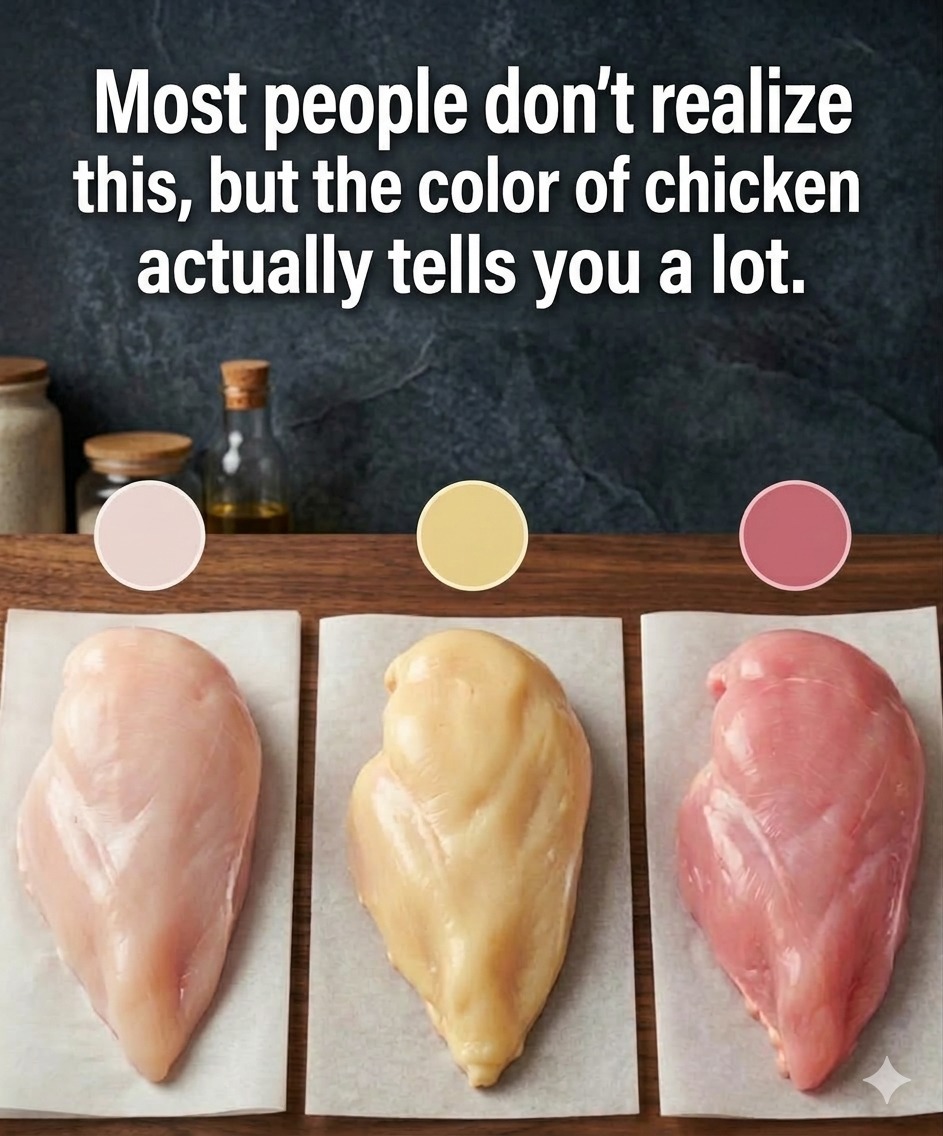
The Surprising Link Between Chicken Color and Quality Explained
When it comes to chicken, the color of the meat often raises questions about quality, taste, and health. Some pieces appear pale or slightly pink, while others have a deeper yellow tone, leading to common assumptions about differences in quality.
However, color alone is not a reliable indicator of freshness or nutritional value. Many factors influence appearance, and visual differences do not always reflect how healthy or natural the chicken actually is.
Pale chicken meat is often linked to industrial farming systems. In these operations, chickens are raised indoors on controlled diets and bred for rapid growth, which can affect both the color and texture of the meat.
These birds typically have limited movement and a standardized feed, which can result in a milder flavor and lighter appearance compared to more traditionally raised chickens.
Yellow-toned chicken is usually associated with diets rich in natural pigments, such as corn or grass. These feeds can influence the fat composition and color of the meat, giving it a richer appearance.
Such chickens may also be raised in more open environments with varied diets, which can contribute to firmer texture and stronger flavor, although production methods vary widely.
It is important to note that some producers can artificially influence color through feed additives, even in more industrial systems. This means appearance alone can sometimes be misleading.
To assess quality more reliably, consumers should look at labels like “organic,” “free-range,” or “pasture-raised,” and consider freshness indicators such as smell and texture rather than relying only on color.