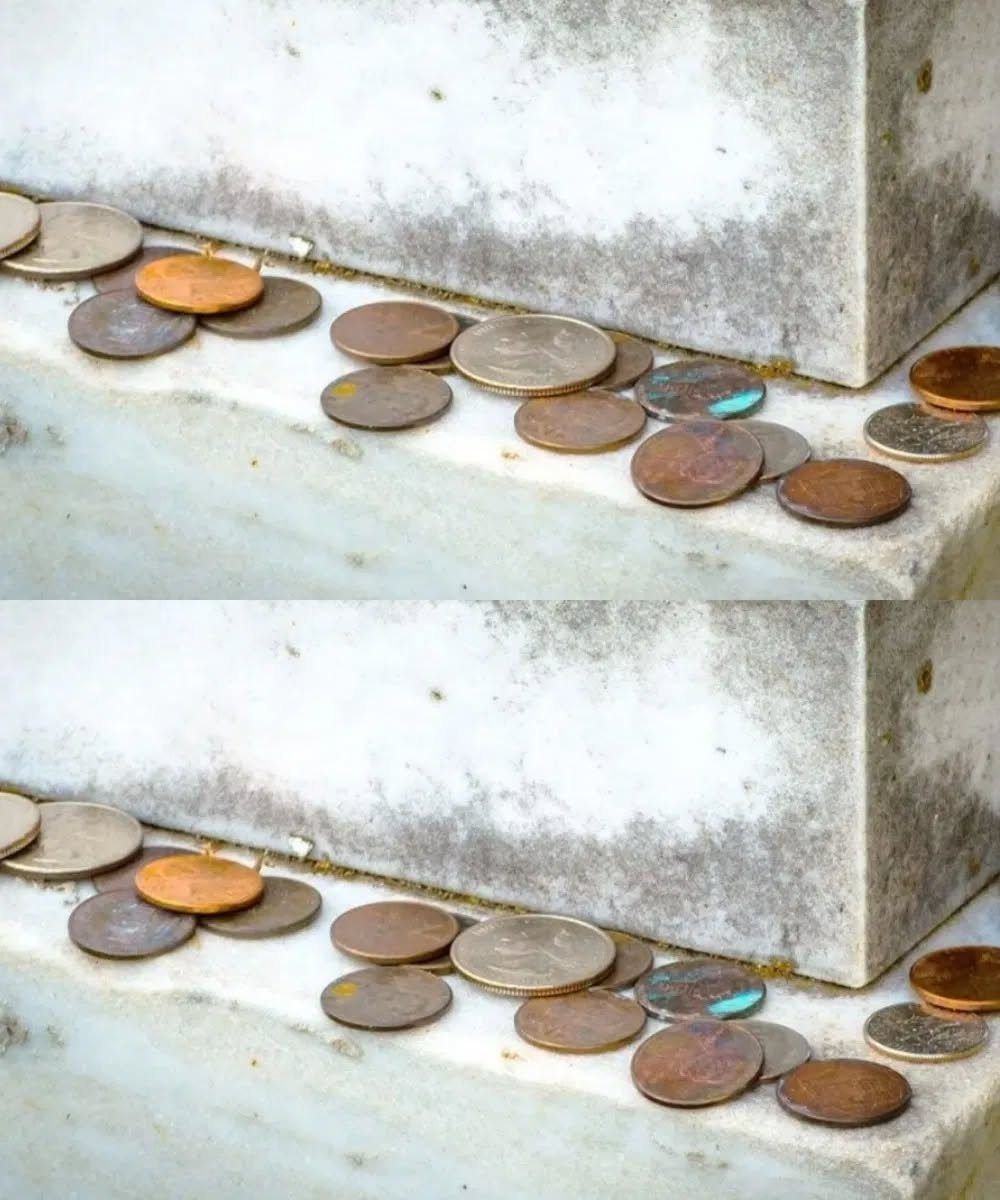
The Significance of the Coin Custom on Gravestones
Have you ever seen a little coin sitting on a headstone while strolling through a cemetery? At first, it can appear haphazard, like someone threw spare coins carelessly. However, that coin is deliberately put in numerous military cemeteries. It’s a polite, silent custom that conveys memory without the need of words.
The custom is most often connected to service members who served in the U.S. armed forces. Different coins carry different meanings, almost like a simple code. A penny is the most common. It means someone visited the grave and wanted to show that the person is still remembered. Families often find comfort in that small sign, because it confirms that their loved one’s life and service still matter to others.
A nickel suggests something more personal: the visitor attended basic training with the service member. Those early weeks of intense training build bonds that last a lifetime. A dime goes a step further, meaning the visitor served alongside the fallen soldier during active duty—sharing long days, responsibility, and often deep trust. The quarter carries the heaviest meaning.
It usually indicates the visitor was present when the service member died. That coin represents final moments and the weight of sacrifice. The tradition became especially known during and after the Vietnam era, offering veterans a private way to honor fellow soldiers even when public opinions were divided. What makes this gesture so powerful is its simplicity. A single coin on stone can say: You are not forgotten. It’s a small object with a large message—one that connects generations through honor, gratitude, and respect.