The Path She Took Before the World Was Watching
Long before the world came to know her as the First Lady of the United States, Melanija Knavs lived a life marked by quiet resolve, careful choices, and a strong sense of privacy. Her rise from a small Slovenian town to the global spotlight was not sudden or accidental, but the result of steady discipline, restraint, and an unwavering focus on her own path.
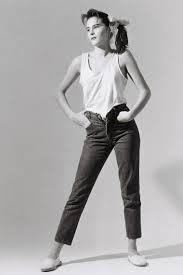
Born on April 26, 1970, in Sevnica—then part of Yugoslavia and now Slovenia—Melania grew up in modest surroundings along the banks of the Sava River. Her father, Viktor Knavs, worked in automobile and motorcycle sales connected to a state-run manufacturer, while her mother, Amalija, was employed as a patternmaker in a children’s clothing factory. Through her mother’s work, Melania was exposed early to textiles, design, and the mechanics of fashion, even participating in small children’s fashion presentations organized through the factory.
From a young age, those who knew her described Melania as reserved and introspective, notably more serious than many of her peers. These traits—calm, composed, and observant—would later define her public demeanor as an adult.
Her education began locally, but by age fifteen she moved to Ljubljana, the Slovenian capital, to attend the Secondary School of Design and Photography, an arts-focused institution housed in a historic former monastery. There, she studied industrial design and was immersed in a broader cultural environment that expanded her understanding of aesthetics and creativity.

Friends and acquaintances from that time recall her as poised and self-contained, someone who stood apart quietly rather than seeking attention. One such acquaintance, Peter Butoln, later recalled meeting her socially in her late teens. He remembered casual outings—riding through the city on his Vespa, attending small clubs, and dancing to pop music of the era. While their relationship was youthful and lighthearted, he noted that Melania was unusually disciplined for her age and uninterested in excess or nightlife culture.
Around the same time, her life took a decisive turn when fashion photographer Stane Jerko noticed her at a local modeling event in 1987. At just 17, she caught his attention for her natural presence and composure. Jerko invited her to participate in photo sessions that helped introduce her to professional modeling. These early images circulated among fashion contacts and opened doors to formal modeling training—marking the beginning of her professional transition.

Although documentation of her early personal relationships is limited, another name associated with Melania during her Slovenian years is Jure Zorčič. The two reportedly met in the early 1990s and spent time together before Melania left Europe to pursue opportunities abroad. Years later, they briefly reconnected in New York, where Melania made clear that her life had moved in a different direction and that she would not be returning to Slovenia.
After completing one year of studies at the University of Ljubljana, Melania made a pivotal decision at age eighteen: she left university to pursue modeling full-time. Signing with an agency in Milan, she adopted the professional name Melania Knauss, a version she believed would be more accessible internationally.
Her career unfolded gradually across Europe. In Milan and later Paris, she built her portfolio through runway work, photo shoots, and agency representation. Life as a working model proved demanding—long hours, frequent travel, and constant competition—but Melania approached it with focus and restraint. She did not rise as part of the global supermodel elite of the era; instead, industry insiders recall her as reliable, professional, and quietly determined.
Much of her European work remained within agency portfolios rather than major magazine campaigns, which limited public documentation of her social life during that period. Still, those who worked with her consistently described her as composed, hardworking, and uninterested in publicity for its own sake.
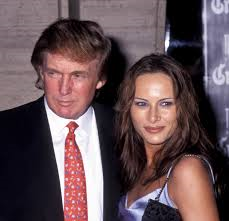
Her move to the United States came through the encouragement of Paolo Zampolli, a Milan-based agent with strong connections in New York’s fashion scene. Recognizing her potential in the American market, he persuaded her to relocate. In 1996, Melania arrived in New York City and began establishing herself professionally.
There, she worked steadily, appearing in prominent fashion shoots and collaborating with respected photographers such as Patrick Demarchelier and Helmut Newton. It was during this chapter—specifically in September 1998—that her life intersected with Donald J. Trump.
The two met at a fashion-industry event in Manhattan, reportedly at the Kit Kat Club, through Zampolli. Trump attended with another guest but was drawn to Melania and approached her directly. Rather than giving him her phone number, she insisted he give her his—a quiet assertion of independence. When he provided several personal numbers, she agreed to meet him again.

Their relationship developed deliberately and without spectacle. Even as Trump’s public profile expanded through business and media exposure, Melania remained selective about her visibility. Friends from that era recall her as thoughtful and guarded, maintaining firm boundaries around her personal life despite the social environment surrounding her.

Their marriage took place on January 22, 2005, at Bethesda-by-the-Sea church in Palm Beach, Florida. The ceremony blended elegance with prominence, attended by political figures, celebrities, and fashion leaders. Melania wore a custom gown designed by John Galliano for Dior Couture—later featured in Vogue—symbolizing her transition into a new public role.
In 2006, shortly after becoming a U.S. citizen, she gave birth to their son, Barron William Trump. Motherhood added another dimension to her life as she continued navigating the demands of public attention alongside private responsibility.
As Donald Trump’s career expanded into television and later politics, Melania approached her evolving role with the same measured discretion that had guided her earlier years. She neither rushed forward nor withdrew entirely, choosing instead a controlled presence shaped by intention.
Her journey—from a quiet childhood in Sevnica to international modeling, American life, and eventually the White House—was not driven by impulsive ambition or constant visibility. Rather, it reflected a pattern of deliberate decisions: knowing when to advance, when to remain reserved, and how much of herself to reveal.
The relationships of her youth were chapters that passed, while her long-term focus and discipline hinted at the life she would ultimately lead. Melania Trump’s story is one of intentional self-definition—marked by restraint, persistence, and an enduring commitment to shaping her own narrative amid extraordinary circumstances.