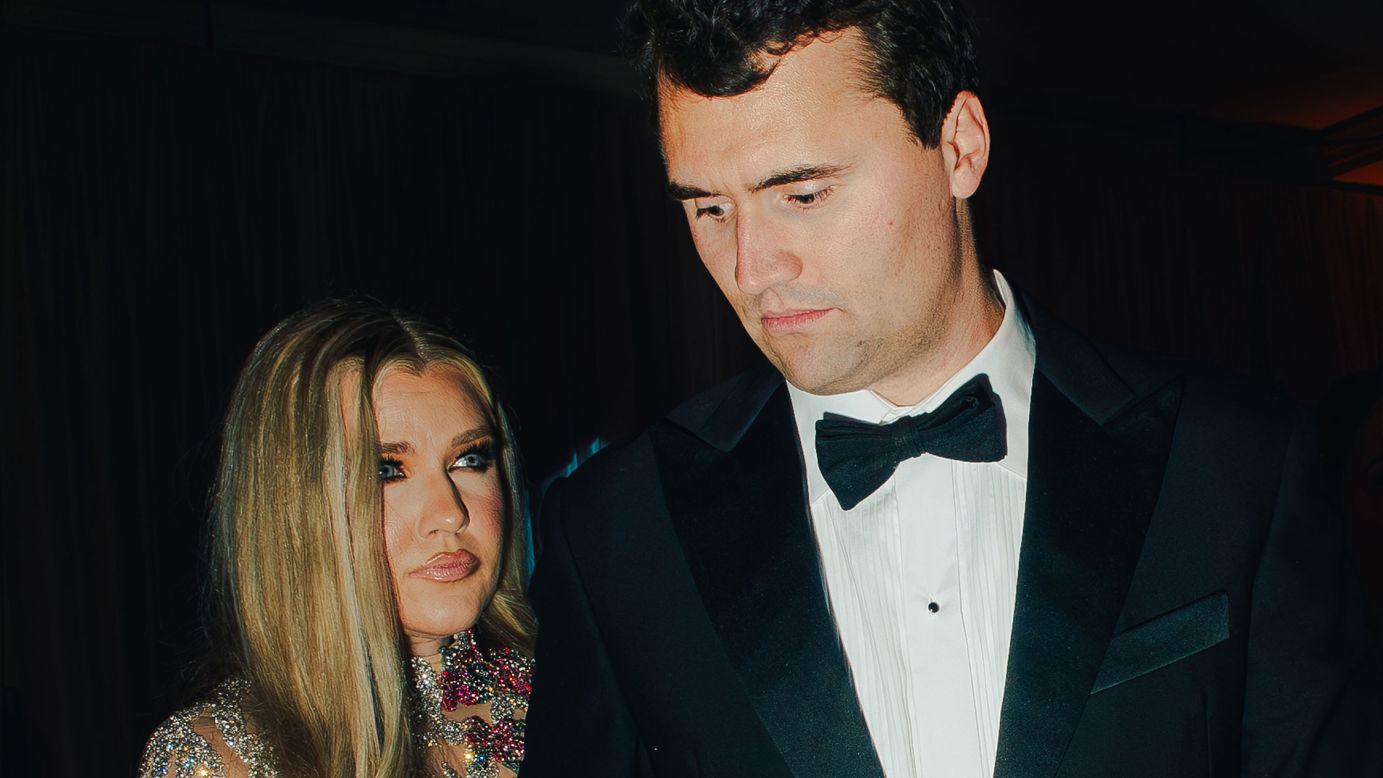
LEAKED Miss USA Photos Expose Erika Kirk Was a SPY │ Charlie Marriage ARRANGED Years Ago. t1
Something unusual started happening when old pageant footage suddenly resurfaced online. Clips that had been buried for years began circulating again, pulled out of context, slowed down, re-edited, and reinterpreted through a completely different lens. What once looked like routine moments from a beauty competition was now being framed as something far more complicated. And as these clips spread, so did a wave of claims, theories, and speculation surrounding Erika Kirk and her past. But what exactly is real, and what has been reshaped by the internet’s obsession with hidden meaning?
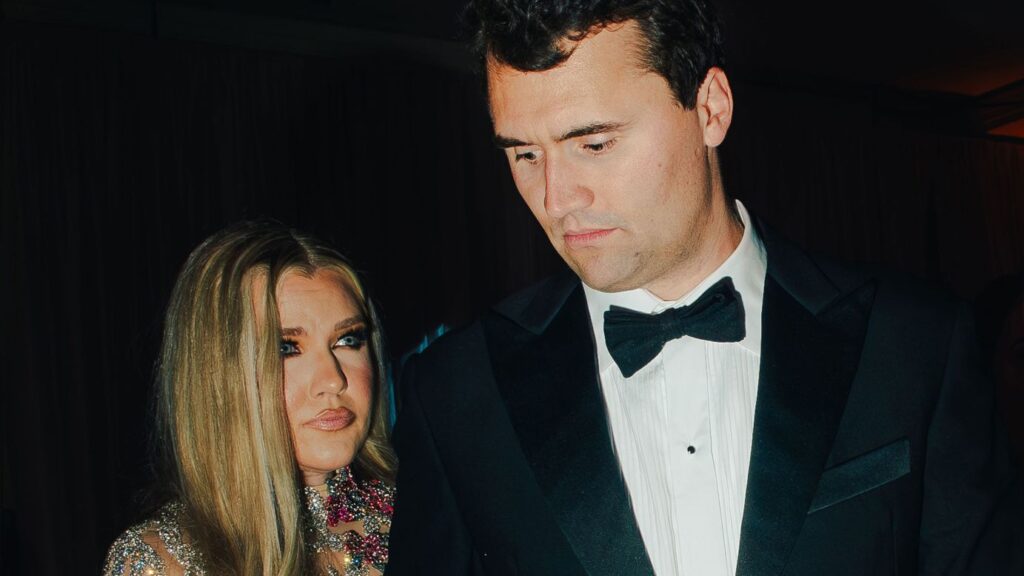
It all begins with the resurfacing of Miss USA-era material that most people had long forgotten. These images and videos were never meant to carry weight beyond the stage they were recorded on. Yet in today’s online environment, even the smallest detail can become fuel for a larger narrative. Faces in the background, casual interactions, and shared appearances have all been pulled into new interpretations. Suddenly, what looked like ordinary pageant history is being treated as if it holds secret significance. And that shift is exactly what sparked the current wave of attention.
As Erika Kirk’s name re-entered the conversation, old interviews and statements about her pageant experience also came back into circulation. In those clips, she describes her entry into the pageant world as unexpected, something that wasn’t planned or anticipated early in her life. However, online communities began comparing different versions of her story across time, pointing out inconsistencies in tone and detail. Some users interpreted this as a normal evolution of memory, while others saw it as something more deliberate. And from there, speculation began to grow rapidly.
Once speculation takes hold online, it rarely stays contained. Entire threads started forming around the idea that the pageant world might be more interconnected than it appears on the surface. People began connecting unrelated public appearances, shared institutions, and overlapping timelines. Terms like “influence networks” and “career pipelines” started appearing frequently in discussions. However, none of these claims have been independently verified, and much of the narrative relies heavily on interpretation rather than documented fact. Still, the momentum of these theories continued to build.
The focus eventually shifted toward Erika Kirk’s relationship with Charlie Kirk, which became a central point of discussion in these online narratives. Some users questioned how two individuals from very different backgrounds and life trajectories came together. Others pushed back, arguing that relationships often form in unpredictable and organic ways that don’t require hidden explanations. Despite this, social media continued to compare their histories side by side, searching for patterns that might not actually exist. And with every comparison, the story became more polarized.
As more content creators joined in, the original footage and statements were increasingly edited into short, dramatic clips designed to provoke emotional reactions. Context was often removed, leaving viewers with fragmented pieces of a much larger picture. This is where interpretation began to blur with assumption. What started as curiosity slowly transformed into certainty for some audiences, even without supporting evidence. And once that shift happens, it becomes difficult to separate analysis from narrative.
At the same time, algorithms on major platforms amplified the most sensational interpretations. Content that suggested hidden motives or secret connections naturally attracted more engagement, which in turn pushed it to wider audiences. This created a feedback loop where speculation was rewarded with visibility. Over time, that visibility gave the impression of credibility, even when the underlying claims remained unverified. The result was a digital environment where uncertainty was often replaced by confident storytelling.
In this atmosphere, even neutral events began to take on exaggerated meaning. Every public appearance, every interview clip, and every historical photo became part of a larger interpretive framework constructed by online users. But beneath all of it, the actual confirmed facts remained limited. Much of what circulated was built on inference rather than evidence. And as with many viral narratives, the line between observation and imagination became increasingly thin.